Recommended
Bled Castle is a powerful castle on the rock above Lake Bled. According to written sources is one of the oldest castles in Slovenia. Bled Castle is beside Bled island a symbol of Bled and Slovenia. From the castle are wonderful views to the lake with an island, Julian Alps, Karavanke, Lesce, Radovljica and other surroundings. The castle was donated with the deed of donation from Henrik II. to Brixen bishop Adalberon in 1011. The name Bled was in medieval written sources first mentioned in the German form Veldes. In Gorenjska Region Bled Castle was the administrative centre of the Brixen land property. Bled and its beauty was described by many travelers, among them was also Janez Vajkard Valvasor in 1689. Later Brixen bishops leased property and the castle also to others. During Napoleon’s occupation the Bled estate belonged to the Illyrian Provinces. In 1838 the Brixen bishops got the property back, but they sold it to the owner of the Jesenice ironworks, Viktor Ruard in 1858, because of too high costs. In 1882 Viktor Ruard sold the castle property and the castle to the wholesaler Adolf Muher. The next owner was the hotelier Ivan Kenda, who wanted to arrange the castle to a hotel. The bank seized all his property in 1937 and after bank the property got the Drava Province. Bled castle has buildings arranged around two courtyards. Farm buildings were on the lower yard and the residential area was on the upper yard. Buildings are from the Renaissance and city walls are Romanesque. Today is the Bled castle in the property of the state and managed by the cultural institution of Bled. Bled Castle was throughout the history scene of protocol and diplomatic meetings at the highest levels. The castle was renovated and arranged to tourist visits in years from 1952 to 1961 by plans from the architect Tone Bitenc. The museum part of the castle was renovated in 2008.
Sneznik Castle is the best preserved castle in Notranjska region. It is located under the mountain Sneznik near the place Kozarisce. The castle is built on a rock at the source of the Brezno Spring and the Obrh. Below the castle is the spring dammed into a large pond. In sources the Sneznik Castle was first mentioned in the year 1268 as the hunting post. The formation of the present castle goes to the year 1462. First owners were the Aquileian Patriarchs and later the owners changed several times. Before the war it was the property of the family Schönburg from the vicinity of Dresden. Sneznik Castle is a three storey building with a newer stone bridge that leads to the walls and Renaissance walls in front of the entrance. Two arched stone bridge and the outer towers are Romantic additions of the 19th century. In the castle is preserved all the original fittings, mostly from the 19th. You can feel the throb of life from the end of the 19th and beginning of the 20th century. Among the living quarters are the most interesting the room with Egyptian furniture, the dining room and a larger hall arranged into a wedding hall. The castle residents also had an improvised theatre hall and a small library. In vestibules and in all the halls you can see the numerous stuffed animals and trophies. The surroundings have been carefully arranged into a park with riding and walking paths. East of the Sneznik Castle are farms and other additional buildings that house a small hunting museum. Sneznik Castle is a wonderful place for a romantic and unforgettable wedding. The manager of the castle is the National Museum of Slovenia.
Ljubljana has been the capital city of Slovenia since 1991. It is a popular tourist destination that attracts visitors throughout the year. It was first mentioned in written sources around 1120.
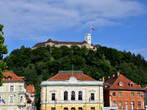
Today, Ljubljana is the cultural, administrative, transport, economic, political, research, and educational center of Slovenia. Ljubljana Castle, a mighty medieval fortress, is a symbol of the capital. It stands on the edge of Castle Hill, just above medieval Ljubljana. You can reach the castle by car, take the funicular railway from Krek Square in the old town, or walk along one of the well-maintained trails. Ljubljana Castle evolved from a fortified tower with a defensive wall, even before the first mention of Ljubljana. On the hill where the castle stands, human presence has been confirmed since the late Bronze Age. Throughout its rich and varied history, Ljubljana Castle has undergone many changes and witnessed important events that influenced the development of Ljubljana and Slovenia. At the end of the 18th century, the Habsburg owners wanted to abandon it, but did not demolish it due to protests from the Carniolan provinces. The castle was purchased by Mayor Ivan Hribar on behalf of the city in 1905, and he transformed it into a cultural center. In the early 20th century, the city of Ljubljana bought the building, and many renovations began, with plans drawn up by well-known architects such as Plečnik, Mihevc, Kobe, and Ravnikar Jr. The castle's current appearance is the result of the efforts and ideas of Projective Bureau Ambienti d.o.o. from Ljubljana.
Their contributions to the renovation include the funicular railway, the Slovenian History exhibition, the Erasmus Tower, the Frederick Tower, the circular route around the castle, the lapidary and mini-theatre, the archers' tower, the castle inn, wedding halls, the bastille, the Puppet Museum, Hribar Hall, the wine cellar, terrace, and more. Today, Ljubljana Castle is an extremely attractive tourist destination and hosts many concerts, cultural events, film and theater performances, and exhibitions. Visitors can explore various parts of the castle, such as the tower, the Chapel of St. George, the permanent exhibitions on the Penitentiary and Slovenian History, Dwelling Hall, Frederick Tower, Frederick's Room, the Arts Sales Gallery, Shooter Tower, and the Pentagonal Tower. The Virtual Castle offers a 12-minute projection on the history of the castle, its architectural development, and archaeological findings.
The Castle Cafe serves typical Slovenian dishes with a modern twist, while the Castle Cafe offers a wide selection of coffees, beverages, fruit bowls, cocktails, and desserts. During the summer, the castle courtyard hosts various events, the most popular of which is the "Movie Under the Stars" screening.
The Predjama Castle is located under the overhanging rock in the region Podgora, which is only 9 kilometres from Postojna, beside the village of Predjama. It is also called eagle nest of the robbery knight Erazem Predjamski, about who exists lots of legends. The Predjama Castle is carved in the vivid rock. It was existing already in the 13th century, probably sooner. It was managed by Jamski, which belonged under the Oglej property. After Jamski the castle was under management of the Adam Purgstaller and from the year 1567 were in it the family Kobenzl, who also provided for the renovation. The last aristocratic owners were counts Windischgrätzi from the year 1846 to 1945, which also changed the external image of the castle. The parts of the castle are different by style and by the time of the origin. The constructors used the advantages of the cave and with that they preserved the non conquery of the primary castle. The cave under the Predjama Castle is ramified with more parts with the several entrances. The most famous is the entrance through the Horse stable in which they discovered the traces of the minor stony and copper age and also from the Roman times. Today is in the castle museum, which is showing the medieval life of the knights. Amongst the interesting things are also residence rooms, chapel and prisons, some parts of the arms, oil paintings and Pieta from the year 1420. Every year is organized here the famous Erazem knight tournament, which attracts many visitors. The performance conjures up the former life in and beside the castle.
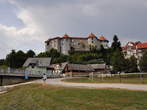
Velenje castle is one of the most preserved castles in Slovenia. It lies in the steep rock under the city of Velenje. It is first mentioned in 1270. Velenje castle is one of the tenth Slovenian castles who existed in the Middle Age in Saleska valley. The castle is a tipical military and residental stronghold. After the centuries they built it and changed it several times. First owners were Kunsper gentlemen followed by their relatives Ptuj gentlemen and the family Liechtenstein. Family Wagen von Wagensberg entirely renovated the construction in the 16th century. The fortress was transformed in a Renaissance residence. The castle was attacked by Turks in the 17th century, but they didn't have any success, because it was good secured and strengthened. The most important owners in the 19th century were Karl and Bianca Adamovich. The last owner of the Velenje castle was count Coronnini-Kromberg until 1943 when Germans drove him out of Velenje after the Italian capitulation. After the Second World War the castle became part of general social property. Apartments were made, a lot of furniture were demolished and the building was falling into ruins. In 1957 Velenje coalmine founded a Museum of Slovene Coalmines in the castle.
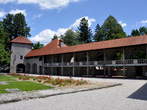
That was later renamed to Velenje Museum. They transported the coalmine collection to abandoned shaft of Coalmine Velenje and so we got the Coal mining museum of Slovenia. Gradually first collections were organized and at the same time an intensive renovation of the Velenje castle was done. The building consist of the core with arched tower and with the arcades surrounded yard. There is also the wedding hall. In the castle yard are organized musical and cultural festivals.
Other
Bohinjska Bistrica is the largest village in the Bohinj valley and seat of the community. It is situated between hills Ajdovski gradec and Dobrava and between brooks Bistrica and Belica. The village divides road from the railway station to the Lower and Upper village. In Bohinjska Bistrica are railway tunnel, sports hall, open playground for tennis, football playground, elementary school, bus station, museum, restaurants, shops, private hotels, hotel, health service, local office, tourist informative centre, fire station, monument in memory of Second World War, Zois Manor with Tower Clock, First World War Military Cemetery, the Church of Saint Nicholas, ski center Kobla and other. Next to Aquapark Bohinj is located interesting and beautifully arranged Ceconi’s Park. The Zois Manor with Tower Clock was built in the neo Romanic style in the second half of the 18th century. Above the entrance doors we can see the famous arms. The manor was the residence and administrative building for iron entrepreneurs. In the Lord's garden, which is across the road in the southern side of the castle, is the Zois clock. Baron Ziga Zois built it that ironworkers would come in right time to the work. Ziga Zois was the ironworker, botanist, mineralogist, regenerator and the patron of the Slovenian literature. The castle and other buildings are today reorganized to the restaurant in the medieval style. They can accommodate 80 guestes. By the brook Bistrica they offer place for group and family picnics. Zoisov grad Restaurant serves twenty-five varieties of pizza from the open-hearth oven, original dishes, house specialities and chef's specialities such as Bohinj trout, Zois steak with boletus mushrooms, Emperor steak with asparagus, the Manor platter and other delicious food.
Crnomelj is the central and the biggest town in Bela krajina. It lies high under the confluence of the river Lahinja and at the affluent of the river Doblicica. Crnomelj was settled since the older Iron Age. The city has because of its geographical position, beside the main road, only two parallel streets. This has changed only a little with the years. Crnomelj is first mentioned in the year 1228 with the name Schirnomel. The city got town rights in the year 1407. Crnomelj was in the 15th century secured against Turks with the walls and they also dug out the moat. The important things to see in the old city centre are Castle Crnomelj, the Komenda (Commandery), Stonic Castle, Church of Saint Peter, Church of the Holy Spirit and others. In the year 1944 was established the first partisan gymnasium in Slovenia. Crnomelj Castle was first built in the year 1165. The bigger castle was built later and with some additional extension is preserved to these days. In the 13th century was also established the Komenda of the Knights Templars. The inner yard has renovated arcades. Here are also exhibited Roman tombstones. Stonic Castle lies opposite of the Castle Crnomelj. It is built of the three buildings, which were in the year 1768 united in one. Castle was announced for the cultural statue in the year 2003. The Church of Saint Peter originate from the year 1228. The baroque hall is from the first half of the 18th century. The Gothic church of the Holy Spirit is first mentioned in the year 1487. It was renovated in the end of the 19 th century, together with the walls for protection. Črnomelj is the traffic centre of the Bela krajina, because of its central position. At the same time is also the cultural place, famous of the traditional »jurjevanje«, a three-day festival in mid-June of music, dance and bonfires. It is one of the most important celebrations of folklore in Slovenia.
Crnomelj is the central and the biggest town in Bela krajina. It lies high under the confluence of the river Lahinja and at the affluent of the river Doblicica. Crnomelj was settled since the older Iron Age. The city has because of its geographical position, beside the main road, only two parallel streets. This has changed only a little with the years. Crnomelj is first mentioned in the year 1228 with the name Schirnomel. The city got town rights in the year 1407. Crnomelj was in the 15th century secured against Turks with the walls and they also dug out the moat. The important things to see in the old city centre are Castle Crnomelj, the Komenda (Commandery), Stonic Castle, Church of Saint Peter, Church of the Holy Spirit and others. In the year 1944 was established the first partisan gymnasium in Slovenia. Crnomelj Castle was first built in the year 1165. The bigger castle was built later and with some additional extension is preserved to these days. In the 13th century was also established the Komenda of the Knights Templars. The inner yard has renovated arcades. Here are also exhibited Roman tombstones. Stonic Castle lies opposite of the Castle Crnomelj. It is built of the three buildings, which were in the year 1768 united in one. Castle was announced for the cultural statue in the year 2003. The Church of Saint Peter originate from the year 1228. The baroque hall is from the first half of the 18th century. The Gothic church of the Holy Spirit is first mentioned in the year 1487. It was renovated in the end of the 19 th century, together with the walls for protection. Črnomelj is the traffic centre of the Bela krajina, because of its central position. At the same time is also the cultural place, famous of the traditional »jurjevanje«, a three-day festival in mid-June of music, dance and bonfires. It is one of the most important celebrations of folklore in Slovenia.
Prosenjakovci is a small village in the Municipality of Moravske Toplice in the Prekmurje region, near to the border with Hungary. There are two small churches in the settlement. The village is the site of an unmarked grave associated with the Second World War.
Matzenau Manor is located near the centre of the village. The two-storeyed manor, mentioned in records as a castle from 1876, was a luxurious edifice (26,5 x 15,5 x 9 meters high) built in a neoclassical style, and used as a seasonal and hunting residence by numerous owners, who lived in Austria or Hungary. The structure is said to have been built at the beginning of the 19th century by Italian architects. Around the building there was a park with a resting benches and fountain. The entire premises spanned an area of approximately 150 hectares (400 acres). As part of the Carpe Diem project the park has once again regained its original image, since it is being restored to the charm and the purpose for which it was designed. It is surrounded by a trail which also serves as an access to the manor.
The benches along the trail offer an opportunity for the visitors to enjoy and rest the untouched nature, and the information panels give them some information on our native three species and their peculiarities. In 1900, Denes Craigher bought the manor from Carl von Matzenau.
The Soteska Manor is located in the road between Novo mesto and Zuzemberk. Among the Second World War was destroyed by fire and today remained only the ruins. The manor was built in the years from 1664 to 1689 by count Jurij Ziga Gallenberg. The owner made the castle park designed in renaissance style with the garden pavilion, which has today the name Hudic turn. The building has the ground plan in the form of the fourfeathery clover. In the pavilion are partialy preserved the wall paintings. By opinion of the Janez Vajkard Valvasor, the manor was one of the most beautiful and prominent in the Kranjska Region. It is located in the left bank of the river Krka and it has replaced the medieval castle Stara Soteska in the right side of the river Krka, which was in the 15the century highly damaged. The manor is built in the shape of the regular rectangle. The inner arcade yard was surrounded with four two-storeyed tracts and four corner towers. The Soteska manor was famous by rich painted rooms, which author was master Almananch. Gallenberg’s were the owners of the property Soteska from the year 1733 and then they sold it to the counts Auersperg. In the year 1743 they bought it the counts Lichtenberg and kept it till the year 1793. At that time the owners were ones again the Auersperg’s and they had it till the end of the Second World War. The economical strength of the property Soteska in the 19th century was leaning in the exploitation of the extensive Roska woods. From the middle of the 19th century is working the saw in the right bank of the river Krka. The manor was destroyed in the year 1943 by fire from the partisans. They also took away all the precious equipment and after the war the local people used it as the quarry. The hydroelectric power station from the year 1927 in the left bank of the river preserved all the technical instruments. The visitors can see the exhibition storehouse of the Technical museum Slovenia and the Hudicev turn only by the previous arrangement in the Commune Dolenjske Toplice.
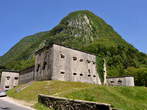
Fort Hermann is part of the stronghold complex of the Kluze Fortress. It was built in the rising ground above the Kluze Fortress. The beginning of the trail is in the nearness of the Kluze Fortress, at the opposite side of the road. Under the steep walls, where the rocks can fall, you will come to the tunnel. The tunnel has lighting and when you walk through, are by side the corridors, which lead to the shooting lines. They started to built the tunnel and the accessible road already in the year 1897. The work was done under the Austrian imperial – royal military construction leadership, which had seat in Bovec and was ended till the year 1906. The tunnel was in The First World War equipped with the three hidden lines, which are still seen now. To the Fort Hermann leaded also the steep trail on the transversal wedges. Today is the trail to the fortress directed with signboards. When you come to the Fort Hermann, you will stop breathing because of its greatness, in spite of that it is very ruined of the passed time. It got the name after the captain Johann Hermann von Hermannsdorf. He was the commander of the Predel fortress in the time of the Napoleon wars. It was built in the year 1900, so that it would support the Kluze Fortress. It was one of the six Carinthia's fortresses. It is also known as the upper Kluze Fortress. The fortresses were protecting the access to Trbiz and to the hinterland of the Austria. In the First World War the Fort Hermann was destroyed by the first greater Italian bombardment and it was not in use till today. You can only see the ruins of the building. In the fortress is standing the information table. You can go by the new stairs to three galleries below Fort Hermann.
Radgona Castle is located in the Gornja Radgona, which lies in the right bank of the river Mura. The city is situated by the main road from the Murska Sobota to Maribor, at the border with Austria. Gornja Radgona is lying in the hill Grajski gric. It is famous by annual agricultural fair. Radgona Castle was first mentioned in the 12th century. It stands in the hill from there is a beautiful view to the surroundings. It was built by the aristocrat with Slovenian origin Radigoj. Its first owners were counts Spanheim. Through the centuries the owners were different several times. The present image the castle got in the year 1775 by the count Leopold Herberstein. The last owners were counts Chorinsky. They sold it in the year 1931 to the ban's administration. In the Radgona Castle was by the Second World War the elementary school. Now is the castle in the lease of the local man Milan Herzog. At the present he is renovating this beautiful building. In the castle is also the wedding hall. Radgona Castle was several times enlarged and rebuilt. The entrance is through the external yard. You can first visit the two-storeyed building. They were preserved the apertures for the chains of the lifting bridge. The main gates are massive and lined with sheet metal. Above the entrance you can see the blazon of the counts Herberstein. At the end of the court you can come to the other entrance. Here you can see the apertures of the lifting bridge, which means that was here the internal castle ditch. In the portal is the double blazon of Herberstein-Eggenberg. You can come to the other yard by the longer corridor, which is by all four sides arcaded. The main three-storeyed castle building is entirely under the cellar. Sometimes the castle also had its 56 metres deep fountain. The top of the castle is concluded by the small tower. Beside the castle, opposite of the first entrance, was more than 50 metres long chesnut promenade. Radgona castle will be reorganized to the representation building.
Castle Bizeljsko (Wissel) is situated on a rocky hill above the village Bizeljsko. Castle gives the village its characteristics appearance. In written sources is first mentioned in 1404, when the region was inhabited by knights Wissell. The castle has a medieval layout. Throughout the centuries has played an important role as a defensive post. Today the Castle Bizeljsko has Renaissance and Baroque features. Renaissance form can be seen at the entrance, when the Chapel of St. Hieronim with rich Baroque altar was added to a building. The chapel originates from 1623. The arch of the chapel and three rooms on the first floor are decorated with stuccos from the late 18 th century. Rooms were built as a series of continually spaces. A rectangular courtyard is surrounded by four two -storeyed tracts. On the west side are at the corners round towers. In the Castle Bizeljsko did not keep the valuables, because everything took away its last owners, counts Windischgraetz. Today is in the castle the wine chapel Klakocar. The family Klakocar also restored the castle rooms. We can see the rich wine cellar and the castle chapel. Beside famous wines from Bizeljsko is in the cellar preserved the autochthon sort named Rumeni plavec.
Castle Bogensperk is one of the most significant Renaissance castles in Slovenia. It was also home of the celebrated polymath Johann Weichard Valvasor. The castle was built by the Wagen family, feudal lords of the near by Lichenberg castle.
The first documented records date back to 1533 when Jorg Wentschitsch is mentioned as the castellan. The castle remained the property of the Wagen family until 1627, and had several subsequent owners before being bought by Johann Weichard Valvasor (1641-1693) in 1672. Further to the extensive library and a collection comprising 7,752 graphic prints and drawing by 15th-17th century European masters, Valvasor founded a graphics enterprise and a workshop employing a number of artists and copperplate engravers. In a twenty year period he wrote and published six works of a topographic historical nature and three with a more artists mofit. Valvasor's magnum opus and most famous work was the multi volume Glory of the Duchy of Carniola published in 1689. The publication of the Glory was a massive undertaking which got him into financial difficulties, and in 1692 he was forced to sell the castle. It then had a succession of owners, before becoming a home of Windischgraetz nobility, who were forced to relinquish the property at the end of the Second World War.
Castle Bogensperk was plundered during Second World War, and after the war it was used by the Jesuits for some years. A gradual renovation began in 1972. Today, Bogensperk houses a museum containing exhibition collections pertaining to Valvasor and his era.
Castle Dobrovo is located on a small viewing slope in the village of Dobrovo. The Renaissance two-storey mansion from the early 17th century was built on the site of an older castle.
The estate was started to be built by the dukes of Montecuccoli, completed by the Counts of Colloredo, and its last owners were the Baguers. Castle is an undivided rectangular building with square towers. The towers are upstairs higher than the mansion and open to each side with three arches. The courtyard is walled and decorated with cylindrical columns. The walls were probably built during the Venetian War and after the war turned into an arcade corridor and one of the towers into a chapel dedicated to Saint Anton Padovansky. The location of the castle indicates a well-considered layout and layout. Older equipment is scarce, fragments of frescoes with coats of arms and a landscape image preserved by Cement del Neri from 1894 are preserved. The paintings are on the staircase and in several rooms. The extensive renovation of Dobrova Castle, which had been planned in 1979, was completed after 1991. On the first floor of the mansion is the Knights' Hall, where you can see the coats of arms of noble families and a wall painting depicting a naval attack on the city. There are many music and other events in the hall. In addition, the gallery with a permanent collection of prints by world-renowned artist Zoran Music and part of the collection of Count Baguer, the last owner of the castle, is also interesting to see. In the castle cellar there is a hunting room, restaurant and wine cellar of winemakers from Brda.
The former park in front of the castle was converted into a parking lot. Beneath the Castle of Dobrovo is a bronze monument dedicated to the poet Alojz Gradnik, the work of sculptor Jakov Brdar.
Grad Castle is located in the village Grad in Goricko. The village Grad is the biggest and the oldest settlement in Goricko. The castle is a cultural memorial and it is very important in the state level. It is protected with its surroundings and castle park as the artistry, architecture and cultural memorial. The castle is the big trump for the touristical resuscitate of the village Grad. The local people wants that the castle would be live again as the centre of the political, economical and cultural life of the region. Grad Castle is at the moment under the renovation. It is the biggest castle complex in Slovenia. It has over 365 rooms. The history of the castle goes to the year 1208. The owners were frequently different. Between the First World War and the Second World War were its owner the industrial Geza Hartner from Murska Sobota. At that time was equipped with art works and very well preserved, afterwards was till the renovation long time abandoned and left to the destruction. Inside of the castle is the fountain, which is insured with plate and cut in the vivid rock. In the time of the attacks and sieges had played the important role. In the castle yard is the focal point of the energetic forces. The vibrations of the castle radiation should heal different illnesses. The visitors can see only one part of the rooms. It is open the wedding room, smith's, potter's and wheelwright's workroom and some of the ethnological collections. It is also available the smaller souvenir shop. The biggest traditional performance is the Night of the witches.
The Gradac Castle is situated in the village Gradac in the Community Metlika in Bela krajina. The castle stands in the good protected area of the river Lahinja. There is a footpath to the Gradac Castle, which secedes from the main road next to the store. We come to the castle over the wooden bridge, which goes across the former defensive dyke. In the sources was the castle first mentioned in the year 1326 as Gräcz. At the beginning the Gradac Castle was probably the stronghold against the Turks. It was in the property of the Italian family counts Thurn-Valsassin, until it came in the possession of the family Burgstall, which were also the owners of the Krupa and Pobrezje Castles. The next owner was Jurij Gusic, who marked the castle with reconstructions. His tomb is situated in the castle park. He died in the year 1831. In the gable of the castle porch we can see the coat-of-arms of the family Gusic. The castle was in the year 1846 bought by Franz knight Friedau. He built in Gradac in the year 1858 foundry for iron with smelting furnace and supplied it with copper ore, which was digged out in Bela krajina. The last of the owners of the Gradac Castle was before the second world war wholesaler Sutej from Zagreb in Croatia. In the castle was between the war transitional partisan hospital, in the years from the 1944 to 1945 was alsto the officer school. After the war there was the school for hard educable children. Afterwards there was the agricultural and domestic school. However, after the year 1956 there were apartments. The Gradac Castle had a park with garden and avenue planted with plane and pine trees, but it is cut down now. The park belongs to the garden architectural heritage.
Zagorje is a small village in the Municipality of Pivka in the Inner Carniola region. In the village is a parish church, which is dedicated to Saint Helena and the chapel at the cemetery, which is dedicated to Saint Paul.
The Kalc castle is located near the village Zagorje in the Valley of the Pivka Lakes. At Kalc, a mansion was built by the nobleman George Steinberg around 1620. It was named after the local term kal (a Karstic pond) that refers to a sinkhole pond, a pool or watering place for livestock. In 1684, Fran Anton Steinberg (1684-1765) was born at Kalc. He was the supervisor of provincial roads and the manager of Idrija's mercury mines. He is known for his contributions to the development of mechanics, maths, cartography and karstology on Slovenian territory. From 1843 onward, the Kalc mansion was the property of the politician, poet and Slovenian patriot Miroslav Vilhar (1818-1871). On 9 May 1869, he organized the 6th meeting of all Slavs where eight thousand people demanded a United Slovenia (the unification of all Slovene-inhabited areas) and equal rights for the Slovene language. Kalc thus became the centre of a cultural and national movement. Fran Levstik, the author of tales Martin Krpan, lived here as a tutor for Vilhar's children. Kalc was populated and a part of the village of Bač until 1919.
From a large complex with an outbuilding and a chapel has been preserved, as has the avenue lined with chestnut and linden trees. In the vicinity of the castle, the Pivka river springs. In times of heavy rains, intermittent lakes arise in surroundings.
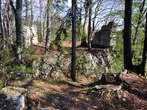
Castle Kamen is situated in the village Begunje on narrow passage, which closes valley of Draga. From former powerful castle are today remaining only ruins, which are exemplary ordered and protected before further decaying. Every year they light a bonfire, celebration in honour of nationality – 25th of June and archery tourney. We trace the first records of castle Kamen in the 12th century, when it was still in the property of landlords of Kamen. In the year of 1261 passed over to property of Ortenburzan and later Celjan's, but there is no exact information. Valvasor is reporting, that has here from falling down out of horse killed Herman III., son of Herman II. Celjski. After their extinction in the 1428 has the castle Kamen passed over to possession of Habsburzan's. Owners have later frequent exchanged. Between them was also famous knight Gasper Lambergar, winner of 85 tournaments, which is also praised in national song of Pegam and Lambergar. In 18 th century castle was gave up.
The Otocec Castle is situated near the city Novo mesto in Dolenjska. It is the only water castle in Slovenia and it stands on one of the island of the Krka River. Its image was formed through the centuries. The beginning of the castle goes back to the 13 th century, in the year 1252. The name Otocec originates from the Freizing bishops. The owners of the castle were named knights from the island – de Werde or islander. In the minddle of the 14 th century the building was widened and it got the ground plan of the letter L. The Castle Otocec was additional strengthened after the Turks devastation in the year 1471. In the second half of the 16 th century it got the renaissance appearance. In the second half of the 17 th century the castle building got among the other renovations also the arcade corridors in the ground floor and in the both floors of the southern tract. Between the Second World War the Castle Otocec was destroyed by fire from the partisans and in that time were ruined the precious archives in which was hidden some interesting stories from the rich history of this wonderful castle. After the war the castle was nationalized. Today is in the castle the Otocec Castle Hotel, which is very luxurious and a restaurant with the best culinary offer. Near the hotel, in the right side of the river Krka, is situated pleasant Camp Otocec. About 300 metres from the castle is the Sport Hotel and a motel, which is designed mainly for travellers in transit guests. We can get fun in the Sport Hotel, where they have gambling rooms. For business meetings is available congressional hall. At the weekends is possible to dance in the restaurant Tango at the sounds of the live music. The Otocec has also developed to sport centre, which offers excellent conditions for running or cycling and guests can play tennis, golf and other sports. The River Krka invites us in the upper current to rafting, under the castle you can go boating or fishing. The Hotel Otocec is the ideal place for romantic and unforgettable weddings, where guests can feel like kings. They offer arrangements like Castle wedding in Chivalric saloon, Castle wedding, Wedding in the open air, Romantic wedding in the shine of the torchs and candles, Wedding in the open air with bridesmaid and senior, Lords wedding and Wedding in the dreaming river Krka. In last years are very popular weddings in the open air under the tent in the Castle Otocec park. The park is shaped after the patterns of the English landscape style. The oldest trees are old almost hundred years and mayority was planted after the renovation of the castle in the 50 years of the 20th century.
Podsreda Castle is situated in the Kozjansko Regional Park. It lies in the northern slope Orlice. From the castle is a wonderful view to the valley Bistrica and Sotla, medieval square Podsreda and Hrvasko Zagorje. It was built in the 12th century. Many owners exchanged, but the medieval kernel of the castle remained almost undamaged through the centuries. The present image got in the 19th century. They started with its renovation in the year 1983. It belongs between most important buildings of the Romanic architecture. The castle has defensive a tower, tower with the chapel and two palatium. The bishop in Ljubljana, Tomaz Hren, consecrated the chapel to Saint Ana, Saint Filip and Jakob in the year 1612. In the castle we can see Romanic room, southern palatium, medieval kitchen with open fireplace, northern palatium, renaissance hall, castle prison, cellar rooms and galleries in the castle granaries. In the castle prison they imprisoned the resisting thralls. The northern palatium is the oldest part of the Podsreda Castle. The renaissance hall is the largest room. In the southern palatium we can see in the first floor the history of the castle, course of the renovation and building history. The Podsreda Castle is open all days in the week, except in Mondays, from 10.00 to 18.00 hour. In winter months is closed. In summer months they organize concerts, exhibitions and other activities.
Slovenska Bistrica Castle is located in the immediate nearness of the city centre. It is the powerful building, which can be hardly missed. At the castle is the park, which attracts locals and other visitors in every time of the year. The Slovenska Bistrica Castle was first mentioned in the year 1313. It has variegated history, because it changed the owners several times. At the beginning it was in the ducal lands. In the year 1587 bought it the aristocratic family Vetter, later von der Lilie. The next owners were the family Wildenstein before the end of the 17th century. They are famous by the forming of the Bistrica Castle Park. The counts Attems bought it in the year 1717 and it remained in their property till the end of the Second World War in the year 1945. Today is the castle the cultural centre of the city. It is carefully renovated since the year 1985. In the Slovenska Bistrica Castle you can see the permanent exhibitions like the room of flags, Roman road Celeia – Petovio, the exhibition Ancnik ancient fort, Ark’s ethnologic collection, collection of the wines of the Bistrica growers, collection of the prayer books, collection of the oil lamps, collection of the puppets in the typical costums of the world, Pajtler’s collection of the fossils and minerals, collection of the minerals from Communes Slovenska Bistrica and Oplotnica, Ingolic memorial room, stoneware of the Pohorje, Castle’s smokehouse with the old castle hour and Tomazic memorial room. In the castle are also the artistic saloon, chivalric hall in which they organize different cultural performances, the wedding hall and the gallery Castle. In the summer time they organize the traditional old Bistrica evenings. They have the permanent guide service.
Zgornji Tustanj is a small village in the Municipality of Moravce in the central part of Slovenia. Tustanj Castle is located on a hill southwest of Moravce and southeast of the road to Vrhpolje. The castle was built in 1490 and got its present form in the year 1671.
Tustanj Castle offer – attend castle cultural events, organisation of field trips for kindergartens and schools, organise seminars and events in a unique castle ambient, experience an unforgettable wedding (a church and a civil ceremony in a standard wedding dress or in a medieval costume), learn about life within the castle walls on a guided tour. By prior arrangements, groups will be served home made delicacies. Tustanj Castle is among the few amazing castles in Slovenia in which an original collection of porcelain, furniture, land register, documents, tiled stoves and other antiques are kept. The first nobility mentioned is the Lichtenberg family. Tustanj Castle is the only preserved castle from the six castles that once dominated the Moravče Valley. It was home to many noble families for more than 500 years of its exsistence, it has a rich history and many interesting stories to tell. The most famous of all of them is the one about how the castle passed over from the hands of noblemen into the hands of the ordinary Slovenian family of Pirnat, a castle gardener.
Tustanj castle has an arcaded courtyard and four corridors with halls that guard the pearls of the interior furnishings dating from the lifetimes of past nobility. The beautiful castle park preserves a large plane tree and a small pond.
The Castle of Zaprice is one of the biggest cultural sights in Kamnik. It is situated on the small hill above the town and there were two castles already in that place in the past. The Castle of Zaprice was built by aristocratic family Dienger von Apecz. In the first half of the 16th century was renovated by Jurij Lamberg. The primary medieval castle was surrounded with walls with two towers and corner balconies. In Vajkard Valvasor famous book The Glory of the Duchy of Carniola from the year 1689 we can still see the renaissance appearance of the Castle of Zaprice. In the castle were meetings of local Lutherans in the 16th century, but after the year 1574 their ceremonies were forbidden. In the 17th and 18th century the Castle of Zaprice was increased, rebuilt and it got the baroque style. After the year 1945 the castle was nationalized. Today the Intermunicipal Museum Kamnik is in the Castle of Zaprice, which was open in the year 1961. In the museum we can see periodical and permanent exhibitions. Lapidary – the collection of stony testimony of the human activity from antique until today is situated in the ground floor. In front of the Intermunicipal Museum Kamnik is on the grassy area the open air museum – ethnographic museum, which shows the granaries from the Tuhinj Valley.
Castle Gewerkenegg is located on a small hill in the old town centre of Idrija. The renaissance castle was built in the 16th century for the mine management and the storage of mercury. Castle Gewerkenegg was also a centre of trade with mercury in Idrija. The castle was through the centuries rearranged and upgraded. Courtyard facades were painted in the other half of the 18th century with frescoes, which are now restored and reconstructed. Today is in the castle seat of the Municipal Museum Idrija, which was proclaimed for the best European museum of engineering and industrial heritage in the year 1997. The museum was established in the year 1953. In its care are cultural, historical monuments, technical monuments, natural remarkablenesses and preserved buildings from the Second World War. In the museum they have the permanent exhibition named Five centuries of the mercury mine and the town of Idrija. Photographs of Idrija, exhibited documents, maps and original objects illustrate mining history, the development of floating timber and forestry. In the geological collection are presented minerals, mercury ores, rocks and fossils. In the castle are held many cultural events in the summer time, which attract many domestic and foreign visitors.
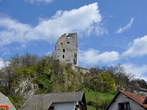
The Old Castle is a castle above the city Kamnik, where are nowadays only ruins. We can go to the castle from different directions. If we walk, we can start by the marked way near the centre of Kamnik. It takes about 30 minutes. Somewhere on the half of the way is the Little Wooden Mills Grove,where are lots of small mills. This part is especially interesting for children. We can also drive by the asphalt road, which begins by the health centre. The Old Castle was built in the 12th century by Andeski Counts. The castle above Kamnik belongs to the one of the oldest castles in Gorenjska Region. Because of its good strategic position the owners could control the traffic roads, which went near the Kamnik. Today it is situated the restaurant Grof Andes near the Old Castle.
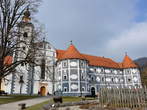
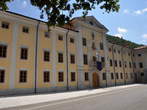
The Bozidar Jakac Gallery is situated in Kostanjevica na Krki. It was established in the year 1974. Most of the pictures are from expressionists. The first starts of the gallery goes back to the year 1956, when was in the places of the elementary school established The Gorjup Gallery. The Gallery Bozidar Jakac is situated in the rooms of the former Cistercian monastery, which the local people also call it Kloster or Kostanjevica Castle. Before the entrance to the gallery is beautiful lime avenue, which in summer times gives nice shadow. The Church of the Virgin Mary and the cloisters are the oldest part of the monastery. The church originates from the middle of the 13th century. In the 18th century was renovated to the baroque style. The wall above the main entrance was painted in the year 1737 by Franc Jelovsek. In the 19th century the monastery was condemned to dilapidation, but the worst part was, when the monastery was burnt down between the Second World War. Furthermore, in the year 1956 was destroyed the church tower. The renovation began soon after the war, under the direction of the France Stele. It is still continuing today, under the cover of the group of the institution for the protection of the natural and cultural heritage. In the gallery are permanent exhibitions of Joze Gorjup, Tone Kralj and Bozidar Jakac. Gradually, with renovation of the rooms, the gallery has the exhibitions of France Kralj, Zoran Didek, France Gorse and Janez Boljka. Specially interesting is the art collection of old masters from the nearby Pleterje monastery. The castle grounds are used to exhibit over 100 large wooden sculptures from Forma Viva, an international exhibition once held in several places in Slovenia from 1961 to 1988 whereby sculptors worked with materials assosiated with the area. Here it was oak, in Portorož stone, iron at Ravne in Koroška and shudder concrete in Maribor. In the future Forma Viva will be organized every two years. Lamut Art Salon is dislocation of the gallery and is situated in the city centre. The painter and graphic artist Vladimir Lamut completed a large portion of his work here in Kostanjevica.
The Maribor Castle is one of the most remarkable architectonic monuments in Maribor. Today is here the seat of the Regional Museum of Maribor. On the facade you can see the table in the memory of Franjo Bas, who organized the museum and archives. The Maribor Castle is decorated with different architectoral and style periods. It was built by Friderik III. between the years 1478 and 1483 to strengthen the town's walls because of the threatening Turkish attacks. Later was changed to the rich feudal residence. At the western side of the castle is the wonderful baroque staircase from the years 1747 and 1759. In the northeastern corner the eastern façade is concluded with the castle bastille, which had represented the defensive point by the town’s dike. It is the work of the building contractor Domenica dell' Allio from the years 1556 to 1562. At the northwestern side you can see the powerful tower. Loret’s chapel at the southern side was made in the years from the 1665 to 1675. Festive hall or the solemn hall represents the central place of the Maribor castle. On the roof you can see the image of the horse battle between the Turkish and the Christian war, which was painted by Johann Gebler in 1763. In this place gave the concert the famous Hungary composer and pianist Franz Liszt. Some well known people resided in the castle including: Emperors Leopold I. and Karl VI., Empress Maria Teresia, Russian Crown Prince and later Car Pavel I and Pope Pius VI.
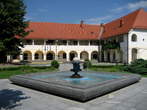
Polhov Gradec Mansion is situated in Polhov Gradec and it is the main attraction of the place. It lies between Polhograjska Gora and Kalvarija and it is a little bit far from the old village centre. Before the mansion is a wonderful park with a a hundred years old lime tree and the Neptun fountain with colums with nymphs from the year 1696. The mansion complex also has an English tower with clock, mansion farm, stables, mansion laundry, drying house for flax and other. The Polhov Gradec Mansion has a varied historical past. The upper old manor was built in the 13th century. In the earthquake in the year 1511 was very damaged, so it was not renovated any more. The owners moved to the lower tower mansion, enlarged it and strengthen before Turks. Under the ownership of the baron Khisel at the end of the 16th century the building got the renaissance style. The present image with the additional baroque style the mansion got around the year 1700, under baron Kunstel. Today the Polhov Gradec Mansion is renovated, but not the whole complex. In the mansion is a local museum, which shows the historical happening and a life in the village, wedding room and e-point. In exhibiton rooms are organized cultural and other performances. Polhov Gradec Mansion is a wonderful place for a romantic wedding.
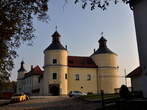
Castle Brdo was built in the first quarter of the 16 th century. The renaissance mansion was built by aristoctratic family Egkh. Plans for the castle were made by Italian master builders. They also arranged the garden, ponds and orchard. In the castle were later living the family Gallenberg, family Zois and Prince Karađorđević. Brdo was after the Second World War nationalized. The castle was renovated and equipped with period furniture, fine art, carpets and many other. With the renovation castle lost its renaissance design. Brdo became the Slovenian residence of Josip Broz Tito, president of the former Yugoslavia who hosted many world economic, political and other personalities. Today is Brodo a protocol building, which serves the needs of the Government of the Republic of Slovenia. Here are taking place the highest protocol meetings, conferences, congress events, special private and official ceremonies and many other. The area covers about 500 hectares of land with gardens, walking paths, ponds, orchards and forest.
The Lake Crnava and Hotel Alma & Grad Hrib are situated in Preddvor. They are popular places for many local people. They are also starting-points for trips to the saint Jakob, Potoska gora, Kalisce, Javorjev vrh, Srednji vrh, Cemsenik, Storzic and Hudicev borst. The Preddvor manor in the middle of the village was between second world war private hotel for holidaymakers. Today is youth house. The Castle Hrib was reorganized to the restaurant and they also have weddings. Beside the castle is an old avenue planted with old trees on both sides. The old legend promises to the fresh married couple, if they walk through this promenade, 50 years of faithfulness. Beside the castle they damed up the brook Bistrica, which flows from the back of the Potoska gora and supplies the artificial lake Crnava. Hotel Alma has a terrace, from where we can enjoy in wonderful views to the mountaints and to the lake. In summer time is possible to borrow the boat, hire a tennis place and in winter time we can slide. Around the lake is a good walking path. In the Bistrica valley, beneath Zaplata, is the rock climbing. It is only half an hour walking from the Lake Crnava.
Ptuj Castle is a powerful building, which is proudly rising above the town. The castle complex is composed from the former administrative building, central castle building, granary, stables, southern right-angled tower, west tower, southern round tower, northern tower, castle farm and castle walls with three portals, early medieval terrestrial dyke and guardhouse. All the buildings are located in the castle hill. Ptuj Castle has a varied historical past. The medieval stronghold was built in the 11th century, but the castle hill was already settled from the 5th Millenium before BC. The important owners were the Salzburg arcbishops, the Lords of Ptuj, the Leslie Family and the Herberstein Counts. After the Second World War the castle was nationalized. In the Ptuj Castle is today a museum. Collections in Ptuj Castle are the Collection of Arms, the Collection of Musical Instruments, the exhibition on Feudal Dwelling Culture, the Castle Gallery, the Collection of Traditional Carnival Masks, the Ethnological Exhibition and the Collection of Traditional Carnival Masks. Periodical exhibitions are the Leslie Family, the Sluga Collection and the Lords of Ptuj. The most representative place in the castle is the festival hall with the small chapel, which is convenient for solemn occasions as are weddings, symposiums, concerts, business meetings and other. From the Ptuj Castle is a wonderful view to the town Ptuj and the nearby surroundings.
The Novi Dvor manor house, which some sources state was also called Marijin Dvor, Dvor, Weichselbergerhof or Weichselstein, began to be constructed in the second half of 1535 by Lord Žiga Višnjegorski at a cost of 2000 florins. The house took shape alongside the road between Radeče and Boštanj, which had been opened in 1458, and the estate was connected to nearby Sevnica by the ford between Čot and Loka. At the end of the 17th century, Valvazor wrote the following about Novi Dvor: The Weichselstein manor house is a quarter of an hour away from the town of Radeče and enjoys a splendid views of the river. A linden tree stands in the large courtyard. Before the house we can sees fields, precious fruit trees and wine-covered hills nearby. There are beautiful views over the neighbouring manor houses. The current owner, Baron Sigismund Wilhelm, has beautified the house and decorated it with a number of additional features. In 1853 the estate and manor house were bought by the wealthy and highly educated aristocrat Dr Ludwig von Gutmannstahl-Benvenuti, who began to lay out the famous park that sits alongside. The Baroque building was given a Neo-Classical makeover and the park began to be established, with plants being transported from Trieste and the Botanical Gardens in Ljubljana. In the period leading up to the Second World War, the estate came into the hands of the Sisters of Mercy of the Order of St Vincent, and after the war it served for a time as the administrative headquarters of the coalmining companies of the Zasavje region. It later became a youth correctional centre.
Pustal is suburban settlement in Skofja Loka. It is situated in right bank of Poljanscica. Pustal is accessible from the town over bridge Pustal and on foot by Kopaliska Street over wooden footbridge Hudiceva brv (Devil footbridge), in which is also a mark. River under footbridge Hudiceva brv is spuming and rapid. Worth seeing are also Pustal's castle, church saint Kriz on Hribec, Nace's house, Policar house and baths, which are rather neglected. Pustal's castle was built in the year 1220. In that castle lived family Pustal, which has extincted at the end of 16th century, followed by a lot of other owners. Castle's chapel has marvellous fresco »Snemanje s križa« of Quagli from the year 1706. Now are in former castle in the two-storeyed building with arcades yard, apartments. Up to baroque church of saint Kriz we come on walking passing 12 Stations of the Cross. On Policar's house is marked up to where was stretching water at the big flood in the year 1926. Nace's house is museum and monument of Slovenian cultural heritage. It is the example of old Slovenian home, which has preserved original external form and old interior equipment. History of this house extends in the beginning of 15th century.
Stara Loka is part of Skofja Loka and belongs to oldest Slovenian settlements. It is primary Loka and in the year 1286 is first named as Stara. Worth seeing in Stara Loka are church of saint Jurij and Strahlov or Staroloski castle, beside there is also a small park. Church of saint Jurij is one of the oldest in Kranjska, it was built round 1118. Church was several times changed and rebuilt, so it has lost primary appearance. In the chapels are tombstones from 16 and 17th century. Present newromanic appearance got it at renovation in the year 1863. Beginnings of Staroloski castle go back to the 15th century. Since the year 1999 is announced as a cultural monunent national importance. Speciality of the castle are round towers, which were used for defence. Around the wall was also a moat, which is now filled up with earth. In the castle rooms are today the Centre of blind and weak-eyed and the Museum of post and telecommunication.
Rising 475m above the city of Krancelj on a prominence stands Loka Castle. It was built on the edge of a natural terrace and below the castle a settlement of merchants and tradesmen grew up. It was first mentioned in a document in 1202 which stated it to be a resistantial castle. The first castle was build by the Freising Bishops and was the seat of the Manager or Head. The bishop when he came to see his dominion also stayed here. When it was almost completely destroyed by an earthquake in 1511, Bishop Filip ordered it to be rebuilt. In the castle’s courtyard was a powerful tower whose foundations are still seen today. Today the castle is part of the Loka Museum where you can see the cultural, ethnological, historical, Artistric, natural and scientific wealth of the Skofja loka region. Near the castle is a place used for concerts and walks that are wonderful during the summer. Into the city we can come down on the way near good preserved city wall that protect city many centuries.
The first fortified settlement that gave shape to life in the village, was built in the 11th century. The oldest written document about the stronghold of Duino is dated 1139, the period which began with the condominium of the Tybein De Dewino, vassals of the Patriarchs of Aquileia; the fiefdom at that time was called Tybein.
The fiefdom was able to fend of attacks thanks to the high walls and battlements which enabled the observation of any hostile ships arriving. The fortress was accessible by a single, steep and fortified path along the battlement. The tower was constructed on different levels. From the recovered remains such as a desk set in the wall near an oval window and the frescoes on the bottom floor, it is supposed that this was a chapel whilst those above were used as a prison. The entrance to the fortress today is where there was a drawbridge. Beneath the ruins we can glimpse a rock overlooking the sea that looks like a petrified woman wrapped in a cloak, the famous White Lady. According to one legend, a noble lady – chatelaine Esterina da Portole, was thrown from the cliff at the time by her jealous husband. Every night the lady leaves the rock face and wanders around the castle, seeking in vain the cradle with her baby; every dawn she returns, petrified, to the face of the cliff. Between the two castles at high tide, one may see a rock, cut off by the sea; this is Dante's Rock.
The Patriarch Cassano della Torre (1316-1318) has crowned Arrigo king of Italy in 1311, when he had been Bishop of Milan. The ceremony took place in the basilica of Aquileia and in addition to the successor of the Patriarch – Pagano della Torre, Dante Alighieri was present, as ambassador of Cangrande della Scala. It seems that Dante was hosted on that occasion in the fiefdom of Duino by Pagano della Torre, before was nominated as Patriarch (1319-1332). The history of the castle and of the lords of Duino in this period is intermingled with Aquileia and the Torriani Patriarchs. The family reached the zenith of power with Ugone V (1344-1391) who submitted to the Dukes of Austria and received the Regency of Trieste. The lord of Duino had the new castle built on the ruins of the pre-existing Roman Tower. The Duino family history is interwoven with the Walsee family with the marriage of Ugone VI to Anna Walsee in 1389 and that marks the building of the new castle according to the wishes of Ugone, the last representative of the dynasty of Duino.
Walsee had the castle until 1472 and then for more than a century from 1472 to 1586 the castle was held by the Serene House of Austria, represented by the supervisors and captains, amongst these, the Hofers. In 1478 the ancient fortress was attacked during a Turkish raid and was finally abandoned for the New Castle.
Kluze Fortress is situated near Bovec. It belongs to the most powerful and most interesting strongholds. It is lying above the deep gorge of the Koritnica River, in its most narrow part. Before the Kluze Fortress is a small park, where are also the information tables. The primary Venetian fortress was erected in the second part of the 15th century for defence before the Turks. The Venetians were banished away in the year 1509 and the Kluze fortress came into the Austrian possession. It was strengthen at the expense of the Carinthia provincial States and it became the seat of the district. In the second part of the 17th century the governor general of a province Georg Filip von Gera took care for the necessary improvement and completed it. The Kluze Fortress played the important role in the French wars. It was burnt down and destroyed in the year 1797. In the years from the 1881 to 1882 the remains were pulled down and they built the new fortress in the same place. Between the First World War was here the seat of the Austro – Hungarian garrision close behind the front line. After the Second World War it lost its rule and was left to the time. Between the years 1987 and 1991 they protected the roof construction and put in order the surroundings. Inside of the fortress is presented the history of the fortress and its surroundings, the smaller tourist office, wedding hall and local painting gallery. They regularly perform the games of soldiers, which are dressed in uniforms and with the equipment from the period of the First World War. Before the fortress in the direction of Bovec you can see The Castle Well from the year 1670, which is cut in the rocks. In the well was flowing the rainwater. Before that they carried the water from Koritnica River.
Fort Predel is located about one kilometre from the former frontier Predel. It belongs between one of the six Carinthia strongholds. The first fortification was already built in the time of the Napoleon Wars and was burnt down twice in the fights between the French and the Austrians. In the year 1850 they built a new stronghold, which was constructed from the main building on the rising and the smaller barrier by the road. Buildings were connected with the underground passage and walls. Next to the road is situated the monument, which consists from the stony support wall, the pyramid with the carved inscription and the lithoiron statue of the wounded lion. In the honor to defenders was erected by the Austrian emperor Ferdinand I. and was solemnly unveiled in the year 1851. The Fort Predel was reorganized to the military warehouse in the year 1898, because it became obsolete and it did not suited to the changed military regulations. It was renamed to the Depot Predil in the year 1907. After the First World War was no longer maintained, so today can be seen only the walls.
 KRAJI - Slovenia
 KranjHotel Actum