Source: Public information of Slovenia,
The Surveying and Mapping Authority of the Republic of Slovenia,
State map in measure 1 : 1.000.000, 1995
www.gu.gov.si
Recommended
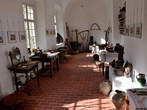
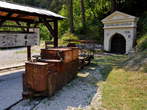
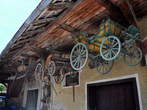
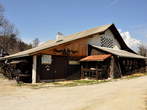
Technical Museum of Slovenia is situated in the former monastery and later cahteau area of Bistra. Bistra is located in the nearness of Ljubljana, between Vrhnika and Borovnica. The museum is housed in 6000 square metre of area. It lies in a wonderful surrounding with park, forest educational trail and pond. In the museum they have permanent collections from the fields of water drive, forestry, wood processing, hunting, fishing, electrical engineering, textile engineering, vehicles and traffic, agriculture and printing. In Sunday they organize demonstrations of old ways and technics, machines and devices, which were used by everyday work. They have demonstrations of milling of flour in the mill on the water drive, working of a circular saw, agricultural and textile machines and other. The wood department shows the contemporary forestry, wood as the source of the energy and raw materials, forest educational way and the ecology of the wood. The forestry department is the continuation of the wood department and is divided to external and internal. It contains thematic complexes as are carpentry, merchandise, joinery, cooper's trade, wheelwrights's trade, production of chairs and sawdusting. The hunting department shows the history of hunting and games in Slovenia. The fishing department shows the history of fishing, fish farming, fishes in Slovenia, technics of fishing and the ecology of waters. The electricity department shows the life and the work of the great inventor, Nikola Tesla and the development of the electrification. The textile department shows the textile trade, industry, raw material, testing of the textile goods and European textile path. In the traffic department are interesting collections of cars before and after the second world war, cars of Josip Broz – Tito, cars of national production, motors and bikes. The agricultural department shows the collections from grain to bread, drive machines, forge's and wheeler's workshop. The printing department shows the history of printing technics and printed words in Slovenia. The Technical museum of Slovenia in Bistra is closed on Mondays, in December, January, February and in first November.
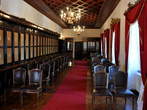
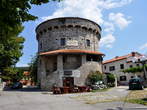
The Skofja Loka Museum is located in Loka Castle in Skofja Loka, which was first mentioned in 1215. The Skofja Loka Museum is a general museum with historical, archaeological, ethnological, cultural-historical, art and natural history collections. It was founded in 1939 and covers the area which for 830 years (973-1803) formed the Loka Estate under the authority of the Freising Bishops of Bavaria. The museum is located in the first flour, in the ground floor and in basement spaces. In the ground floor we can see Loka Estate, castles, the town, guilds, compatriots and education, furniture from Visoko, Loka's painted bourgeois pottery, Medieval art, altars from Drazgose, gallery and round tower. In the first floor we can see art gallery, black kitchen, lamps, architecture, agriculture, animal husbandry, food, transport, sieve-making, lace-making, linen-making and dyeing, small bread, artificial flowers, recent history collection, natural history collection and archaeological collection. In the basement spaces are Copies of Gothic frescoes and Gallery of Skofja Loka visual artists of the 20th century.
Other
Bohinjska Bistrica belongs to the Bohinj Municipality. It is the largest village in the Bohinj valley and the seat of the community. It is an important tourist place. Bohinjska Bistrica is situated between hills Ajdovski gradec and Dobrava and between brooks Bistrica and Belica. The village divides road from the railway station to the Lower and Upper village. Bohinjska Bistrica is a starting point for mountaineering trips to Vogel, Ratitovec, Crna prst, Komna and other. Over Upper Sorica and Sorica mountain pasture is connected with Selska valley. The road was made after the Second World War. In the village is very well known ski center Kobla. There are 3 double chair lifts and 3 drag lifts on Kobla. Here is located the Bohinj railway tunnel, which connects Gorenjska Region with Primorska Region. In Bohinjska Bistrica are railway tunnel, sports hall, open playground for tennis, football playground, elementary school, bus station, museum, restaurants, shops, private hotels, hotel, health service, local office, tourist informative centre, fire station, monument in memory of Second World War, Zois Manor with Tower Clock, First World War Military Cemetery, the Church of Saint Nicholas and other. The Aquapark Bohinj offers spoiling in the saunas, swimming pools, wellness and fitness. They have varied offer of food. In special offer they have romantic coddling for two. Next to the Aquapark Bohinj is located interesting and beautifully arranged Ceconi’s Park.
Sneznik Castle is located under the mountain Sneznik near the place Kozarisce. The romantic building is the best preserved castle in Notranjska region. The castle is built on a rock at the source of the Brezno Spring and the Obrh. In sources the Sneznik Castle was first mentioned in the year 1268 as the hunting post. The formation of the present castle goes to the year 1462. First owners were the Aquileian Patriarchs and later the owners changed several times. Before the war it was the property of the family Schönburg from the vicinity of Dresden. Sneznik Castle is a three storey building with a newer stone bridge that leads to the walls and Renaissance walls in front of the entrance. Two arched stone bridge and the outer towers are Romantic additions of the 19th century. In the castle is preserved all the original fittings, mostly from the 19th. You can feel the throb of life from the end of the 19th and beginning of the 20th century. You can feel the throb of life from the end of the 19th and beginning of the 20th century. Among the living quarters are the most interesting the room with Egyptian furniture, the dining room and a larger hall arranged into a wedding hall. The castle residents also had an improvised theatre hall and a small library. In vestibules and in all the halls you can see the numerous stuffed animals and trophies. You can also see the menu from July in the year 1906, ornamented stoves in many rooms, black dinning room, old mechanism of informing between lords of the castle and servants, Roman tombstone, castle basement, old refrigerator and other interesting things.
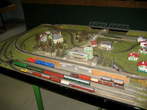
The Museum of Parenzana is located in the old centre of the Izola. If we are enough watchful, we can see the signs, which will lead us to the museum. The Museum of Parenzana was open in the year 2000. Parenzana was called the small train in that time. The museum shows the history of the narrow gauge railway Parenzana. The railway connected at the beginning of the earlier century places from Trieste to Porec that included Izola as a key station stop. The first train started in the year 1902 and the last 33 years later. It stayed in the memory of the local people because of the wonderful views from the train. It is the symbol of connecting different nations from all clases. You can see in the museum photographic material and other documents about the railway line, unique railway models and a large map of Parenzana. One of the richest collections of the train models is in the property of the Josip Mihelic, who also shows you and explains you the secret of the Parenzana. The path of Parenzana is today the footpath and cycling road. It is called The path of health and friendship.
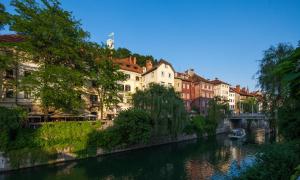
Ljubljana has been the capital city of Slovenia since 1991. It is a popular tourist destination that attracts visitors throughout the year. It was first mentioned in written sources around 1120.
Today, Ljubljana is the cultural, administrative, transport, economic, political, research, and educational center of Slovenia. Ljubljana Castle, a mighty medieval fortress, is a symbol of the capital. It stands on the edge of Castle Hill, just above medieval Ljubljana. You can reach the castle by car, take the funicular railway from Krek Square in the old town, or walk along one of the well-maintained trails. Ljubljana Castle evolved from a fortified tower with a defensive wall, even before the first mention of Ljubljana. On the hill where the castle stands, human presence has been confirmed since the late Bronze Age. Throughout its rich and varied history, Ljubljana Castle has undergone many changes and witnessed important events that influenced the development of Ljubljana and Slovenia. At the end of the 18th century, the Habsburg owners wanted to abandon it, but did not demolish it due to protests from the Carniolan provinces. The castle was purchased by Mayor Ivan Hribar on behalf of the city in 1905, and he transformed it into a cultural center. In the early 20th century, the city of Ljubljana bought the building, and many renovations began, with plans drawn up by well-known architects such as Plečnik, Mihevc, Kobe, and Ravnikar Jr. The castle's current appearance is the result of the efforts and ideas of Projective Bureau Ambienti d.o.o. from Ljubljana.
Their contributions to the renovation include the funicular railway, the Slovenian History exhibition, the Erasmus Tower, the Frederick Tower, the circular route around the castle, the lapidary and mini-theatre, the archers' tower, the castle inn, wedding halls, the bastille, the Puppet Museum, Hribar Hall, the wine cellar, terrace, and more. Today, Ljubljana Castle is an extremely attractive tourist destination and hosts many concerts, cultural events, film and theater performances, and exhibitions. Visitors can explore various parts of the castle, such as the tower, the Chapel of St. George, the permanent exhibitions on the Penitentiary and Slovenian History, Dwelling Hall, Frederick Tower, Frederick's Room, the Arts Sales Gallery, Shooter Tower, and the Pentagonal Tower. The Virtual Castle offers a 12-minute projection on the history of the castle, its architectural development, and archaeological findings.
The Castle Cafe serves typical Slovenian dishes with a modern twist, while the Castle Cafe offers a wide selection of coffees, beverages, fruit bowls, cocktails, and desserts. During the summer, the castle courtyard hosts various events, the most popular of which is the "Movie Under the Stars" screening.
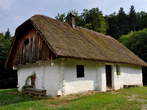
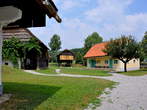
Open-air museum or Pleterje Skansen is situated in village Vratno, in the parking place for the Monastery Pleterje. Open-air museum is spread out across a lovely green field. Skansen represents a typical farmyard from this region in the 19 th century. You can see farm house and other buildings with courtyard. Buildings are in the majority in ground floor, wooden and covered with straw. However, there is also showed the living and working in the farmyard. The museum began in the year 1990 with cooperation of the Institute for protection of natural and cultural heritage of the city Novo mesto and Pleterje Monastery. The purpose was that are preserved particular parts of the architecture and with that materials and technics of construction. The first was displaced Kegljevic house and then the other buildings, which were in primary place menaced. All the houses were taken to pieces, transported and once again composed in the present location. Farmyard of the Sentjernejsko polje in Pleterje is part of the nets of the regional museums in the open-air in Slovenia. Museum includes these buildings: Kegljevic house, Banic house, double drying-frame, pigsty, lavatory, floor, garden, small bridge, fountain and drying room for fruit and flax. The central room in Kegljevic house in black kitchen, from where is the entrance to the other places. It originates from the year 1833 and it is equipped with authentic equipment. The fountain was in the past characteristic for the Sentjernej field. In the Banic house are rooms of the manager of the museum and small shop with souvenirs like pottery and ceramics. In the museum we can also see animals. They have a small horse, hens, cock, hare and spoiled piglet.
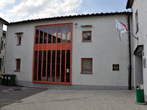
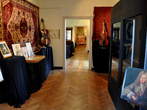
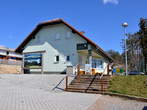
Solcava is a small, sprawling village that is increasingly developing as a tourist destination. In Solcava is the Rinka Center, which is a multi-purpose center for the sustainable development of Solcava Area. The Center brings new development opportunities and connects different activities. There is a tourist information point in the lower rooms of the center. The central part is the multipurpose hall around which is a permanent exhibition on the nature and life of Solcava. On the ground floor there is a showroom for products from this area and the surrounding area. There is also a bar, tasting room, internet, reading and children's area in this section. The first floor has offices for a rural development incubator. In the attic there are municipal premises intended for rent.
The Museum of Alpine Dairy Farming is situated in Stara Fuzina, which is a typical alpine village with preserved old farm houses. The museum was opened in 1971 and reorganized in the year 1990. The museum is arranged in the abandoned village cheese dairy, which was built in 1883 and where were producing cheese until 1967. The museum of dairy farming and cheese making is shown in four rooms.
In the first room we can see the alpine dairy hut with furnishing from the alpine pasture Zajamniki and originates from the year 1849.
In the second room we can see the original cheese dairy with large built in rennet vats and a press for forming cheese loaves. There are exhibited the original things of the interior furnishings of cheese dairies as are milk bowls, butter churns, cheese making utensils and other. In the show case we can see a large backpack with the equipment of alpine dairymen and herdsmen they took up to the monuntain pastures.
At the entrance to museum are shown a print with house signs used by farmers to identify their crockery and equipment, a cartographic presentation of the most ancient references to alpine pastures and a portrait painting of the parish priest Janez Mesar. Janez Mesar stimulated the cultural and economic revival of Bohinj.
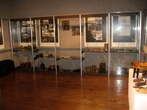
In the third room we can see photographs which show settlements and alpine dairy huts at Bohinj.
In the fourth room we can see the oldest depiction of the Triglav, an alpine herdsman of Bohinj and the alpine pasture of Velo polje. There are shown portraits of old dairymen and herdsmen, their working day, leisure, food and other. We can also see a traditional tourist event named Cow Ball of Bohinj.
 KRAJI - Slovenia
 Zgornje JezerskoTourist Farm Šenkova Domačija