Source: Public information of Slovenia,
The Surveying and Mapping Authority of the Republic of Slovenia,
State map in measure 1 : 1.000.000, 1995
www.gu.gov.si
Recommended
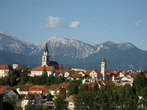
Skofja Loka lies on the confluence of the Poljanska and Selska Sora Rivers under the slope of the Skofja Loka hills. The nearest villages are Stara Loka, Crngrob, Suha and Pustal. Skofja Loka was established by Freising bishops in the year 973 and they dominated the place to the year 1803 when it was nationalized by the Austrian emperor. Skofja Loka through the history survived attacks, plagues, fires and earthquakes. The worst was in the year 1511 when the city was very damaged, but it was soon renovated by the bishop Filip. The image of the city did not change a lot from that time. Skofja Loka is the best preserved medieval town in Slovenia. Today city offers rich culinary, sporting, cultural, tourist and other offer. We can eat in the guesthouse Homan, where they have confectionery, cafe and Chinese restaurant, inn Krona, Kasca and many others. Accommodation is offered in Mini Hotel, tourist rooms Paleta, tourist farm Pri Marku and in other places. Tourist Association Skofja Loka is located in the old town centre and has many interesting ethnological souvenirs.
The Vintgar Gorge is situated in the road from the Bled over Spodnje Gorje, Podhom and the small village Vintgar. We can park car before the gorge, there is a big parking place. The Blejski Vintgar Gorge is open from the end of the April till the end of October but it depends on the weather situation. The gorge is open from eight to seven in the afternoon. It was discovered in the year 1891 by photograph Benedikt Lergetporer and Jakob Žumer, mayor of Gorje village and cartographer. For tourist visit the gorge was open in the year 1893. The paths were from that time frequently renovated. The Vintgar Gorge is 1,6 kilometres long. Through the gorge flows the wonderful greenish Radovna River with the pools, waterfalls, rapids and roaring, which is echoing over the narrow passages. The height of the slope is 250 metres. In some places is protected with the nets. The path leads us across the wooden bridges and so called Zumer gallery. Necessary is to have good sport shoes, because in some places is the path slippery and dangerous. The river beds crosses the railway line Jesenice – Most na Soci. At the end we can see the powerful Sum Waterfall, about 15 metres high, which is one of the rare Slovenian river waterfalls. Here is also the barrage for the hydroelectric station Vintgar. We can refresh and recover at the beginning of the gorge or at the waterfall Sum. In both places are small cafes. We can go back at the same way or over the Hom to Sveta Katarina, where is a historical church and wonderful view to Karavanke and Bled with surroundings. For walking and return with photographing and viewing we need about one hour and half. The Vintgar Gorge is exceptional beautiful and worth seeing. In summer months is pleasantly cool.
Triglav is the highest mountain in Slovenia and the central part of Triglav National Park. Triglav is 2864 metres high and is located in the Julian Alps. It is a symbol of Slovenia and we can see it in the Slovenian arms. The first one who climbed to the mountain in the year 1778 were Luka Korosec, Stefan Rozic, Matevz Kos and Lovrenc Willomitzer from Bohinj, where we also can see their monument. In the year 1895 was built Aljaz's Tower by Jakob Aljaz, the parish priest in Dovje. In the case of bad weather can be in the tower 5 people. Aljaz's Tower is protected as the cultural monument. Jakob Aljaz also made the Stanic shelter, which is located just above the Triglav summit. We can come to Triglav from different ways and the easiest is from Krma or Pokljuka. The time of walking is from 6 to 8 hours, depending on our condition and the way of beginning. One of the difficult climbing ways is the Triglav northern rock wall. From the summit of Mt. Triglav is a nice view to Julian Alps and other more distant peaks. In sunny weather we can also see the Adriatic sea.
Bled is by far the country’s most popular destination. Thanks to its placid fairytale lake and the island in the middle, this small town is the top choice for travelers who want to spend relaxing holidays in Slovenia.
The castle is perched 120 meters on a craggy bluff on the northern shore. The first trace of human settlement dates from the Stone Age. Bled is today a modern resort with many hotels, private apartments, car parks and various local and foreign culinary delights. It is especially renowned for the delicious “kremsnita” (cream slices), a local sweet made of custard. Bled is also famous as a rowing and boat race center. It is the starting point for numerous trips and walks in the beautiful areas surrounding Bled, such as the Pokljuka Gorge, Vintgar, the waterfall under Iglica, the Pokljuka plateaux, and the Triglav National Park. There is a path that encircles the lake which only takes an hour and one-half. You can also take a carriage by the Festival Hall for a tour around the lake.
Visitors can visit the island with a typical “pletna” boat which is steered with only one oar and accommodates about 20 persons. The church on the island is famous for its “wishing bell” manufactured in 1543. If you make a secret wish, it will come true when you ring the bell.
Other
Brezje in Gorenjska is famous as a pilgrimage place of Slovenian Cristians. Brezje is visited across all year, but the main meeting is at the festival of Maria Pomagaj in 24 th of May. Brezje are situated in outstanding beauty of Slovenian land, because they lie in Gorenjska flat country under rich woods of Karavanke, Jelovica and Pokljuka under powerful Triglav. Brezje are first mentioned in 11th century, but at least in 15th century was there modest church of saint Vid, which belonged in parish church Mošnje. In basilica of saint Vid today worship merciful image Mother of God, which was painted by Leopold Layer in the year 1814 and people name it »Marija Pomagaj«. In the year 1907 was crowned by Ljubljana's bishop Anton Bonaventura Jeglič with permission of pope Pij X.
Golica is a border mountain in Karavanke. It is situated in the height 1835 above sea level. The most proper time to visit it is from May to October, but the most beautiful is at the end of the May and in June, when it is covered with narcissuses. At that time the meadows look like as they are white like snow. The people's tale says that narcissuses got their name because of the bees. The mountain is accessible from Jesenice and from there over winding road to Planina pod Golico. In the middle of the village stands large building Dom pod Golica, where you can live a car. If you want to shorten the way you can drive higher and live the car in the village Betel, by restaurant Pri Fenc, but the parking place is smaller and full at the end of the week. In the village Betel is also a signpost, which directs us over shorter way under telpher line or longer way, but gently sloping across mountain pasture Markelj rovt. The shorter way leads us past restaurant Pri Fenc, over path across meadow. Then expect us the pine wood and later macadam road, above which is lower station of the telpher line. In the left side is more demanding way and in the right side we continue less demanding way. Before the end of the path are extensive meadows under Krvavka, which is the top above mountain hut. Koča na Golici, Hut at the mountain Golica is situated at the height 1582 above sea level. It stands on the edge of the precipice. At the hut you can take time and try their good food. It is only half an hour of sheer way to the top of the Golica mountain. There are wonderful views to Austria, Julian Alps, Triglav and Stol. The trip will take us about two hours in one way. If you have time, you can also look at the former iron mine, Savska jama.
Kranj is Slovenia's fourth largest city and the largest in Gorenjska. It is an economical, mercantile, transport, educational and cultural centre. The city is constantly expanding. New shops and apartments are being built, old buildings and streets are being renovated and the city is looking more pleasant. Kranj was developed on the flat area above the confluence of the Sava and Kokra rivers, between the foothills of the Julian Alps and the western spur of the Kamniške-Savinja Alps and Karavanke. The name “Creina” first appeared in 1600 in Briksen’s traditional documents. However, it is in the old city centre that the most important cultural and historical monuments are found. The newest parts of Kranj are made up of Huje, Klanec, Planina, Primskovo, Čirče, Struževo, Zlato polje, Stražišče, Šmarjetna gora, Labore, Orehek and Drulovka.
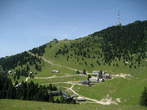
Krvavec is a mountain, which is situated in Kamnik-Savinja Alps. It belongs to Cerklje Commune in Gorenjska Region. Krvavec RTC is very well known wintersport centre, which is visited by many admirers of skiing and other sport activities. Before development of skiing and cable railway Krvavec was in summer time a mountain pasture for cattle. The first double seated ski chair lift from the valley to Gospinec started to work in the year 1958. The first downtrodden machine they got in the year 1968. The two seated chair lift Zvoh is the highest in Krvavec. The upper station is situated at a 1971 height above sea level. In the ski resort they have artificial snow. In winter time you can spend the night in the interesting Eskimo village. In the igloo hotel are available five igloos for six people and two igloos especially for couples. In additional offer are also ski school, competitory line Zeton, polygon for safe driving, polygon for beginners, infant's ribbon and merry go round. In the mountain are following accommodations and restaurants Hotel Raj Krvavec & Plaza Krvavec, Planšarija Viženčar, Penzion Tia, mountain hut in Gospinec, restaurant Dom na Krvavec, Pr' Dovarju and Brunarica Soncek. In Krvavec is the transmitter for radio and television Slovenia. It is built from ferroconcrete and 100 metres high. In summer time Krvavec is a starting point for many mountain trips. You can go just by walking paths or by the path, which will lead you after the Krvavec history.
Plansar Lake is situated in Zgornje Jezersko, against boundary, where is the branch marked with a signpost. At the lake is the restaurant Gostisce ob jezeru, where they have good local food. Around the lake goes a nice walking way. The lake has a shape of a heart. It was damed up in the memory of the big ice lake. It is the most known tourist point in the village and their symbol. We can visit it in any time of the year. In the summer we can go boating, cycling or climbing in small artificial wall. In the winter we can go to ski running or skating. It is especially romantic in the evening in the clear weather, when above us are stars and in the restaurant waits us hot tea.
The Pokljuka Gorge is one of the most beautiful gorges in Slovenia. Now is possible to visit gorge only in your own responsibility, because everywhere lies the remains of trees and branches. In spring time is also dangerous because of falling stones. Some parts of the Pokljuka Ravine are ruined. It is accessible from the road of Bled, over villages Zgornje Gorje, Krnica and also from Zatrnik. It belongs to Triglav National Park. It is 2 kilometres long and 40 metres deep. It was made from flowing water of Pokljuka glacier. The remain is today brook Ribščica, affluent of river Radovna. You can see here beautiful natural bridge, Pokljuka hole and Side gorge. Pokljuka hole is the cave hall with two entrances and three natural windows. Through the upper entrance leads the way to the Old Pokljuka. Side gorge gets in rainy days 22 metres long waterfall. Great natural bridge is situated 24 metres above ground. People call round and narrow plateau kindergarten. Through the narrowest gorge to the most beautiful kinderkarten and smaller bridge is possible to go on to the wooden bridges – galleries, but they are unfortunately destroyed now. The wooden bridges, which were built in the year 1930 by members of Tourist society of Gorje, are called The Galleries of prince Andrej. The Pokljuka Gorge is at ground and at rock walls covered with a different kind of plants, like fern, forest flower and mountain flower. In summer time the gorge offers kind refresing and special experience.
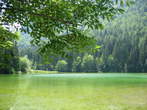
The Lake Crnava and Hotel Alma & Grad Hrib are situated in Preddvor. They are popular places for many local people. They are also starting-points for trips to the saint Jakob, Potoska gora, Kalisce, Javorjev vrh, Srednji vrh, Cemsenik, Storzic and Hudicev borst. The Preddvor manor in the middle of the village was between second world war private hotel for holidaymakers. Today is youth house. The Castle Hrib was reorganized to the restaurant and they also have weddings. Beside the castle is an old avenue planted with old trees on both sides. The old legend promises to the fresh married couple, if they walk through this promenade, 50 years of faithfulness. Beside the castle they damed up the brook Bistrica, which flows from the back of the Potoska gora and supplies the artificial lake Crnava. Hotel Alma has a terrace, from where we can enjoy in wonderful views to the mountaints and to the lake. In summer time is possible to borrow the boat, hire a tennis place and in winter time we can slide. Around the lake is a good walking path. In the Bistrica valley, beneath Zaplata, is the rock climbing. It is only half an hour walking from the Lake Crnava.
The Pericnik Waterfall is one of the most well known waterfalls in Slovenia. It consists of the Upper and Lower waterfall. The Upper waterfall is high about 16 meters and the Lower waterfall is high about 52 meters. The maximum water flow is in autumn and in spring time. In winter time both waterfalls turn into innumerable floes and icicles in delicate shades of green and blue. Near the waterfall is a mountain hut called Koca pri Pericniku. The Pericnik Waterfall was created as a result of glacial activity in the Vrata Valley. During the retreat of the glaciers, glacial material was carried away by water and deposited further down the valleys. In Vrata, deposited material formed a conglomerate rock face which runs along the left bank of the Triglavska Bistrica river, stretching up to 100 meters in width. The conglomerate cliff is best seen in the location of Pericnik Fall, dropping over its rim. The fall's course changed several times. Above the Lower Pericnik Waterfall, the Upper Pericnik Waterfall also cut its way across the rim.
The Savica Waterfall is a wonderful waterfall in Bohinj valley. The best way to come to the waterfall is from the parking place by Koca pri Savici and Home Savica. We come there from Ukanc. Passing the Home Savica we follow the information sighns to the stony bridge over the Mala (Little) Savica. Here we pay in the wooden cottage contribution for maintenance of the road and we can also buy souvenirs. After that we continue the way after the stony stairs to the small wooden hut. Time of walking is about 20 minutes. In the cottage is a view to the Savica Waterfall, Bohinj and Vogel. Waterfall Savica is most visited and very well known Slovenian waterfall. The largest stream is in spring and autumn. The waterfall had celebrated in the poems the greatest Slovenian poet, France Preseren. Waterfall Savica is two part waterfall, which is in the shape of letter A. The smaller waterfall falls in the pool 25 metres deep. The height of the bigger side is about 78 metres. The Savica brook has two parts, which are Mala (Little) Savica and Velika (Great) Savica, on which is the Savica Waterfall. We can come to the waterfall also, if we turn right by the Koca pri Savici, but from this side is not so marvellous view.
The three-border area is situated on the border with Austria, Italy and Slovenia. It is also called Pec (1510 m). It connects German, Slavonic and Romance culture. On the top they organize meetings of all three nationalities every year. The three-border area is a popular excursion point for locals and tourists. The three-border area is located near Kranjska Gora, in the direction to the border passage Ratece. We can park car in the village Ratece, where begins the forest path. The path goes through the wood, passing meadows and approximately after one hour of walking we come to the crossing, where it branches to mountain hut or to the top of the hill. The mountain hut is open every day, except on Mondays. They offer delicious local food like mushrooms, strudels, stews and other. Their speciality is bean with mushrooms. The walking path is not pretentious, it gradually goes up, it is marked and suitable in every time of the year. In winter time we can also take sledge with us. In the Austria side is the ski slope, which is appropriate for beginners and also for more experienced. From the top are in sunny weather nice views to Austria and Julian Alps.
Mountain pass Vrsic (1611 m) is the highest road passing in the Eastern Julian Alps. The pass is connecting Savska and Soska dolina or Gorenjska Region with Trenta. Vrsic is considerable part of the year closed because of the snow. The road was built by Russian prisoners between First World War. At that time Vrsic was strategically important, because it made the Austrian army the easier access to the Soska front and it has to be transportable also in the winter months. To Russian army prisoners, victims of the snowslide, reminds the Russian small chapel above the road between the Miha hut and Hut on the wood. The Russian chapel is here as a reminder and as a memory to the absurdity of the world wars. Vrsic is a starting point for mountain tours to Mojstrovka or Prisojnik and for walks in the nearness surroundings. Between walkings you can be attentive to the rocky face of the Pagan girl, which is the best seen from the belvedere hill and to the large window in the wall of the Prisank. The large window is the most known natural window in the Julian Alps and it is one of the largest natural openings in Slovenia. It is high about 80 metres and wide about 40 metres. The crockery should be opened at the breaking and so it sprang up the landslide, which was with the mouldering increasing to the present hole. In Vrsic you can strengthen with home made food in the next mountain huts: Erjavec hut (1515 m), Ticar hut (1620 m), Hut in the Wood (1226 m) and Postman hut (1725 m).
Zelenica is located in the left side of the former boundary frontier Ljubelj. You can leave car in the larger parking place under the lower station of the ski slope Zelenica. At weekends it can be crowded, so it is better if you come in the early morning hours. The ski centre Zelenica attracts many visitors, because the ski lines are good for experienced skiers and also for the ones who are just beginners. It represents the central point for the downhill ski from Vrtaca, Stol, Begunjscica and Suho rusevje. In Zelenica they also have ski school, where you can learn to ski in Alpine style or snowboarding. It is provided for refreshment and rest, because there are open two huts, Hut Vrtaca in the medium station of the ski chair lift and the mountain hut in the peak of the Zelenica. The ski slope has two ski chair lift and three ski lift. The prices for the tickets are among the lowest in the Slovenian ski slopes. Zelenica is in the summer time the starting point for numerous longer and shorter mountain trips and tours. Already in the last turning of the road, which goes to the frontier Ljubelj, there are branches to the Alpine meadow Korosica. The road to the summit of the Zelenica lasts about one hour and half. There is the Mountain hut in Zelenica, which was entirely destroyed by fire in the year 1999 and is now gradually renovated. Zelenica is the transitional post to Begunjscica (two hours and half), Vrtaca (two hours), Stol (three hours and half) and only 15 minutes to Hut by the spring of Zavrsnica. Born’s path is a path which starts to the mountain Preval in the southern part of the Begunjscica. It is the picturesque way through the stony tunnels, which was made by baron Born, so he could have the access to his hunting field. Because it is rather dark there, it is recommended that you have a lamp. At the right side of the former frontier Ljubelj goes the macadam road to the mountain pass Ljubelj, which is in the winter time also the toboggan ride. The pass is known as one of the oldest passes in the Europe, which was already used in the Roman times.
 KRAJI - Slovenia
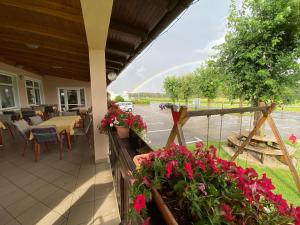 Zgornja PolskavaGostisce Golob