Source: Public information of Slovenia,
The Surveying and Mapping Authority of the Republic of Slovenia,
State map in measure 1 : 1.000.000, 1995
www.gu.gov.si
Recommended
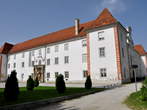
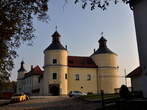
Grad Castle is located in the village Grad in Goricko. The village Grad is the biggest and the oldest settlement in Goricko. The castle is a cultural memorial and it is very important in the state level. It is protected with its surroundings and castle park as the artistry, architecture and cultural memorial. The castle is the big trump for the touristical resuscitate of the village Grad. The local people wants that the castle would be live again as the centre of the political, economical and cultural life of the region. Grad Castle is at the moment under the renovation. It is the biggest castle complex in Slovenia. It has over 365 rooms. The history of the castle goes to the year 1208. The owners were frequently different. Between the First World War and the Second World War were its owner the industrial Geza Hartner from Murska Sobota. At that time was equipped with art works and very well preserved, afterwards was till the renovation long time abandoned and left to the destruction. Inside of the castle is the fountain, which is insured with plate and cut in the vivid rock. In the time of the attacks and sieges had played the important role. In the castle yard is the focal point of the energetic forces. The vibrations of the castle radiation should heal different illnesses. The visitors can see only one part of the rooms. It is open the wedding room, smith's, potter's and wheelwright's workroom and some of the ethnological collections. It is also available the smaller souvenir shop. The biggest traditional performance is the Night of the witches.
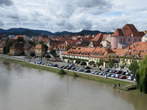
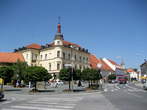
Maribor is the centre of Stajerska Region and the second largest Slovenian town. It has varied historical past. As the city was first mentioned in the year 1254. Already one year later the local people began to built two kilometres long town walls, which limited the old city kernel. The walls were additional strengthen with defensive towers, which are Judgement (Port) Tower, Celigij Tower and Water Tower. Old town centre hides many interesting buildings and places like Lent, Old Wine, the Bay of Koblar, Maribor Island, Koroska Bridge, the Church of Saint Joseph and the fountain, the Old bridge, the Castle square with the castle and museum, the Main square with Plague monument and Town Hall, the Slomsek Cathedral, Jewish synagogue and many others. Lent is the oldest part of the city by the river Drava. On the façade of the Old Vine House is the oldest vine in the world. To the Maribor Island you can go by walking path by river Drava. In the summer time are here public baths. The church of Joseph’s was once the Romance church with the largest meetings, when the small dealers sold ladles and other goods. The beginning of the city is tighty connected with the crossing of the river Drava. The present Old bridge, built between years 1906 and 1912, was one of the most beautiful bridges in Austria-Hungary. The Maribor castle is situated in the heart of the city and is surrounded with the vivid Castle square, the Freedom square and the Square of General Maister. The castle is the most beautiful and the biggest building in the city. Today is the museum of Maribor. The central room is the festival or chivalrous hall. The main square is the biggest square in Maribor. In the centre is the Plague monument. It was erected in the 17th century to thanks for the end of plague. Town hall is from the year 1515. Today is here the restaurant called Toti rotovz, the smaller exhibition room and the Puppet theatre. The Cathedral church is situated in the middle of the Slomsek Square. It was built in the first half of the 12th century as the three nave basilica in the Romanic style. It became the cathedral in the year 1859. In past hundred years was two times renovated. Today shows the Gothic form with long choir from the 14th century and central nave from the 15th century. You can go at the 57 metres high tower only by beforehand agreement. The Jewish synagogue is one of the best preserved synagogues in Europe. It can be found in the Jewish square in former Jewish quarter, which is located near the main square. First time was mentioned in the year 1427, but probably was built before. By the synagogue in past times were also the rabbi house, Talmud's school, the churchyard and by the river Drava the ritual churchyard. Today is the cultural and concert centre.
Ptuj is a picturesque town, which lies by the River Drava in the northeastern part of Slovenia. It is the oldest city in Slovenia and the centre of the Ptuj Municipality. The city was already settled in the minor stone age. The medieval old town centre is protected and is located on the foothills of the Castle hill. In the interesting old town centre we can see Drava Tower, City Hall, City Tower, Dominican monastery, Minorite Monastery, St. George Church and many other. Above the town is proudly raising the Ptuj Castle. Ptuj lies on the old wine cellars, which witnesses about the thousand years old wine culture. In the Ptuj Wine Cellar they have the oldest wine vintage from the year 1917. Ptuj belongs to the largest centres of the Mithraism in the European area. Mithraism is the religion which was brought to Ptuj by Roman soldiers and merchants. In Ptuj and nearby surroundings were discovered five temples, which are consecrated to Mitra, Persian god of light and good. The city is sown with the bridges. In the year 1997 they built on the place of the former wooden bridge the new bridge only for walkers, which got many rewards. Ptuj is the city with the largest Slovenian artificial lake. In the city are every year organized many festivals. On the right bank of the River Drava is located well known health, sports and recreational centre Terme Ptuj and the hotel Grand Hotel Primus. In this area was sometimes the prehistoric settlement Poetovia.
Other
Areh is the Alpine flat land, which is by road connected to Ruse and Maribor. It is well know tripper and tourist place in Ruse Pohorje, which attracts many visitors all over the year. In the winter there are spacious ski slopes and in the summer time will expect you fragrant woods with many mountain paths. The church of Saint Areh (Henrik) is the most famous building in this part and the place also got its name. The church is here from the end of the 15th century. It got today's appearance in the years from 1650 to 1659, when was enlarged. The biggest monument in the church is the stone tomb of St Henry. It is a relief marble slab, which shows the duke in a lying position with a crown on his head. He is dressed in a well fitting clothes with a sword in his hand. The slab was brought to this church from the tomb chapel in the monastery of Carthusian monks in Žiče. Near the church stands a small chapel, next to which is a spring and the water from it is drinking water which should have some healing properties. In Areh are situated Ruska hut, hotel Areh, hotel Zarja, hotel Bolfenk and others. Ruska hut or also Tine hut by Areh in the mountain hut, which was built in the year 1907. Before the second world war were here three huts: Ruska, Planinka and Cander hut. They were burnt down by partisans, so that the enemys could not have the shelter. Rusan people built the present hut in the place of the former Planinka hut. You can try here delicious Pohorje omelette.
Babic Mill on the river Mura is the combined floating mill. It is situated near the place called Verzej. Water mill is on the river and the milling house is on the land. Babic Mill is the monument of the Slovenian heritage and it has invaluable value, because it is the only floating mill on the river of Mura. The owner of the mill is the family Babic. It was built in the year 1890. It was floating and adjusted to the level of the water. The floating mills were typical of the plane landscapes, which were rather densely populated. The local people were producting mostly wheat and cereals. The mill was entirely built from the wood and independent from the quantity of the rainfall. The water mill was burnt down by the fire, so the family Babic built new one in the year 1925. The milling house was situated on the bank of the river Mura. Water wheel was fasten to the two wooden floating boats. Present mill is wooden, stands on the fourth columns by the bank and the water wheel is fasten to the two floating boats, which are made from iron. In the Babic Mill you can buy rye flour, white flour and cornflour and porridge made from boiled millet and other milling products.
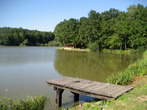
The Lake of Bukovnik is located in Goricko, southern from the village Bukovnica. It is ranging amongst the artificial lakes. It was made against flooding precaution. Lake is ecologically very sensitive region. It is part of the Goricko Nature Park. It belongs amongst the national natural values. The average depth of the lake is about 2 meters and in some places up to 5 metres. The surface of the lake is about 8 hectares. We can come to the lake from the road of Dobrovnik. The Lake of Bukovnik has a wonderful surroundings, which invites us to walks, fishing, camping, picnics, picking mushrooms and other activities. Lake is hidden between the chestnut – beech forest which in summer gives nice shadow. In the lake are growing two endangered plants. On the hill by the lake is the Chapel of St. Vid and next to it springs the healing spring of St. Vid. The Chapel of St. Vid is beside the spring trademark of the lake and the favourite destination of the visitors. The water from the spring has an energy power and healing properties. By the lake are children's playground, cottage, information board and other.
Crno jezero is situated in Pohorje on the forest ridge between Osankarica and Trije kralji. The lake was artificially made and is about 50 hectare large. It is from around 6000 BC, when the inhabitants deepen the swamp region and changed it to the lake. In the middle of the 19th century the lake was increased because of the timber which was put into the valley. The crystal clear lake is home of rare vegetable and animal species. Crno jezero is overgrown with peat moss and pinewood. The black colour gives the lake dark and thick layer of silt. The lake is protected as the forest reserve. The easiest way to come to the lake is if we start by Dom na Osankarici. Undemanding walk takes about one hour. The walking path goes also on the wooden footbridge, because of the swampy grounds. By the lake are tables and benches, so we can sit and enjoy in the nature. Crno jezero is an interesting point for a trip in every time of the year.
Radgona Castle is located in the Gornja Radgona, which lies in the right bank of the river Mura. The city is situated by the main road from the Murska Sobota to Maribor, at the border with Austria. Gornja Radgona is lying in the hill Grajski gric. It is famous by annual agricultural fair. Radgona Castle was first mentioned in the 12th century. It stands in the hill from there is a beautiful view to the surroundings. It was built by the aristocrat with Slovenian origin Radigoj. Its first owners were counts Spanheim. Through the centuries the owners were different several times. The present image the castle got in the year 1775 by the count Leopold Herberstein. The last owners were counts Chorinsky. They sold it in the year 1931 to the ban's administration. In the Radgona Castle was by the Second World War the elementary school. Now is the castle in the lease of the local man Milan Herzog. At the present he is renovating this beautiful building. In the castle is also the wedding hall. Radgona Castle was several times enlarged and rebuilt. The entrance is through the external yard. You can first visit the two-storeyed building. They were preserved the apertures for the chains of the lifting bridge. The main gates are massive and lined with sheet metal. Above the entrance you can see the blazon of the counts Herberstein. At the end of the court you can come to the other entrance. Here you can see the apertures of the lifting bridge, which means that was here the internal castle ditch. In the portal is the double blazon of Herberstein-Eggenberg. You can come to the other yard by the longer corridor, which is by all four sides arcaded. The main three-storeyed castle building is entirely under the cellar. Sometimes the castle also had its 56 metres deep fountain. The top of the castle is concluded by the small tower. Beside the castle, opposite of the first entrance, was more than 50 metres long chesnut promenade. Radgona castle will be reorganized to the representation building.
Jeruzalem is a wonderful view point, which is located in Prlekija. It borders Prekmurje and Austria on the north and Croatia on the south. Jeruzalem is a place where we can see the following: the Church of Our Lady of Sorrows, energy points, a botanical garden, guesthouse Brenholc, the Manor House Jeruzalem, wine shop, Apartments Kuhar and other.
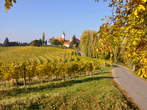
The wine road on the Jeruzalem and Ormoz hills has southern starting point in Ormoz and northern in Ljutomer. The Jeruzalem hill is planted with vines, which gives the world famous Jeruzalem wine. In the autumn time they set melodious rattles (klopotec), which are precursors of maturing grapes and they protect vineyards against birds. Jeruzalem got its name after the Our Lady of Sorrows, which was brought of that time chapel by the Knights of the Cross returning from the Holy Land. The region was given to them in the 13th century by Frederick Ptujski. After the abolishment of the order of the Knights of the Cross they changed the chapel to the eary baroque Church of Our Lady of Sorrows.
On the ridge of Jeruzalem is a Manor House Jeruzalem, the church, a park garden with rare trees, shrubs, perennial and the Tourist Information Centre Jeruzalem. In the centre visitors can get souvenirs, brochures, information, different sorts of wines and many more.
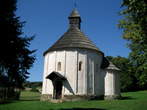
Romanic rotunda of Saint Nikolaj is located about two kilometres to the west from the Slovenian - Hungarian border. It was built in the 13th century in the valley of Kobilje brook by the medieval traffic road from the Alps to the Panonska lowland. In 19th century they added to rotunda bell tower, covered dome with tinplate and gave the Gothic wing altar to Budapest. The circular sanctuary is architecturely excellent remnant of the presumptionly larger medieval post. The interior was first time probably painted around the year 1300. Today's, partly reconstructed appearance was given after the extensive conservator and renovate work in the year 1956. The painting in the cupola was restored in the year 1980. The rotunda of Saint Nikolaj lies in the rising ground under the valley, which protects the church before the flood. The church is built from the brick. They got clay in the nearness of the church. Northwest from the rotunda is the cemetery with the tombstone of the aristocratic family Matzenau from Prosenjakovec. By rotunda is also the energetic point in which are united energies of cosmos and earth.
Slovenska Bistrica is one of the oldest towns in Slovenia. Spanheim family was in the first half of the 13th century the first known owner of this place. The original settlement developed at the juncture of roads in directions of present towns Ptuj, Maribor and Celje. Settlement goes back to antique and even in the earlier period. In the Middle Ages spread from the original Gradisce to the place of the today’s settlement. The first written document is from the year 1227, where the place is named Fvstritz - Bistrica. The name Slovenska the town got in 1565. The city rights Slovenska Bistrica got till the year 1313. During the Turkish attacks and three fires, which burnt the city every time, Slovenska Bistica suffered great damage. Most of the buildings is because of the fire from the 18th century. Among most important cultural buildings are the former Hotel Beograd, the Church of Mary and the Seven Sorrows and Minorite Cloisters, Town Hall, the former town palace, Slovenska Bistrica Castle, the Parish Church of St Bartholomew, the statue of The Immaculate from year 1771, Grassl's Tower, former school and others. In the area of natural heritage are the most important the Castle Park and chestnut promenade in Kolodvorska Street. The oldest part in Slovenska Bistica is Gradisce. Today is town administrative, cultural and economical center of the country between Haloze and Pohorje. It has about 8000 inhabitants. Along the city is developing an industrial zone with many activities. Important branches in surroundings are agriculture, fruit growing and wine growing.
On the side of an old chapel the first church was built between 1636 and 1643. A bell from 1666, the bell-tower and a part of the nave, now exhibited in the presbytery, are the only remains of the original church. In 1663 the church was taken over by the Augustinian friars from Radgona. With the help of castellan Traumansdorf from Negova they had a monastery built along the southern part of the church which was in its turn aggrandized. The church had soon become too small to accommodate the increasing number of pilgrims.
In 1735 the count Draskovic's financial help facilitated the building of a new Baroque church. In 1756 the main altar was completed and as many as six side altars three years later. The new church was consecrated in the year 1772. Both bell-towers at the church frontage and facing the square were built in years from 1779 to 1780. At the same period the church was connected to the cloister. In 1787 the monastery was closed down while the church became a parish under the patronage of deanery in Lenart. In 1811 the Augustinians abandoned the monastery and the church was taken care of by diocesan priests. In 1854 the parish passed to Franciscan friars who are still responsible for it. In 1885 the bell-tower near the main altar got its present appearance.
The church in itself is considered a Baroque masterpiece. A quite special artefact is the main altar made between 1752 and 1756. It belongs among three biggest altars in Slovenian churches. The magnificent Baroque altar is very dynamic due to statues and angel's figures, impressive pillars as well as a picture which represents the Mystery of the Holy Trinity. In 1883 and 1884 the church was painted by Oswald and Egid Bieri and Giacomo Brollo. The third altar was made by Josef Straub in 1756. A Loretto chapel was built in 1693 lean-to the first church and contains a statue of Black Mary. A column bears a famous Mary's throne and a statue of the Virgin which used to be carried around in processions. The cloister houses a church museum and a famous library with more than 3,000 precious volumes. Among the books can be found the first printed book on physics from the year 1574. Since 2003 the church has one of the biggest organs in Slovenia.
 KRAJI - Slovenia
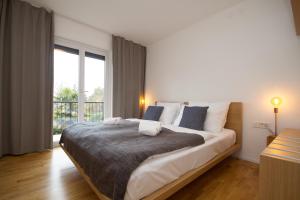 PortorožForgotten Garden Apartments Portoroz