Recommended
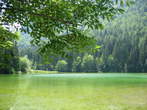
Bled is by far the country’s most popular destination. Thanks to its placid fairytale lake and the island in the middle, this small town is the top choice for travelers who want to spend relaxing holidays in Slovenia.
The castle is perched 120 meters on a craggy bluff on the northern shore. The first trace of human settlement dates from the Stone Age. Bled is today a modern resort with many hotels, private apartments, car parks and various local and foreign culinary delights. It is especially renowned for the delicious “kremsnita” (cream slices), a local sweet made of custard. Bled is also famous as a rowing and boat race center. It is the starting point for numerous trips and walks in the beautiful areas surrounding Bled, such as the Pokljuka Gorge, Vintgar, the waterfall under Iglica, the Pokljuka plateaux, and the Triglav National Park. There is a path that encircles the lake which only takes an hour and one-half. You can also take a carriage by the Festival Hall for a tour around the lake.
Visitors can visit the island with a typical “pletna” boat which is steered with only one oar and accommodates about 20 persons. The church on the island is famous for its “wishing bell” manufactured in 1543. If you make a secret wish, it will come true when you ring the bell.
Ljubljana is a vibrant and modern capital of Slovenia, one of the largest cities in Europe. It has been the capital of the Republic of Slovenia since 1991, when Slovenia became an independent state.
The symbol of Ljubljana is represented by the Ljubljana dragon, which is visible on the Dragon Bridge and in the coat of arms. Throughout its diverse history, the city has been influenced by several different cultures, since it was located at the crossroads of Romance, Germanic and Slavic nations with their customs, customs and languages. Today, Ljubljana is the cultural, geographical, economic, scientific, administrative and political center of Slovenia. The highest state bodies, the Parliament of the Republic of Slovenia, the President of the State, the Supreme and Constitutional Courts, the Government and a number of consulates and embassies operate in Ljubljana.
There are many primary and secondary schools and a university in the city. The center of cultural events are Cankarjev dom, Slovenian Philharmonic, Opera and Ballet theaters, SNG Drama, galleries and museums. National and University libraries stand out among the libraries. The biggest attractions in the old town are the Ljubljana Castle, which is a recognizable building by far, Franciscan Church, Triple Bridge, City Hall, Robb's Fountain, St. Nicholas Church and many more. Since 2006, Ljubljana Castle has been connected to the old town by a funicular. Famous Slovene architect Jože Plečnik left a great mark on urban architecture between the two wars.
The picturesque Ljubljanica River, which winds through the city, crosses many bridges, the most famous being the Dragon Bridge and the Triple Bridge. The hustle and bustle of the capital is mitigated by many smaller city parks, large green spaces such as Tivoli Park and the location between forested areas. Ljubljana also has the Ljubljana Zoo, which was founded in 1949 and the interesting Ljubljana Botanical Garden, which has been operating since 1810. By setting up a sports hall in Tivoli and a modern Stozice Center, which covers a multi-purpose sports hall and a football stadium, Ljubljana has become an internationally renowned sports center.
Outside the city center there is a larger shopping, sports, entertainment and business center - BTC City. Popular excursion points for Ljubljana residents in the city and the surrounding area are Sisenski hrib, Katarina, Tosko celo, Rasica and Smarna gora.
Piran is an old port town in Slovenian Istra. The town is bilingual, Italian and Slovenian. The Italian name for the city is Pirano. It is situated at the cape of the Piran peninsula. Piran has kept its medieval appearance with narrow streets and closely built houses, which gives it a typical Mediterranean character and a special charm.
On a hill above the houses, the church of Saint George is situated, with a high tower and an interior with many paintings and intricate artwork. Piran has been settled since before Roman times. In the years between 1909 and 1953, Piran was connected with Portorož and Lucija by an electric railway. Today, Piran is an administrative and tourist center which attracts both local and foreign visitors. Some of the most fascinating sites in Piran include the Tartini Square, the Town Palace, the Tartini Monument, the Tartini House, special stone columns for flags, the Court Palace, the May 1 Square, also known as the Old Square, and the old town wall composed of three walls from different time periods. In the city center is the Aquarium which was established in 1964. The Promenade extends along the coast and offers many restaurants with a wide variety of local foods and drinks. Church of Saint George offers an extraordinary view of the old town and the Gulf of Trieste. It was built in 1638 on the site of the Romanesque basilica and the Gothic three-nave church. A bell tower stands independently of the church. It was built in 1609 after the model of the bell tower of St. Mark in Venice. Tartini Square was originally a seafront for fishing boats. It was demolished in 1894. In the middle of the square stands a bronze monument to Giuseppe Tartini, a famous Piran countryman, composer, violinist and music educator. The Church of Our Lady of the Snows is located along Bolniska Street. It was built in 1404 and rebuilt in the baroque style in the 17th century. Opposite the church stands the church of Saint Franciscan monastery. The monastery cross corridor with a portal is a remarkable work from the 17th century.
Narrow streets in Piran make it impossible to drive cars, so there are parking places in front of the city. Piran, Seča and Portorož are connected by a regular local bus route. A newer part of the town developed outside the walls along the coast towards Portorož.
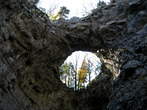
Velika Planina is the high mountain plateau located in the foothills of the Kamnik-Savinja Alps, where the best preserved herdsmen settlement in Europe is located. The fastest and most common access is by cable car from Kamniska Bistrica, where parking is located. When you arrive at the top, it is possible to us a chair lift that will convey you to the Gradisce. A little further on, one can see the wonderful view of the herdsman settlement. On the other side are the high mountain peaks of Grintavec, Skuta, Brana, Ojstrica, Planjava, Lucka Baba, and Kamnik saddle. There are about 140 cottages on the plateau, all designed by the architect Vlast Kopac. Rich alpine flora and grassy slopes, Carst sinkholes, larches and pine trees create a fairytale landscape, perfect for an all-day trip. One can rest by the Chapel of Marija Snezna, or one can choose to walk down to the cave of Vetrnica that is accessible by a circular path. There are, in fact, two caves: Mala (small) and Velika (big) Vetrnica that are connected by a natural bridge. The caves are the result of a high alpine environment where snow is still to be found even in the summer months. On the western border of the plateau (Zeleni rob) lies the picturesque natural window Luknja. There a also a few mountain huts on the plateau: Domzalski dom, Dom na Mali planini, and Domzalski dom Mountain Hut. In winter, there is a ski slope that offers good skiing and winter beauty.
Other
Ajdovscina is the economic, cultural and industrial center of the Vipava Valley. It is located at the confluence of the Hubelj and Lokavscek streams and lies at the steep edge of the Trnovo forest. Ajdovscina has a rich and rich historical past. From Roman times the walls with fourteen Castro towers have been preserved. On the ground floor of the new market building and on the small square we can see the old Roman spas. The center of the old town is Lavric Square. Nearby is the Church of Saint John the Baptist, where one of the most famous and oldest depictions of the Way of the Cross in Slovenia, which is the work of the local Anton Cebe, is located. Anton Cebej was a popular Baroque painter who also left a mark on the church with altar paintings and ceiling murals. Behind the church are the Police Sports Center and the school district. The cultural heritage of Ajdovscina is also enriched by the artistic legacy of Veno Pilon, which can be viewed in the Pilon Gallery. The museum at the old mill houses approximately 1,200 fossils of Slovenia from the Stanislav Bacar collection. The museum presents the settlement of the city from prehistory to the early Middle Ages and a chronological survey of the fortifications. Near the center of Ajdovscina is the Aeroclub Josip Krizaj Ajdovscina Sports Airport, which offers a flight school, sports and business flights and more.
Areh is the Alpine flat land, which is by road connected to Ruse and Maribor. It is well know tripper and tourist place in Ruse Pohorje, which attracts many visitors all over the year. In the winter there are spacious ski slopes and in the summer time will expect you fragrant woods with many mountain paths. The church of Saint Areh (Henrik) is the most famous building in this part and the place also got its name. The church is here from the end of the 15th century. It got today's appearance in the years from 1650 to 1659, when was enlarged. The biggest monument in the church is the stone tomb of St Henry. It is a relief marble slab, which shows the duke in a lying position with a crown on his head. He is dressed in a well fitting clothes with a sword in his hand. The slab was brought to this church from the tomb chapel in the monastery of Carthusian monks in Žiče. Near the church stands a small chapel, next to which is a spring and the water from it is drinking water which should have some healing properties. In Areh are situated Ruska hut, hotel Areh, hotel Zarja, hotel Bolfenk and others. Ruska hut or also Tine hut by Areh in the mountain hut, which was built in the year 1907. Before the second world war were here three huts: Ruska, Planinka and Cander hut. They were burnt down by partisans, so that the enemys could not have the shelter. Rusan people built the present hut in the place of the former Planinka hut. You can try here delicious Pohorje omelette.
Babic Mill on the river Mura is the combined floating mill. It is situated near the place called Verzej. Water mill is on the river and the milling house is on the land. Babic Mill is the monument of the Slovenian heritage and it has invaluable value, because it is the only floating mill on the river of Mura. The owner of the mill is the family Babic. It was built in the year 1890. It was floating and adjusted to the level of the water. The floating mills were typical of the plane landscapes, which were rather densely populated. The local people were producting mostly wheat and cereals. The mill was entirely built from the wood and independent from the quantity of the rainfall. The water mill was burnt down by the fire, so the family Babic built new one in the year 1925. The milling house was situated on the bank of the river Mura. Water wheel was fasten to the two wooden floating boats. Present mill is wooden, stands on the fourth columns by the bank and the water wheel is fasten to the two floating boats, which are made from iron. In the Babic Mill you can buy rye flour, white flour and cornflour and porridge made from boiled millet and other milling products.
Bistra is a village, which belongs to the Municipality of Vrhnika. The village with a carthusian monastery is named by karstic springs which spring here.
Bistra is well known by the monastery and later Castle Bistra, which is today a Technical Museum of Slovenia, the source of Ljubljanica River, a castle park and a forest educational path.
The beginnings of the monastery began in 1220, when duke Bernard Spanheim invited to Carniola first Carthusian monks. Bistra was one of four monastery of Carthusian monks in Slovenia. In the museum they have permanent collections from forestry, hunting, fishing, transport, woodworking, electricity, textile, agriculture, printing and other. In the collection of transport are interesting collections of cars before and after World War II., cars of Josip Broz – Tito, cars of national production, motorcycles and bicycles.
Castle park is very nice arranged and interwind with many walking paths. In this part is also a cafe and a pavilion for romantic weddings. The Forest Educational Trail is located directly above the museum of Bistra. From here is also a nice view to surroundings. It is about 2300 meters long and goes through beech and fir forest.
Brezice is the administrative, economical and cultural centre of Brezice country and surrounding hills. It is located near the confluence of Krka and Soca Rivers. As the administrative centre of Salzburg archbishops the city developed by the Castle Brezice, where is today the museum. In the beginning the castle was only the wooden stronghold. The settlement was first mentioned in the year 1322. Through the city went the trade road from Styria and Carniola. Today in Brezice are developed transport trade, industry, wholesale trade, manufacturing trade and other. The city is the school centre of Posavje Region. In the city we can see the Parish Church of St Laurence, which was built in 1782, the Church of Saint Rok, which is from the year 1740 and was built because of the severe fever, water tower, Aqueduct tower, Castle Brezice, Castle granary, old pharmacy, the house of family Del Cott, Town Hall and many other. The Aqueduct tower is visible far away and it is the most known point of the city. It was built in the year 1914 and is 46 meters high. Today is in it a coffee shop with three floors. We can also see original old instruments. The tower is a symbol of Brezice. The Castle Granary is one of the best preserved granaries in Slovenia. In the former castle stables in now the Music School Brezice. In the old pharmacy is the well known restaurant Santa Lucija. In the German house is the courthouse.
Brezje in Gorenjska is famous as a pilgrimage place of Slovenian Cristians. Brezje is visited across all year, but the main meeting is at the festival of Maria Pomagaj in 24 th of May. Brezje are situated in outstanding beauty of Slovenian land, because they lie in Gorenjska flat country under rich woods of Karavanke, Jelovica and Pokljuka under powerful Triglav. Brezje are first mentioned in 11th century, but at least in 15th century was there modest church of saint Vid, which belonged in parish church Mošnje. In basilica of saint Vid today worship merciful image Mother of God, which was painted by Leopold Layer in the year 1814 and people name it »Marija Pomagaj«. In the year 1907 was crowned by Ljubljana's bishop Anton Bonaventura Jeglič with permission of pope Pij X.
The Lake of Bukovnik is located in Goricko, southern from the village Bukovnica. It is ranging amongst the artificial lakes. It was made against flooding precaution. Lake is ecologically very sensitive region. It is part of the Goricko Nature Park. It belongs amongst the national natural values. The average depth of the lake is about 2 meters and in some places up to 5 metres. The surface of the lake is about 8 hectares. We can come to the lake from the road of Dobrovnik. The Lake of Bukovnik has a wonderful surroundings, which invites us to walks, fishing, camping, picnics, picking mushrooms and other activities. Lake is hidden between the chestnut – beech forest which in summer gives nice shadow. In the lake are growing two endangered plants. On the hill by the lake is the Chapel of St. Vid and next to it springs the healing spring of St. Vid. The Chapel of St. Vid is beside the spring trademark of the lake and the favourite destination of the visitors. The water from the spring has an energy power and healing properties. By the lake are children's playground, cottage, information board and other.
Celje is the third largest city in Slovenia. The remains of a material culture histrically bear witness to wealthy and stormy centuries. In Roman times Celje was named Claudia Celeia and it was a rather strong and wealthy town. When people migrated, Celje was ruined. In the Middle Ages it is mentioned again in the year 1125, but its its unpredictable success reached its zenith in the 14th and 15th century. At that time Celje was under the authority of the Celje Counts and it would become the head town of the extensive Central European-Balkan region. Celje received its town rights in the 1451 from Friderik II Celjski. Celje has been subject to disasters and enemies alike, such as the Turks, but it still developed into one of the most important towns of lower Štajerska with vibrant shops and trade. In 1846 railway tracks brought industrialization. Celje is now a modern city pulsing with culture and tourism, a developed social life, a market and trade centre and with beautiful surroundings. Important cultural buildings are the Celje Home, the People's Loan Bank, the Town Wall, the Water tower, Maria's Sign, the Town Hall, the Court, Saint Daniel’s Church, the National Home, the Old County and others.
Mangart is 2679 meters high mountain in Julian Alps. It is the fourth highest mountain in Slovenia. It lies on the border with Italy, so it attracts many mountaineers from both countries. We can come to Mangart Saddle from different directions: from direction Lake Predil (Trieste), from direction Trenta (Vrsic) or from direction Bovec. Branch for the road to Mangart Saddle is in the nearness of the new viaduct, which is situated on the way between border crossing Predel and Log pod Mangartom. The old military road drives us to Mangart Saddle, which lies 2055 meters above sea level and it is a starting point for hiking to Mangart. The road is steep, winding and in some parts little exposed. We drive through several tunnels. Driving in this road is a wonderful experience. On the way we can stop on resting places. It was built in the year 1983. We have to pay to use the road. During driving we have magnificent views to near and distant neighbourhood. The road is an attractive destination for cyclists and motorcyclists. It is the most beautiful mountain road in Slovenia. On the way to Mangart Saddle we can see sheep in the summer time and it becomes the paradise for lovers of sledding in the winter time.
Sticna Abbey is situated among Dolenjska hills. Among the rare working cloisters is the only one, which belongs to Cistercian monks. The Cistercian order originates to the year 1098 to Burgundija in France. It got the name by the place called Citeaux. The founders were three saints, which were the benedictine monks from the monastery in Molesme. The Sticna Abbey is today the important cultural and religious memorial. It was established from the patriarch Peregrin I. At that time it also got lots of property. The monks Cistercians have beside prayers dedicated lots of their time to charity, work and economical activity. From the 13th century they also work on pastoral soul. In the second part of the 15th century had experienced many attacks from Turks and had crisis in the 16th century. The new blossoming was in the 17th century. That lasted till its disbandment in the year 1784. The abbey was again inhabited in the year 1898. It is the oldest in the Slovenian territory. In Sticna Abbey lived well-known Slovenian medical man Simon Asic. Here were also educated Anton Tomaz Linhart and Jakob Petelin Gallus. The complex of the abbey is composed from the Romanic cloistral church – basilica, which was in baroque twice renovated, early Gothic cross – shaped corridor with frescoes and the line of the buildings with the change from the 17th and 18th century. In the first floor are museum and gallery collections from the Slovenian religious museum. Part of the garden in the walls at the southern side comprehends meditative park, which is completely distant from the other areas and ordered like the peaceful, green grass. In the shop you can buy well – known herbs of the Simon Asic and products of other monks.
Crno jezero is situated in Pohorje on the forest ridge between Osankarica and Trije kralji. The lake was artificially made and is about 50 hectare large. It is from around 6000 BC, when the inhabitants deepen the swamp region and changed it to the lake. In the middle of the 19th century the lake was increased because of the timber which was put into the valley. The crystal clear lake is home of rare vegetable and animal species. Crno jezero is overgrown with peat moss and pinewood. The black colour gives the lake dark and thick layer of silt. The lake is protected as the forest reserve. The easiest way to come to the lake is if we start by Dom na Osankarici. Undemanding walk takes about one hour. The walking path goes also on the wooden footbridge, because of the swampy grounds. By the lake are tables and benches, so we can sit and enjoy in the nature. Crno jezero is an interesting point for a trip in every time of the year.
Golica is a border mountain in Karavanke. It is situated in the height 1835 above sea level. The most proper time to visit it is from May to October, but the most beautiful is at the end of the May and in June, when it is covered with narcissuses. At that time the meadows look like as they are white like snow. The people's tale says that narcissuses got their name because of the bees. The mountain is accessible from Jesenice and from there over winding road to Planina pod Golico. In the middle of the village stands large building Dom pod Golica, where you can live a car. If you want to shorten the way you can drive higher and live the car in the village Betel, by restaurant Pri Fenc, but the parking place is smaller and full at the end of the week. In the village Betel is also a signpost, which directs us over shorter way under telpher line or longer way, but gently sloping across mountain pasture Markelj rovt. The shorter way leads us past restaurant Pri Fenc, over path across meadow. Then expect us the pine wood and later macadam road, above which is lower station of the telpher line. In the left side is more demanding way and in the right side we continue less demanding way. Before the end of the path are extensive meadows under Krvavka, which is the top above mountain hut. Koča na Golici, Hut at the mountain Golica is situated at the height 1582 above sea level. It stands on the edge of the precipice. At the hut you can take time and try their good food. It is only half an hour of sheer way to the top of the Golica mountain. There are wonderful views to Austria, Julian Alps, Triglav and Stol. The trip will take us about two hours in one way. If you have time, you can also look at the former iron mine, Savska jama.
The Lookout Tower is located on the hill Mejnik above the village Gonjace. It is a central point in Goriska brda and the belvedere which in nice weather offers wonderful views to Goriska brda, Furlanija, Carnian and Julian Alps, Trnovo forest, Dolomite, Karst, Trieste bay and Vipava Valley. The Lookout Tower is 23 meters high, has 144 steps and was built in 1961. The plans did the architect Marko Slajmer. Beside the tower is a memorial, which is dedicated to victims of World War II on the right bank of the Soca River. An interesting monument is work of the academical sculptor and painter Janez Boljka. The engraved verses are written by the writer France Bevk.
Radgona Castle is located in the Gornja Radgona, which lies in the right bank of the river Mura. The city is situated by the main road from the Murska Sobota to Maribor, at the border with Austria. Gornja Radgona is lying in the hill Grajski gric. It is famous by annual agricultural fair. Radgona Castle was first mentioned in the 12th century. It stands in the hill from there is a beautiful view to the surroundings. It was built by the aristocrat with Slovenian origin Radigoj. Its first owners were counts Spanheim. Through the centuries the owners were different several times. The present image the castle got in the year 1775 by the count Leopold Herberstein. The last owners were counts Chorinsky. They sold it in the year 1931 to the ban's administration. In the Radgona Castle was by the Second World War the elementary school. Now is the castle in the lease of the local man Milan Herzog. At the present he is renovating this beautiful building. In the castle is also the wedding hall. Radgona Castle was several times enlarged and rebuilt. The entrance is through the external yard. You can first visit the two-storeyed building. They were preserved the apertures for the chains of the lifting bridge. The main gates are massive and lined with sheet metal. Above the entrance you can see the blazon of the counts Herberstein. At the end of the court you can come to the other entrance. Here you can see the apertures of the lifting bridge, which means that was here the internal castle ditch. In the portal is the double blazon of Herberstein-Eggenberg. You can come to the other yard by the longer corridor, which is by all four sides arcaded. The main three-storeyed castle building is entirely under the cellar. Sometimes the castle also had its 56 metres deep fountain. The top of the castle is concluded by the small tower. Beside the castle, opposite of the first entrance, was more than 50 metres long chesnut promenade. Radgona castle will be reorganized to the representation building.
Castle Bizeljsko (Wissel) is situated on a rocky hill above the village Bizeljsko. Castle gives the village its characteristics appearance. In written sources is first mentioned in 1404, when the region was inhabited by knights Wissell. The castle has a medieval layout. Throughout the centuries has played an important role as a defensive post. Today the Castle Bizeljsko has Renaissance and Baroque features. Renaissance form can be seen at the entrance, when the Chapel of St. Hieronim with rich Baroque altar was added to a building. The chapel originates from 1623. The arch of the chapel and three rooms on the first floor are decorated with stuccos from the late 18 th century. Rooms were built as a series of continually spaces. A rectangular courtyard is surrounded by four two -storeyed tracts. On the west side are at the corners round towers. In the Castle Bizeljsko did not keep the valuables, because everything took away its last owners, counts Windischgraetz. Today is in the castle the wine chapel Klakocar. The family Klakocar also restored the castle rooms. We can see the rich wine cellar and the castle chapel. Beside famous wines from Bizeljsko is in the cellar preserved the autochthon sort named Rumeni plavec.
Castle Bogensperk is one of the most significant Renaissance castles in Slovenia. It was also home of the celebrated polymath Johann Weichard Valvasor. The castle was built by the Wagen family, feudal lords of the near by Lichenberg castle.
The first documented records date back to 1533 when Jorg Wentschitsch is mentioned as the castellan. The castle remained the property of the Wagen family until 1627, and had several subsequent owners before being bought by Johann Weichard Valvasor (1641-1693) in 1672. Further to the extensive library and a collection comprising 7,752 graphic prints and drawing by 15th-17th century European masters, Valvasor founded a graphics enterprise and a workshop employing a number of artists and copperplate engravers. In a twenty year period he wrote and published six works of a topographic historical nature and three with a more artists mofit. Valvasor's magnum opus and most famous work was the multi volume Glory of the Duchy of Carniola published in 1689. The publication of the Glory was a massive undertaking which got him into financial difficulties, and in 1692 he was forced to sell the castle. It then had a succession of owners, before becoming a home of Windischgraetz nobility, who were forced to relinquish the property at the end of the Second World War.
Castle Bogensperk was plundered during Second World War, and after the war it was used by the Jesuits for some years. A gradual renovation began in 1972. Today, Bogensperk houses a museum containing exhibition collections pertaining to Valvasor and his era.
Grad Castle is located in the village Grad in Goricko. The village Grad is the biggest and the oldest settlement in Goricko. The castle is a cultural memorial and it is very important in the state level. It is protected with its surroundings and castle park as the artistry, architecture and cultural memorial. The castle is the big trump for the touristical resuscitate of the village Grad. The local people wants that the castle would be live again as the centre of the political, economical and cultural life of the region. Grad Castle is at the moment under the renovation. It is the biggest castle complex in Slovenia. It has over 365 rooms. The history of the castle goes to the year 1208. The owners were frequently different. Between the First World War and the Second World War were its owner the industrial Geza Hartner from Murska Sobota. At that time was equipped with art works and very well preserved, afterwards was till the renovation long time abandoned and left to the destruction. Inside of the castle is the fountain, which is insured with plate and cut in the vivid rock. In the time of the attacks and sieges had played the important role. In the castle yard is the focal point of the energetic forces. The vibrations of the castle radiation should heal different illnesses. The visitors can see only one part of the rooms. It is open the wedding room, smith's, potter's and wheelwright's workroom and some of the ethnological collections. It is also available the smaller souvenir shop. The biggest traditional performance is the Night of the witches.
The Otocec Castle is situated near the city Novo mesto in Dolenjska. It is the only water castle in Slovenia and it stands on one of the island of the Krka River. Its image was formed through the centuries. The beginning of the castle goes back to the 13 th century, in the year 1252. The name Otocec originates from the Freizing bishops. The owners of the castle were named knights from the island – de Werde or islander. In the minddle of the 14 th century the building was widened and it got the ground plan of the letter L. The Castle Otocec was additional strengthened after the Turks devastation in the year 1471. In the second half of the 16 th century it got the renaissance appearance. In the second half of the 17 th century the castle building got among the other renovations also the arcade corridors in the ground floor and in the both floors of the southern tract. Between the Second World War the Castle Otocec was destroyed by fire from the partisans and in that time were ruined the precious archives in which was hidden some interesting stories from the rich history of this wonderful castle. After the war the castle was nationalized. Today is in the castle the Otocec Castle Hotel, which is very luxurious and a restaurant with the best culinary offer. Near the hotel, in the right side of the river Krka, is situated pleasant Camp Otocec. About 300 metres from the castle is the Sport Hotel and a motel, which is designed mainly for travellers in transit guests. We can get fun in the Sport Hotel, where they have gambling rooms. For business meetings is available congressional hall. At the weekends is possible to dance in the restaurant Tango at the sounds of the live music. The Otocec has also developed to sport centre, which offers excellent conditions for running or cycling and guests can play tennis, golf and other sports. The River Krka invites us in the upper current to rafting, under the castle you can go boating or fishing. The Hotel Otocec is the ideal place for romantic and unforgettable weddings, where guests can feel like kings. They offer arrangements like Castle wedding in Chivalric saloon, Castle wedding, Wedding in the open air, Romantic wedding in the shine of the torchs and candles, Wedding in the open air with bridesmaid and senior, Lords wedding and Wedding in the dreaming river Krka. In last years are very popular weddings in the open air under the tent in the Castle Otocec park. The park is shaped after the patterns of the English landscape style. The oldest trees are old almost hundred years and mayority was planted after the renovation of the castle in the 50 years of the 20th century.
Podsreda Castle is situated in the Kozjansko Regional Park. It lies in the northern slope Orlice. From the castle is a wonderful view to the valley Bistrica and Sotla, medieval square Podsreda and Hrvasko Zagorje. It was built in the 12th century. Many owners exchanged, but the medieval kernel of the castle remained almost undamaged through the centuries. The present image got in the 19th century. They started with its renovation in the year 1983. It belongs between most important buildings of the Romanic architecture. The castle has defensive a tower, tower with the chapel and two palatium. The bishop in Ljubljana, Tomaz Hren, consecrated the chapel to Saint Ana, Saint Filip and Jakob in the year 1612. In the castle we can see Romanic room, southern palatium, medieval kitchen with open fireplace, northern palatium, renaissance hall, castle prison, cellar rooms and galleries in the castle granaries. In the castle prison they imprisoned the resisting thralls. The northern palatium is the oldest part of the Podsreda Castle. The renaissance hall is the largest room. In the southern palatium we can see in the first floor the history of the castle, course of the renovation and building history. The Podsreda Castle is open all days in the week, except in Mondays, from 10.00 to 18.00 hour. In winter months is closed. In summer months they organize concerts, exhibitions and other activities.
Sneznik Castle is the best preserved castle in Notranjska region. It is located under the mountain Sneznik near the place Kozarisce. The castle is built on a rock at the source of the Brezno Spring and the Obrh. Below the castle is the spring dammed into a large pond. In sources the Sneznik Castle was first mentioned in the year 1268 as the hunting post. The formation of the present castle goes to the year 1462. First owners were the Aquileian Patriarchs and later the owners changed several times. Before the war it was the property of the family Schönburg from the vicinity of Dresden. Sneznik Castle is a three storey building with a newer stone bridge that leads to the walls and Renaissance walls in front of the entrance. Two arched stone bridge and the outer towers are Romantic additions of the 19th century. In the castle is preserved all the original fittings, mostly from the 19th. You can feel the throb of life from the end of the 19th and beginning of the 20th century. Among the living quarters are the most interesting the room with Egyptian furniture, the dining room and a larger hall arranged into a wedding hall. The castle residents also had an improvised theatre hall and a small library. In vestibules and in all the halls you can see the numerous stuffed animals and trophies. The surroundings have been carefully arranged into a park with riding and walking paths. East of the Sneznik Castle are farms and other additional buildings that house a small hunting museum. Sneznik Castle is a wonderful place for a romantic and unforgettable wedding. The manager of the castle is the National Museum of Slovenia.
Hrastovlje is a village in the Commune Koper. It is located in the northwestern part of the Slovenian Istra under the Karst edge (limestone region). Houses in the village are markedly mediterranean or karstic type with many portals and archs of the limestone. Lots of houses is under memorial protection and because of that the procedures of the renovations are more complicated and they impede the aesthetic development of the place. Hrastovlje is most known by the Romanic Church of the holy trinity from the beginning of the 12 century, which is situated on the rising ground above the village. In the 16 th century they surrounded it with the high defensive, camping walls, which are still yet very well preserved, but they cover the view to the building. Outwards the church is simple and covered with stony plates as is the habit in Mediterranean. Most interesting and precious is its interior with three ship's architecture. The Church of the holy trinity became international known in the year 1951, when the frescoes of the Dead dance were uncovered by the patriotic sculptor Joze Pohlen. The church was ranged to the list of the world's cultural heritage. South of the village stands the stony statue called Savrinka by Pohlen, which was once the name for the women from Trieste who carried on heads their rustic harvest.
Castle Gewerkenegg is located on a small hill in the old town centre of Idrija. The renaissance castle was built in the 16th century for the mine management and the storage of mercury. Castle Gewerkenegg was also a centre of trade with mercury in Idrija. The castle was through the centuries rearranged and upgraded. Courtyard facades were painted in the other half of the 18th century with frescoes, which are now restored and reconstructed. Today is in the castle seat of the Municipal Museum Idrija, which was proclaimed for the best European museum of engineering and industrial heritage in the year 1997. The museum was established in the year 1953. In its care are cultural, historical monuments, technical monuments, natural remarkablenesses and preserved buildings from the Second World War. In the museum they have the permanent exhibition named Five centuries of the mercury mine and the town of Idrija. Photographs of Idrija, exhibited documents, maps and original objects illustrate mining history, the development of floating timber and forestry. In the geological collection are presented minerals, mercury ores, rocks and fossils. In the castle are held many cultural events in the summer time, which attract many domestic and foreign visitors.
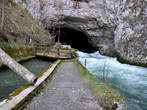
The River Krka springs in the Krka Cave in the 268 height above see level and then it flows into the river Sava at Brezice. To the spring you can come after the pleasant walk throug the village Gradicek. The Karst spring is under the rock, where is the the entrance to the original Krka Cave. The examination of the cave is possible only with the tourist guide, which will accept you before entering to the cave. The cave is open from April to October. For the public was opened by the Tourist association Krka in the year 1996. The Krka Cave is 200 metres long and wide about 30 metres. The chamber is concluded with the 30 metres long siphon lake. The siphon goes after the 210 metres into the spacious, 60 metres long final cave. The common length of the researched tunnels is about 490 metres. It is the horizontal cave, from which vomits the underworld water only by overflowing. The floors are covered with large boulders and rubble, which are in the eastern part piled up all to the stamp. In the cave is the constant inhabitant the human fish. The Krka Cave was sometimes the shelter for the local people. About that wrote Josip Jurcic in his novel Jurij Kozjak. The first one, who put down the visit of the Krka Cave, was Janez Vajkard Valvasor in the second part of the 17th century. The first plan of the Krka Cave was made in the year 1887 by V. Hrasky. The main entrance was wide open in the year 1937, so that they could made possible the faster outflow of the underworld water and so save the problem with the floods in Radenska field. The cave divers have only in the year 1995 swam across the labyrinth of the underwater tunnels and broke through the final Vrhoved chamber. River Krka is the longest and completely Slovenian river. It has 94 kilometres of surface stream and rainy – snowy regime with the highest water in autumn and the lowest in summer. It’s river basin is extended over the 2284 square kilometres. Krka River is the only tufa producing river. Its water is saturated with the limestone, which from the village Marinca to Otocec eliminates like tufa and forms the characteristic barriers and thresholds. In the past there were numerous mills and saws, but today is prevailing more the recreative and tourist meaning of the river. Particulary is attractive for kayaking and fishing. Because of the pollution waters in the Karst hinterland is the Krka River already by the source ranged to the second quality rank. Its quality goes worse in the middle and lower stream, where is in the second and third rank. Above the village Gradicek is located the Poltarica Cave, the neighbour of the Krka Cave, which was uncovered in the year 2003. The cave is above the source of Poltarica, the first afflux of the Krka River. It is ornamented with many stalactites, curtains, tubes, five siphon lakes, human fishes and rapids. Poltarica Cave is not open for tourists, but you can see it in the attendance of the cavers.
The most beautiful World War I monument is a wooden shrine that rises high above the Tolminka riverbed – the memorial church of the Holy Spirit in Javorca. The church in the walley of Polog was built by Austrian soldiers in 1916, to the design of the Austrian architect Remgius Geyling.
The outside of the church is decorated with stylised coats-of-arms of all the monarchies and lands of Austria-Hungary. The interior is classic art nouveau, adorned with colourful decorations. The idea of a memorial church is communicated through engraved oak plaques bearing the names of all the Austro-Hungarian soldiers who lost their lives on the hills of Vodil vrh, Mrzli vrh, Rdeči rob and Sleme.
Owing to its predominantly wooden construction, prone to rapid decay, and severe weather conditions, the church has undergone several renovations, the most recent one being in 2005. The church in Javorca was proclaimed a historical monument with the 1990 Order declaring natural and historical monuments and natural attractions in the Municipality of Tolmin.
Jeruzalem is a wonderful view point, which is located in Prlekija. It borders Prekmurje and Austria on the north and Croatia on the south. Jeruzalem is a place where we can see the following: the Church of Our Lady of Sorrows, energy points, a botanical garden, guesthouse Brenholc, the Manor House Jeruzalem, wine shop, Apartments Kuhar and other.
The wine road on the Jeruzalem and Ormoz hills has southern starting point in Ormoz and northern in Ljutomer. The Jeruzalem hill is planted with vines, which gives the world famous Jeruzalem wine. In the autumn time they set melodious rattles (klopotec), which are precursors of maturing grapes and they protect vineyards against birds. Jeruzalem got its name after the Our Lady of Sorrows, which was brought of that time chapel by the Knights of the Cross returning from the Holy Land. The region was given to them in the 13th century by Frederick Ptujski. After the abolishment of the order of the Knights of the Cross they changed the chapel to the eary baroque Church of Our Lady of Sorrows.
On the ridge of Jeruzalem is a Manor House Jeruzalem, the church, a park garden with rare trees, shrubs, perennial and the Tourist Information Centre Jeruzalem. In the centre visitors can get souvenirs, brochures, information, different sorts of wines and many more.
Kamnik is one of the oldest towns in Slovenia. It is an administrative, cultural, tourist and industrial centre on the southern slopes of the Kamnik Alps. It has a partially preserved medieval core to the city. It was the most influential town of the Carniola country in the 12th century, however, it was comquered by Ljubljana in 13th century. Through centuries there were home of smithery, nailery, leathery and furriery. Two raised areas above the city remind us of the town’s older periods. Mali grad (Small castle) is only a few meters above the town’s core. The Andeski Counts built the castle in the 12th century. Today it is only possible to see the castle walls. In a better condition is the castle’s chapel with its Roman porch on two levels – the upper for the gentry and the lower for servents. Stari grad (Old castle) is on a steep hill 180 meters above the city. There are ruins here of the castle from the 13th century. Today there is restaurant near the ruins with an access road. In the city is the cemetery of the old city walls with its defence tower. On the slopes of the Tunjice hills above old city core you can find the Renaissance Mansion (castle) Zaprice from the 16th century. Today there is a museum there. In the city you can find a Franciscan monastery dating from the 15th century with an interesting preserved library. The Constitutive part of Kamnik is also Mekinje with its monastery dating from the 14th century. The main street in Kamnik is Sutna. At the Agency for tourism and business you can book a visit to Kamnik and its environs but you need to make a request in advance.
Koper is the main center of the Koper Municipality. The city has two official languages, the Slovenian and the Italian. Koper has an architecturally very rich old city center. It was built on a rocky island which the Romans called Insula Capraria (goat’s island).
Koper saw great economic and cultural blossoming in the years from 1279 to 1797, when it was under the rule of the Venetian Republic. The remains of the Venetian period are visible in the city architecture which has preserved its medieval appearance in spite of the modern interventions. Because of that, Koper was included in the association of the medieval cities. At the beginning, Koper was an island, surrounded with walls and connected with the land by a wooden bridge. It was safeguarded by a powerful fortress, the Lion’s castle. Around the city there were extensive salt works. Koper began to change due to the economic and social development from the 19th century till the First World War, under the regime of the Napoleon French Empire and the Hapsburg Monarchy. By 1912, the salt works were reduced and finally abandoned. Koper slowly started to lose its character of an island and under the Kingdom of Italy it became an integral part of the mainland.
The period after the Second World War brought the final revision of borders, when Koper became a part of Yugoslavia and experienced architectural interventions in the city center and its surroundings. On the outskirts of the city the international cargo port was developed, Luka Koper. The harbour maintains its maritime connections with all parts of the world.
The Bozidar Jakac Gallery is situated in Kostanjevica na Krki. It was established in the year 1974. Most of the pictures are from expressionists. The first starts of the gallery goes back to the year 1956, when was in the places of the elementary school established The Gorjup Gallery. The Gallery Bozidar Jakac is situated in the rooms of the former Cistercian monastery, which the local people also call it Kloster or Kostanjevica Castle. Before the entrance to the gallery is beautiful lime avenue, which in summer times gives nice shadow. The Church of the Virgin Mary and the cloisters are the oldest part of the monastery. The church originates from the middle of the 13th century. In the 18th century was renovated to the baroque style. The wall above the main entrance was painted in the year 1737 by Franc Jelovsek. In the 19th century the monastery was condemned to dilapidation, but the worst part was, when the monastery was burnt down between the Second World War. Furthermore, in the year 1956 was destroyed the church tower. The renovation began soon after the war, under the direction of the France Stele. It is still continuing today, under the cover of the group of the institution for the protection of the natural and cultural heritage. In the gallery are permanent exhibitions of Joze Gorjup, Tone Kralj and Bozidar Jakac. Gradually, with renovation of the rooms, the gallery has the exhibitions of France Kralj, Zoran Didek, France Gorse and Janez Boljka. Specially interesting is the art collection of old masters from the nearby Pleterje monastery. The castle grounds are used to exhibit over 100 large wooden sculptures from Forma Viva, an international exhibition once held in several places in Slovenia from 1961 to 1988 whereby sculptors worked with materials assosiated with the area. Here it was oak, in Portorož stone, iron at Ravne in Koroška and shudder concrete in Maribor. In the future Forma Viva will be organized every two years. Lamut Art Salon is dislocation of the gallery and is situated in the city centre. The painter and graphic artist Vladimir Lamut completed a large portion of his work here in Kostanjevica.
Kranj is Slovenia's fourth largest city and the largest in Gorenjska. It is an economical, mercantile, transport, educational and cultural centre. The city is constantly expanding. New shops and apartments are being built, old buildings and streets are being renovated and the city is looking more pleasant. Kranj was developed on the flat area above the confluence of the Sava and Kokra rivers, between the foothills of the Julian Alps and the western spur of the Kamniške-Savinja Alps and Karavanke. The name “Creina” first appeared in 1600 in Briksen’s traditional documents. However, it is in the old city centre that the most important cultural and historical monuments are found. The newest parts of Kranj are made up of Huje, Klanec, Planina, Primskovo, Čirče, Struževo, Zlato polje, Stražišče, Šmarjetna gora, Labore, Orehek and Drulovka.
Krsko is the central and commune town of Posavje region. The city has developed on both banks of the longest Slovenian river Sava. It also has varied historical past. The old town centre was renovated. New part of the town is situated in Videm. This part was arranged at the same time with the finishing of the nuclear power station Krsko and the largest paper factory in Slovenia. The city is the cultural centre of its region. Major important buildings are the church of Saint John Evangelist, church of the Holy Spirit, Culture House Krsko, Valvasor's Library near city park, the Gallery Krsko, Capuchin monastery with the church, Hall in the Park and before it you can see two half-length bust of the most important citizens of the city: Jurij Dalmatin and Adam Bohoric, who had strongly marked the time of Protestantism. In Krsko lived Janez Vajkard Valvazor, who wrote the famous book The Glory of the Duchy of Carniola (Slava vojvodine Kranjske), published 1689. You can see his monument and the house. The famous residents are also Martin Hocevar, benefactor and merchant and Janez Mencinger, writer and lawyer.
Krvavec is a mountain, which is situated in Kamnik-Savinja Alps. It belongs to Cerklje Commune in Gorenjska Region. Krvavec RTC is very well known wintersport centre, which is visited by many admirers of skiing and other sport activities. Before development of skiing and cable railway Krvavec was in summer time a mountain pasture for cattle. The first double seated ski chair lift from the valley to Gospinec started to work in the year 1958. The first downtrodden machine they got in the year 1968. The two seated chair lift Zvoh is the highest in Krvavec. The upper station is situated at a 1971 height above sea level. In the ski resort they have artificial snow. In winter time you can spend the night in the interesting Eskimo village. In the igloo hotel are available five igloos for six people and two igloos especially for couples. In additional offer are also ski school, competitory line Zeton, polygon for safe driving, polygon for beginners, infant's ribbon and merry go round. In the mountain are following accommodations and restaurants Hotel Raj Krvavec & Plaza Krvavec, Planšarija Viženčar, Penzion Tia, mountain hut in Gospinec, restaurant Dom na Krvavec, Pr' Dovarju and Brunarica Soncek. In Krvavec is the transmitter for radio and television Slovenia. It is built from ferroconcrete and 100 metres high. In summer time Krvavec is a starting point for many mountain trips. You can go just by walking paths or by the path, which will lead you after the Krvavec history.
Laško is situated only 10 kilometres from Celje in the valley Savinja. Laško is the city with rich cultural and historical heritage, natural surroundings and vivid cultural, sporting and tourist pulse. Important buildings are church saint Martin, castle Tabor and Šmihel. Laško lies 228 heigh above sea level. River Savinja divides Laško to left and right bank. In the left side is hill Hum, on right side is Šmihel. Old city is squeezed under Hum. All newer buildings are resembling situated in both banks. Laško is like square first mentioned in the year 1227, but town rights got in the year 1927. The most famous is by brewing industry and entertainment Beer-flowers, which is the biggest tourist amusement in Slovenia and it is visited in five days from about 120.000 people. The highest point is the most crazy Saturday night with magnificent fireworks. Brewing in Laško can be traced back over 170 years. During a walk through the town a visitor might discover all old and beautiful places the town prides in. There is very little flatland in the town, just for the river, road and railway. If you need some relaxation you can visit Laško Thermal Spa Resort, one of the most important spas and tourist centres in Slovenia. They are especially adapted to those who have movement difficulties and those who wish to avoid such problems.
Lipica is situated in the wonderful Karst environment, close to the Italian border. It was founded in the year 1580 and it is the centre of the all Lipizzan hourses (400 lipizzan hourses today in Lipica). The Stud-farm of Lipica is one of the most beautiful cultural and historical monuments of the Republic of Slovenia. Here, the tradition of selection and breeding of pure Lipizzan hourses has been alive for over than four hundred years. After the Second World War, Lipica succeded to develop its own Classical Riding School and presented it in the presentations and equestrian events all over the world. Today is Lipica a recreational and sports centre of a worldwide reputation, where visitors can spend wonderful moments of relaxation. In the complex of Lipica is to the visitor available the Hotel Maestoso, Klub Hotel Lipica, tennis courts, golf course, mini golf, swimming pool, sauna, fitness centre, souvenir shop, museum collection of old carriages and many other. We can see one of the oldest stud farm in the world, the presentation of the Classical Riding School, racetrack, the collection of the art work in the Avgust-Cernigoj Gallery, the Church of the Saint Anthony of Padua and the Valley Our Lady of Lourdes. We can go to the riding school, golf and to the interesting drive with the carriage. In Lipica they also have a wedding hall for romantic weddings.
Logar Valley is located in the centre of the Kamnik-Savinja Alps. It is considered for one of the moste beautiful glacial valleys in Europe. Logar Valley was created in the last Ice Age. The Logarska dolina Valley was already inhabited in the 13th century, but the road was built only in 1930. Logar Valley is 7 km long and it is divided into three parts, which are lower grassy Log, middle woody Plest and upper part Kot. Above Kot raises the glacial basin Okreselj. The Logarska dolina Walking Trail is a natural and ethnographic trail, which has many information boards. Natural attractions in the Logar Valley are the Rinka Waterfall, the Palenk Waterfall, the Rastovski skok falls, Logar's Linden, Plesnik's elm, the Okreselj basin, the second source of the Savinja river and other. The Rinka Waterfall is 90-metre high, it is the highest single and unbroken waterfall in Slovenia. Logar's Linden stands about 300 metres from the Logar farmstead on the left side of the road and it is a symbol view of the Logar Valley. Cultural attractions in the Logar Valley are the Podbreznik chapel, the Chapel of Christ the King, a lumberjack's hut, a spiritual retreat known as the Logar Sister's Hotel and other. The Logar Valley is a starting point for many hiking tours to the peaks of the Alps. Because of the many natural beauties the Logar Valley was proclaimed as a regional park in 1987. From the Logar Valley we can visit the neighbourhood glacier valleys, which are named Matkov and Robanov kot.
Maribor is the centre of Stajerska Region and the second largest Slovenian town. It has varied historical past. As the city was first mentioned in the year 1254. Already one year later the local people began to built two kilometres long town walls, which limited the old city kernel. The walls were additional strengthen with defensive towers, which are Judgement (Port) Tower, Celigij Tower and Water Tower. Old town centre hides many interesting buildings and places like Lent, Old Wine, the Bay of Koblar, Maribor Island, Koroska Bridge, the Church of Saint Joseph and the fountain, the Old bridge, the Castle square with the castle and museum, the Main square with Plague monument and Town Hall, the Slomsek Cathedral, Jewish synagogue and many others. Lent is the oldest part of the city by the river Drava. On the façade of the Old Vine House is the oldest vine in the world. To the Maribor Island you can go by walking path by river Drava. In the summer time are here public baths. The church of Joseph’s was once the Romance church with the largest meetings, when the small dealers sold ladles and other goods. The beginning of the city is tighty connected with the crossing of the river Drava. The present Old bridge, built between years 1906 and 1912, was one of the most beautiful bridges in Austria-Hungary. The Maribor castle is situated in the heart of the city and is surrounded with the vivid Castle square, the Freedom square and the Square of General Maister. The castle is the most beautiful and the biggest building in the city. Today is the museum of Maribor. The central room is the festival or chivalrous hall. The main square is the biggest square in Maribor. In the centre is the Plague monument. It was erected in the 17th century to thanks for the end of plague. Town hall is from the year 1515. Today is here the restaurant called Toti rotovz, the smaller exhibition room and the Puppet theatre. The Cathedral church is situated in the middle of the Slomsek Square. It was built in the first half of the 12th century as the three nave basilica in the Romanic style. It became the cathedral in the year 1859. In past hundred years was two times renovated. Today shows the Gothic form with long choir from the 14th century and central nave from the 15th century. You can go at the 57 metres high tower only by beforehand agreement. The Jewish synagogue is one of the best preserved synagogues in Europe. It can be found in the Jewish square in former Jewish quarter, which is located near the main square. First time was mentioned in the year 1427, but probably was built before. By the synagogue in past times were also the rabbi house, Talmud's school, the churchyard and by the river Drava the ritual churchyard. Today is the cultural and concert centre.
Menina planina is the spacious and wooden plateau. It extends over 10 kilometres by length and 5 kilometres by width. The northern part is higher and is hanging to the south. The height is between 1200 and 1500 metres. Menina planina is part of the Kamnik-Savinjske Alps. It got the name by monks from the upper castle cloister, which part was in the past. Vivodnik (1508 metres) is the highest top of the plateau and is located about 15 minutes walking from the Hut in Menina planina. In the past Menina planina was the second largest chalet region in Kamnik mountains, straight away for Velika planina. Today is vivid only the Biba planina. During the walk you can see flocks of horses, which lazy lie in the meadow or go curiously after you. Present are also the flocks of sheeps and cows, which can stand right in the middle of the path and don't want to go away. The path is rolling and full of small lakes. You can also see small chapels in which you can ring and think of some wish which may realize. At the top will expect you the spacious view and much space for sitting by the Hut in Menina planina, good food and playground for children.
Plansar Lake is situated in Zgornje Jezersko, against boundary, where is the branch marked with a signpost. At the lake is the restaurant Gostisce ob jezeru, where they have good local food. Around the lake goes a nice walking way. The lake has a shape of a heart. It was damed up in the memory of the big ice lake. It is the most known tourist point in the village and their symbol. We can visit it in any time of the year. In the summer we can go boating, cycling or climbing in small artificial wall. In the winter we can go to ski running or skating. It is especially romantic in the evening in the clear weather, when above us are stars and in the restaurant waits us hot tea.
The Pokljuka Gorge is one of the most beautiful gorges in Slovenia. Now is possible to visit gorge only in your own responsibility, because everywhere lies the remains of trees and branches. In spring time is also dangerous because of falling stones. Some parts of the Pokljuka Ravine are ruined. It is accessible from the road of Bled, over villages Zgornje Gorje, Krnica and also from Zatrnik. It belongs to Triglav National Park. It is 2 kilometres long and 40 metres deep. It was made from flowing water of Pokljuka glacier. The remain is today brook Ribščica, affluent of river Radovna. You can see here beautiful natural bridge, Pokljuka hole and Side gorge. Pokljuka hole is the cave hall with two entrances and three natural windows. Through the upper entrance leads the way to the Old Pokljuka. Side gorge gets in rainy days 22 metres long waterfall. Great natural bridge is situated 24 metres above ground. People call round and narrow plateau kindergarten. Through the narrowest gorge to the most beautiful kinderkarten and smaller bridge is possible to go on to the wooden bridges – galleries, but they are unfortunately destroyed now. The wooden bridges, which were built in the year 1930 by members of Tourist society of Gorje, are called The Galleries of prince Andrej. The Pokljuka Gorge is at ground and at rock walls covered with a different kind of plants, like fern, forest flower and mountain flower. In summer time the gorge offers kind refresing and special experience.
Polhov Gradec is a village, which belongs to the Dobrova – Polhov Gradec Municipality. It lies in the shelter of Polhograjska Gora and Old Castle or Calvary. Most famous sights are Polhov Gradec Mansion and the Church of the Birth of Mary, which give the village the picturesque image. In the Polhov Gradec Mansion is a local museum and there are places for romantic weddings, which are also organized in the Mansion Park. In the nearness of the mansion is a Home of Beekepers, where we can buy honey and different products from it. The Church of the Birth of Mary was built in the baroque style. Polhov Gradec was settled already in the Roman times and the most beautiful objects from that time are bronze jug and Celtic fibula, which can be seen in the museum. The most prominent villager was count Rihard Ursini Blagaj, who was also the first mayor in Polhov Gradec. In the old village centre are the most interesting houses Sever house with the preserved black kitchen, Ostetar house, house pri Peku, Faci house and others, which preserved signs from the past. We can strengthen and relax in the inn Gostilna pri Pratkarju or in the inn Pograjski dom. The surrounding offers lots of possibilities for shorter and longer trips. We can go by the Path of Count Blagaj, which begins by the complex of Polhov Gradec Mansion, to the Calvary, to Polhograjska gora – Lovrenc (824 m) and other.
Potocka Zijalka Cave is situated by the path from the mountain village Podolseva to the top of the Olseva mountain. Olseva is about 5 km long rocky ridge, which is the last part of the southern range of Karavanke. On the ridge goes the old regional frontier between Styria and Carinthia. Potocka Zijalka Cave is 115 metres long and from 20 to 40 metres wide karst cave, which was in 1928 discovered by Srecko Brodar. In the Stone Age was in the cave the hunting post. The place is very important paleontological and archaeological site. In the cave they dug up the skeletons and remains of 40 animal species, many of them were skeletons of cave bears. In addition, they found also found scrapers, stone milling tools, fireplaces, about 120 species of bone points and other. Spikes are very different in length, but are similar in form. Among these finds is the most prominent the oldest European needle. From the Potocka Zijalka Cave alos originates the whistle. Finds can be seen in the regional museum in Celje and partly in the exhibition in the restaurant First, which is situated before the Logar Valley. Potocka Zijalka Cave si famous by famous finds from the Stone Age among experts all over the world.
The Lake Crnava and Hotel Alma & Grad Hrib are situated in Preddvor. They are popular places for many local people. They are also starting-points for trips to the saint Jakob, Potoska gora, Kalisce, Javorjev vrh, Srednji vrh, Cemsenik, Storzic and Hudicev borst. The Preddvor manor in the middle of the village was between second world war private hotel for holidaymakers. Today is youth house. The Castle Hrib was reorganized to the restaurant and they also have weddings. Beside the castle is an old avenue planted with old trees on both sides. The old legend promises to the fresh married couple, if they walk through this promenade, 50 years of faithfulness. Beside the castle they damed up the brook Bistrica, which flows from the back of the Potoska gora and supplies the artificial lake Crnava. Hotel Alma has a terrace, from where we can enjoy in wonderful views to the mountaints and to the lake. In summer time is possible to borrow the boat, hire a tennis place and in winter time we can slide. Around the lake is a good walking path. In the Bistrica valley, beneath Zaplata, is the rock climbing. It is only half an hour walking from the Lake Crnava.
The Predjama Castle is located under the overhanging rock in the region Podgora, which is only 9 kilometres from Postojna, beside the village of Predjama. It is also called eagle nest of the robbery knight Erazem Predjamski, about who exists lots of legends. The Predjama Castle is carved in the vivid rock. It was existing already in the 13th century, probably sooner. It was managed by Jamski, which belonged under the Oglej property. After Jamski the castle was under management of the Adam Purgstaller and from the year 1567 were in it the family Kobenzl, who also provided for the renovation. The last aristocratic owners were counts Windischgrätzi from the year 1846 to 1945, which also changed the external image of the castle. The parts of the castle are different by style and by the time of the origin. The constructors used the advantages of the cave and with that they preserved the non conquery of the primary castle. The cave under the Predjama Castle is ramified with more parts with the several entrances. The most famous is the entrance through the Horse stable in which they discovered the traces of the minor stony and copper age and also from the Roman times. Today is in the castle museum, which is showing the medieval life of the knights. Amongst the interesting things are also residence rooms, chapel and prisons, some parts of the arms, oil paintings and Pieta from the year 1420. Every year is organized here the famous Erazem knight tournament, which attracts many visitors. The performance conjures up the former life in and beside the castle.
Ptuj is a picturesque town, which lies by the River Drava in the northeastern part of Slovenia. It is the oldest city in Slovenia and the centre of the Ptuj Municipality. The city was already settled in the minor stone age. The medieval old town centre is protected and is located on the foothills of the Castle hill. In the interesting old town centre we can see Drava Tower, City Hall, City Tower, Dominican monastery, Minorite Monastery, St. George Church and many other. Above the town is proudly raising the Ptuj Castle. Ptuj lies on the old wine cellars, which witnesses about the thousand years old wine culture. In the Ptuj Wine Cellar they have the oldest wine vintage from the year 1917. Ptuj belongs to the largest centres of the Mithraism in the European area. Mithraism is the religion which was brought to Ptuj by Roman soldiers and merchants. In Ptuj and nearby surroundings were discovered five temples, which are consecrated to Mitra, Persian god of light and good. The city is sown with the bridges. In the year 1997 they built on the place of the former wooden bridge the new bridge only for walkers, which got many rewards. Ptuj is the city with the largest Slovenian artificial lake. In the city are every year organized many festivals. On the right bank of the River Drava is located well known health, sports and recreational centre Terme Ptuj and the hotel Grand Hotel Primus. In this area was sometimes the prehistoric settlement Poetovia.
Rakov Skocjan is situated between Planinsko and Cerknica field. Skocjan was first mentioned in the 15th century. It got the name after St. Kancijan Church. In the book The Glory of the Duchy of Carniola from the year 1689 we trace the first noted description of the Rak valley. After the second world war, when the territory was still under Italy, they built barracks and circular road and made plans for the caves. In Rakov Skocjan flows underground stream Rak, which is the precursor of the river Ljubljanica. It is the karst valley, which was made when the roof of the underworld tunnel was destroyed. From the former arch they stayed only the Great natural bridge and Little natural bridge. Rakov Skocjan is 6 kilometres long and is the natural pearl of the Notranjska Region. From the year 1949 is protected as the landscape park. After the valley goes marked circular naturalistic way, where can be seen the most important natural and cultural remarkableness. The valley has its logical beginning in the affluent, east side with the Little natural bridge, where the brook Rak springs from the Zelske jame Caves. There also begins the naturalistic teaching path. After the visit of the sinks leads way by the right bank of the brook, opposite of the hotel crosses the wooden footbridge and continues it in the left side of the riverbed to the Great natural bridge and sinkhole Tkalca Cave. Afterwards the path goes up to the ruins of the St. Kancijan Church, where it ends. It is 3 kilometres long.
Rogla is located on Pohorje, about 15 km from the village of Zrece, which is known mainly for Terme Zrece. Rogla is a natural climatic health resort and recreation center. Lovrenc Lakes, Klopni vrh, Lookout tower, Osankarica, Sumik and others are available for hiking enthusiasts.
They also have marked bike paths. In winter, Rogla turns into one of the most popular and visited ski resorts. Skiing pleasures are ensured by modern snowmaking systems from late autumn to early spring. There are 11 ski lifts, 2 chairlifts and kilometers of groomed trails for cross-country skiers on about 100 ha of groomed ski slopes. They offer storage, rental and service of ski equipment. From Thursday to Sunday, night skiing is possible at the Jasa and Košuta ski resorts. As part of the School of Snow Sports, Intersport Company organizes beginner and advanced skiing courses. In the Fun park Rogla there is a polygon for free style skiers and snowboarders. In Rogla, accommodation is possible in the Hotel Planja, Hotel Natura, bungalows, apartments, the Jelka Youth Hostel or in the Koca na Pesku Mountain Hut.
Hotel Planja offers guests a wellness center, a large multipurpose hall, seminar rooms, a children's corner, an aperitif bar, a gallery, an internet corner, an information point, a souvenir shop and a modern medico center with a pulmonology clinic. The wellness center has an indoor pool, whirlpool, saunas, children’s pool, massages and baths.
The Secovlje Salt - pans are one of the rare saltpans, where the salt is still produced in compliance with several centuries old procedures. They are extending at the mouth of a river Dragonja in Secovlje at about 650 ha of surface. In 2001, the Government of the Republic of Slovenia proclaimed the area of Secovlje Salt – pans a nature park and the Museum of Salt - making a cultural monument of national importance. Secovlje Solina Nature Park is divided in southerner and northern Park, which is separated by the Grande – Drnica channel. The northern part, which borders to Croatian boundary, is called Fontanigge. At Fontanigge the production of salt – harvesting was abandoned in the 1960s. Secovlje Solina Nature Park covers 6.5 square kilometres along the Slovene – Croatian boundary. The Secovlje Salt – pans are, together with the nearby Strunjan pans, the northern most and still active salt – pans in the Mediterranean. In the Museum of Salt – making you can see the producing of the salt in the way which origins from the 14th century. In the shop Lera you can also buy different souvenirs. In the first floor they have the room, where are organized varied exhibitions. In the Salt square is situated the administration of the park and they also have the centre for the visitors. On average, 2,000 tons of salt is harvested annually.
Romanic rotunda of Saint Nikolaj is located about two kilometres to the west from the Slovenian - Hungarian border. It was built in the 13th century in the valley of Kobilje brook by the medieval traffic road from the Alps to the Panonska lowland. In 19th century they added to rotunda bell tower, covered dome with tinplate and gave the Gothic wing altar to Budapest. The circular sanctuary is architecturely excellent remnant of the presumptionly larger medieval post. The interior was first time probably painted around the year 1300. Today's, partly reconstructed appearance was given after the extensive conservator and renovate work in the year 1956. The painting in the cupola was restored in the year 1980. The rotunda of Saint Nikolaj lies in the rising ground under the valley, which protects the church before the flood. The church is built from the brick. They got clay in the nearness of the church. Northwest from the rotunda is the cemetery with the tombstone of the aristocratic family Matzenau from Prosenjakovec. By rotunda is also the energetic point in which are united energies of cosmos and earth.
The botanic gardens of Sezana are situated in the north – eastern part of the town. Sezana has been the administrative centre of the Upper Carst since 1848, and was a commercial and traffic centre already before the date.
The trader family Scaramanga from Trieste was so enthusiastic about the location and the significance of the town that it build a summer residence. In the period between 1848 and 1880 they bought from the farmers the land of which the today's botanic gardens are located. A greenhouse was built in 1890 for those plants that are particularily sensitive to the cold weather. In the botanic park the Scaramanga family cultivated plants from many different parts of the world. They planted deciduous trees from North America, Japan, coniferous trees from Europe and Asia and evergreens from Mediterranean.
Officials fo the park have been completing since 1948 the selection of coniferous and deciduous trees as well as bushes by adding new plants. At the same time they enlarged the stock of plants within the greenhouse by achuiring new material from subtropic, dry and tropic parts of the world.
Skocjan Caves are located in the wonderful Karst in the nearness of Divaca. With the spacious halls and underground gorges they have a special place among caves in Slovenia. Skocjan Caves consist of eleven caves, sinks, natural bridges, sinkholes and many other. They are part of the World Heritage Register by UNESCO from the year 1986 because of its unique cultural and natural heritage. In the cave we can see curtains, large sockets and colorful, big stalagmites different forms. In Skocjan Caves is the main the Velika voda – Reka, which flows booming in rapids, falls in waterfalls and slows in lakes and pools. Skocjan Caves can be seen in the company of experienced guides. The sightseeing takes about one and a half hour. In the tour we see Paradiz, Podorna Hall, Velika Hall, Tiha cave, which was discovered in the year 1904, Sumeca cave, narrow Henke channel from the Cerkvenik bridge, Sumeca cave, Schmidl hall and other. Cerkvenik bridge was built by plans of Franc Cerkvenik in the year 1937 and it was renovated in the year 2003. We can live the underground world by the footpath or we can drive with the elevator.
Skofja Loka lies on the confluence of the Poljanska and Selska Sora Rivers under the slope of the Skofja Loka hills. The nearest villages are Stara Loka, Crngrob, Suha and Pustal. Skofja Loka was established by Freising bishops in the year 973 and they dominated the place to the year 1803 when it was nationalized by the Austrian emperor. Skofja Loka through the history survived attacks, plagues, fires and earthquakes. The worst was in the year 1511 when the city was very damaged, but it was soon renovated by the bishop Filip. The image of the city did not change a lot from that time. Skofja Loka is the best preserved medieval town in Slovenia. Today city offers rich culinary, sporting, cultural, tourist and other offer. We can eat in the guesthouse Homan, where they have confectionery, cafe and Chinese restaurant, inn Krona, Kasca and many others. Accommodation is offered in Mini Hotel, tourist rooms Paleta, tourist farm Pri Marku and in other places. Tourist Association Skofja Loka is located in the old town centre and has many interesting ethnological souvenirs.
The Boka Waterfall is situated in the nearness of Bovec, in the direction to Kobarid. If you arrive from Bovec, there is the parking place in the left side of the road. The Boka Waterfall is already seen from the road, when you drive over the bridge. If you go from the parking place to the footpath and you do not cross the bridge over the Boka River, you will after about one hour and half come to the nearness of the source of the Boka River. In other way, you can also go to the the vista point, from there is a wonderful view to the Boka Waterfall. In this case you have to cross the bridge over the Boka River and right away on the other side of the bridge you go over the marked way to the vista point. In the lower part is going the settled footpath mostly in the wood. During the walk you can in some parts already see the waterfall, which is closer to you with every step. So you can decide by yourself, regarding your tiredness and available time, how close to the waterfall you will go. In the upper part is the trail going near the steep edge, so you have to be very careful, that you do not go too much close to the edge. For moderate slope from the parking place to the vista point you will need about 30 minutes. The Boka Waterfall belongs to the most wonderful and most fluid waterfalls in Slovenia. Its volume varies depending on the precipitation and on the season. The most water is in the late spring. The waterfall falls freely from the 106 metres and immediately after that another 30 metres in an incline. So we get the highest waterfall in Slovenia (144 metres). It is 18 metres wide.
The Kozjak Waterfall is one of the greatest remarkableness in Kobarid region. It is part of The Kobarid historical trail, which also includes the Kobarid museum, The Italian Charnel House, Tonocov grad Hill, Soca Gorge and other. Kozjak Waterfall or also Veliki Kozjak is one the highest waterfalls in the brook Kozjak. It is 15 metres high. The brook goes through many water channels. It falls in six waterfalls, of which only the last two are accessible to visitors. You can not go to others, because there are not available the settled paths. The brook flows at Kobarid into the river Soca. The Kozjak Waterfall is the easiest accessible from the Kobarid – Dreznica road. There is few metres after the crossing by the Napoleon bridge to Dreznica the branch for the Kozjak Waterfall. Here is also the bigger parking place. The tables will show you the way after the settled path over the meadows and through the wood. At the end of the way the footpath will lead you over the wooden bridge, which is from the year 1895. From that bridge you can see the smallest waterfall, Mali Kozjak. It is about 8 metres high. From there to the Kozjak Waterfall is about 5 minutes of walking. At the end of the trail you will cross the wooden footbridge and then you will arrive to galleries. The marvellous waterfall is hiding in the chamber, surrounded with the steepy rocky walls and under it is the pool, which is in wonderful blue and green colour. White column of the water is in the contrast with the dusky atmosphere of the chamber and creates the interesting contrast, which is mutual interacted.
The Pericnik Waterfall is one of the most well known waterfalls in Slovenia. It consists of the Upper and Lower waterfall. The Upper waterfall is high about 16 meters and the Lower waterfall is high about 52 meters. The maximum water flow is in autumn and in spring time. In winter time both waterfalls turn into innumerable floes and icicles in delicate shades of green and blue. Near the waterfall is a mountain hut called Koca pri Pericniku. The Pericnik Waterfall was created as a result of glacial activity in the Vrata Valley. During the retreat of the glaciers, glacial material was carried away by water and deposited further down the valleys. In Vrata, deposited material formed a conglomerate rock face which runs along the left bank of the Triglavska Bistrica river, stretching up to 100 meters in width. The conglomerate cliff is best seen in the location of Pericnik Fall, dropping over its rim. The fall's course changed several times. Above the Lower Pericnik Waterfall, the Upper Pericnik Waterfall also cut its way across the rim.
The Savica Waterfall is a wonderful waterfall in Bohinj valley. The best way to come to the waterfall is from the parking place by Koca pri Savici and Home Savica. We come there from Ukanc. Passing the Home Savica we follow the information sighns to the stony bridge over the Mala (Little) Savica. Here we pay in the wooden cottage contribution for maintenance of the road and we can also buy souvenirs. After that we continue the way after the stony stairs to the small wooden hut. Time of walking is about 20 minutes. In the cottage is a view to the Savica Waterfall, Bohinj and Vogel. Waterfall Savica is most visited and very well known Slovenian waterfall. The largest stream is in spring and autumn. The waterfall had celebrated in the poems the greatest Slovenian poet, France Preseren. Waterfall Savica is two part waterfall, which is in the shape of letter A. The smaller waterfall falls in the pool 25 metres deep. The height of the bigger side is about 78 metres. The Savica brook has two parts, which are Mala (Little) Savica and Velika (Great) Savica, on which is the Savica Waterfall. We can come to the waterfall also, if we turn right by the Koca pri Savici, but from this side is not so marvellous view.
Slovenska Bistrica is one of the oldest towns in Slovenia. Spanheim family was in the first half of the 13th century the first known owner of this place. The original settlement developed at the juncture of roads in directions of present towns Ptuj, Maribor and Celje. Settlement goes back to antique and even in the earlier period. In the Middle Ages spread from the original Gradisce to the place of the today’s settlement. The first written document is from the year 1227, where the place is named Fvstritz - Bistrica. The name Slovenska the town got in 1565. The city rights Slovenska Bistrica got till the year 1313. During the Turkish attacks and three fires, which burnt the city every time, Slovenska Bistica suffered great damage. Most of the buildings is because of the fire from the 18th century. Among most important cultural buildings are the former Hotel Beograd, the Church of Mary and the Seven Sorrows and Minorite Cloisters, Town Hall, the former town palace, Slovenska Bistrica Castle, the Parish Church of St Bartholomew, the statue of The Immaculate from year 1771, Grassl's Tower, former school and others. In the area of natural heritage are the most important the Castle Park and chestnut promenade in Kolodvorska Street. The oldest part in Slovenska Bistica is Gradisce. Today is town administrative, cultural and economical center of the country between Haloze and Pohorje. It has about 8000 inhabitants. Along the city is developing an industrial zone with many activities. Important branches in surroundings are agriculture, fruit growing and wine growing.
Socerb is an Istrian hamlet that lies in the Koper region. It is made from a series of homes that were formed nearer the Carst environment. Every home is a separate unit and its centre is a closed courtyard - Korta. Above the hamlet stands the ruins of the Socerb castle. The remains of the fortress lie on the edge of the Carst wall, on the border between Carst and Istria. Because of the extraordinary strategic position of the castle in olden times, the powerful castle had many landlords. It was already mentioned in the Middle Ages. In 14th century it was the property of the Venetian family Ducani. It was damaged any times due to wars. In the time of the National Liberation War it was in the middle of such battles. Today only some parts of castle walls have been renewed. Inside is a well-known restaurant. From the walls there is a splended view of Trieste and a large part of Istria. Next to the castle, karts cave Sveta jama (Holly Cave) is a site of particular interest. It is 44 m deep and 189 m long. Inside the cave s the only subterranean church in Slovenia. Legend says that the young St. Socerb lived in the cave after he converted to Christianity, and because of that he was executed by the governor of Trieste in 1284. Inside the cave a mass has been held every year on 24th May since the 2nd World War.
The Pekel Gorge is situated near the village Borovnica. From Ljubljana is about 23 kilometres away. It was made with the sank of the Ljubljana swamp. The Pekel Gorge was excavated by the Otavscica brook. In summer months is here pleasant and refreshing coolness. Before the beginning of the road is the information table about the Pekel Gorge. In the gorge you can see five waterfalls, which are in the winter time also suitable for climbing. Access to them is in some regions difficult because of the steep slope and because of that is necessary bigger caution. The first waterfall is the smallest and it is 5 metres high. The other four waterfalls are high from 15 to 20 metres. The fifth waterfall is the higher and they say the fourth waterfall is the most beautiful. The third waterfall is called Kozak because of the silhouette of the chamois in the rock beside the waterfall. The gorge has beside the foaming and wild water also wonderful animal and vegetal world. The symbol of the gorge is the Slovenian endemical plant the Carniolan Primula. Slovene name is Kranjski jeglic and latin name is Primula carniolica. It has beautiful red and violet blossoms. The plant blooms in April and May. The first one, who made footpaths in the gorge, were people who did the char wood and people who did not have their woods for firewood. Under and above the Pekel Gorge were saws and mills. In the glade before gorge is the Brancelj-Kosir mill, which was renovated in years from 1994 to 1995 by the members of the Tourist association Borovnica. Close to the parking place is the restaurant Pekel, which is famous by delicious home made food, especially by trout.
The Vintgar Gorge is situated in the road from the Bled over Spodnje Gorje, Podhom and the small village Vintgar. We can park car before the gorge, there is a big parking place. The Blejski Vintgar Gorge is open from the end of the April till the end of October but it depends on the weather situation. The gorge is open from eight to seven in the afternoon. It was discovered in the year 1891 by photograph Benedikt Lergetporer and Jakob Žumer, mayor of Gorje village and cartographer. For tourist visit the gorge was open in the year 1893. The paths were from that time frequently renovated. The Vintgar Gorge is 1,6 kilometres long. Through the gorge flows the wonderful greenish Radovna River with the pools, waterfalls, rapids and roaring, which is echoing over the narrow passages. The height of the slope is 250 metres. In some places is protected with the nets. The path leads us across the wooden bridges and so called Zumer gallery. Necessary is to have good sport shoes, because in some places is the path slippery and dangerous. The river beds crosses the railway line Jesenice – Most na Soci. At the end we can see the powerful Sum Waterfall, about 15 metres high, which is one of the rare Slovenian river waterfalls. Here is also the barrage for the hydroelectric station Vintgar. We can refresh and recover at the beginning of the gorge or at the waterfall Sum. In both places are small cafes. We can go back at the same way or over the Hom to Sveta Katarina, where is a historical church and wonderful view to Karavanke and Bled with surroundings. For walking and return with photographing and viewing we need about one hour and half. The Vintgar Gorge is exceptional beautiful and worth seeing. In summer months is pleasantly cool.
On the side of an old chapel the first church was built between 1636 and 1643. A bell from 1666, the bell-tower and a part of the nave, now exhibited in the presbytery, are the only remains of the original church. In 1663 the church was taken over by the Augustinian friars from Radgona. With the help of castellan Traumansdorf from Negova they had a monastery built along the southern part of the church which was in its turn aggrandized. The church had soon become too small to accommodate the increasing number of pilgrims.
In 1735 the count Draskovic's financial help facilitated the building of a new Baroque church. In 1756 the main altar was completed and as many as six side altars three years later. The new church was consecrated in the year 1772. Both bell-towers at the church frontage and facing the square were built in years from 1779 to 1780. At the same period the church was connected to the cloister. In 1787 the monastery was closed down while the church became a parish under the patronage of deanery in Lenart. In 1811 the Augustinians abandoned the monastery and the church was taken care of by diocesan priests. In 1854 the parish passed to Franciscan friars who are still responsible for it. In 1885 the bell-tower near the main altar got its present appearance.
The church in itself is considered a Baroque masterpiece. A quite special artefact is the main altar made between 1752 and 1756. It belongs among three biggest altars in Slovenian churches. The magnificent Baroque altar is very dynamic due to statues and angel's figures, impressive pillars as well as a picture which represents the Mystery of the Holy Trinity. In 1883 and 1884 the church was painted by Oswald and Egid Bieri and Giacomo Brollo. The third altar was made by Josef Straub in 1756. A Loretto chapel was built in 1693 lean-to the first church and contains a statue of Black Mary. A column bears a famous Mary's throne and a statue of the Virgin which used to be carried around in processions. The cloister houses a church museum and a famous library with more than 3,000 precious volumes. Among the books can be found the first printed book on physics from the year 1574. Since 2003 the church has one of the biggest organs in Slovenia.
Tolmin is the central point of the Tolmin landscape. It is situated on the balcony between rivers Tolminka and Soca. The city was between first world war, when in the nearness were taking place Soca fronts, very much demolished. In this place are the most remarkable river beds of Tolminka and Zadlascica. Tolmin river beds are the most southern entrance point to Triglav National Park, which is the only Slovenian national park. The road goes from Tolmin and one kilometre to Zatolmin. Tolmin gorge is the most important natural remarkableness. Tourist paths were built from the years 1953 to 1958. They go along Tolminka to the thermal spring and by Zadlascica to Bear’s Head. The main keeper of the road is the Tourist association Tolmin. On the entrance point visitors can buy admission ticket, receive the map of the road and all other important information. The circular trail goes to the confluence Zadlascica and Tolminka, from there to Bear’s Head, by the road Zatolmin – Cadrg to the entrance into Dante’s or Zadlaska Cave. The cave is named by the village Zadlaz. The other name got by the poet Dante Alighieri who perhaps in the beginning of the 14th century visited the cave and in this environment found the inspiration for The Hell in his poem Divine comedy. The Bear's Head is called the natural bridge, the large rock, which had over the centuries wedged between the walls of the canyon Zadlascica. You can return by the road and go across the Devil's Bridge, which was built in the year 1907. At the beginning was wooden, but later was exchanged with iron construction. From this place is a beautiful view to the Tolmin gorge, which was through the centuries shaped by the river Tolminka.
Kluze Fortress is situated near Bovec. It belongs to the most powerful and most interesting strongholds. It is lying above the deep gorge of the Koritnica River, in its most narrow part. Before the Kluze Fortress is a small park, where are also the information tables. The primary Venetian fortress was erected in the second part of the 15th century for defence before the Turks. The Venetians were banished away in the year 1509 and the Kluze fortress came into the Austrian possession. It was strengthen at the expense of the Carinthia provincial States and it became the seat of the district. In the second part of the 17th century the governor general of a province Georg Filip von Gera took care for the necessary improvement and completed it. The Kluze Fortress played the important role in the French wars. It was burnt down and destroyed in the year 1797. In the years from the 1881 to 1882 the remains were pulled down and they built the new fortress in the same place. Between the First World War was here the seat of the Austro – Hungarian garrision close behind the front line. After the Second World War it lost its rule and was left to the time. Between the years 1987 and 1991 they protected the roof construction and put in order the surroundings. Inside of the fortress is presented the history of the fortress and its surroundings, the smaller tourist office, wedding hall and local painting gallery. They regularly perform the games of soldiers, which are dressed in uniforms and with the equipment from the period of the First World War. Before the fortress in the direction of Bovec you can see The Castle Well from the year 1670, which is cut in the rocks. In the well was flowing the rainwater. Before that they carried the water from Koritnica River.
Triglav is the highest mountain in Slovenia and the central part of Triglav National Park. Triglav is 2864 metres high and is located in the Julian Alps. It is a symbol of Slovenia and we can see it in the Slovenian arms. The first one who climbed to the mountain in the year 1778 were Luka Korosec, Stefan Rozic, Matevz Kos and Lovrenc Willomitzer from Bohinj, where we also can see their monument. In the year 1895 was built Aljaz's Tower by Jakob Aljaz, the parish priest in Dovje. In the case of bad weather can be in the tower 5 people. Aljaz's Tower is protected as the cultural monument. Jakob Aljaz also made the Stanic shelter, which is located just above the Triglav summit. We can come to Triglav from different ways and the easiest is from Krma or Pokljuka. The time of walking is from 6 to 8 hours, depending on our condition and the way of beginning. One of the difficult climbing ways is the Triglav northern rock wall. From the summit of Mt. Triglav is a nice view to Julian Alps and other more distant peaks. In sunny weather we can also see the Adriatic sea.
Trojane is a small village that belongs to the Municipality Lukovica. It is situated by the main road Ljubljana – Celje. Trojane is famous by its restaurant, where they make and sell well known Trojane doughnut, which are also registered trademark. The restaurant consists of several buildings, which have a different purpose. In the old restaurant from the year 1849 is tradition wonderfully interwined with modernity. Guests can use several different large rooms. The newest restaurant is more suitable for larger groups and also has a semicircular glassy terrace from where is a nice view to surrounding area. Besides doughnuts and daily lunches guests can enjoy a la carte dishes, pizzas, vegetarian dishes, bottled wines and many other. In the nearness are also the market store and shop for doughnuts and other sweets. There is available 130 parking places for cars.
The three-border area is situated on the border with Austria, Italy and Slovenia. It is also called Pec (1510 m). It connects German, Slavonic and Romance culture. On the top they organize meetings of all three nationalities every year. The three-border area is a popular excursion point for locals and tourists. The three-border area is located near Kranjska Gora, in the direction to the border passage Ratece. We can park car in the village Ratece, where begins the forest path. The path goes through the wood, passing meadows and approximately after one hour of walking we come to the crossing, where it branches to mountain hut or to the top of the hill. The mountain hut is open every day, except on Mondays. They offer delicious local food like mushrooms, strudels, stews and other. Their speciality is bean with mushrooms. The walking path is not pretentious, it gradually goes up, it is marked and suitable in every time of the year. In winter time we can also take sledge with us. In the Austria side is the ski slope, which is appropriate for beginners and also for more experienced. From the top are in sunny weather nice views to Austria and Julian Alps.
Velenje castle is one of the most preserved castles in Slovenia. It lies in the steep rock under the city of Velenje. It is first mentioned in 1270. Velenje castle is one of the tenth Slovenian castles who existed in the Middle Age in Saleska valley. The castle is a tipical military and residental stronghold. After the centuries they built it and changed it several times. First owners were Kunsper gentlemen followed by their relatives Ptuj gentlemen and the family Liechtenstein. Family Wagen von Wagensberg entirely renovated the construction in the 16th century. The fortress was transformed in a Renaissance residence. The castle was attacked by Turks in the 17th century, but they didn't have any success, because it was good secured and strengthened. The most important owners in the 19th century were Karl and Bianca Adamovich. The last owner of the Velenje castle was count Coronnini-Kromberg until 1943 when Germans drove him out of Velenje after the Italian capitulation. After the Second World War the castle became part of general social property. Apartments were made, a lot of furniture were demolished and the building was falling into ruins. In 1957 Velenje coalmine founded a Museum of Slovene Coalmines in the castle.
That was later renamed to Velenje Museum. They transported the coalmine collection to abandoned shaft of Coalmine Velenje and so we got the Coal mining museum of Slovenia. Gradually first collections were organized and at the same time an intensive renovation of the Velenje castle was done. The building consist of the core with arched tower and with the arcades surrounded yard. There is also the wedding hall. In the castle yard are organized musical and cultural festivals.
Volcji Potok Arboretum is located near Kamnik. The word arboretum means the collection of the trees and bushes, which is designed for education and researching. In the base the Arboretum is the botanic garden for woody plants and it is the only one in Slovenia. In the earlier centuries was the mansion property, but from the year 1882 was in the property of the Ferdinand Souvan and later of his son. He arranged the park with ponds and plantation of the exotic trees. The park is also called the Souvan park. The manor was between the Second World War destroyed by the fire. From the year 1952 the park is allocated to the agronomy and forestry faculty in Ljubljana. The Volcji Potok Arboretum is divided to: Francoski park, Stari park, Souvanova loka, Rozarij, Zgornji angleški park, Jelova draga, Spodnji angleški park, Hujski park, Južni park, Zahodni park and the forest in which is very important the rare union of the fir tree and tropical moss. In Arboretum, 80 hectare of ecologically very diversified ground is occupied by about 2.500 taxons of trees and shrubs. The number of perennials is different every year. In the Arboretum is six lakes. The newnesses they have announced in the web page. The exhibition of the orchids and tropical plants you can see in the greenhouse behind the old administration. Between them are flying beautiful tropical butterflys. In April they have the exhibition of the blooming tulips and spring flowers. In the park was on tour the Minimundus from Austria with the miniature buildings. The Arboretum also has the playground for children, which was renovated recently. Next to the playground is situated the granary and in front of it is the garden in which are cultivated herbs like marjoram, sage, tarragon, absinthe and many others. In the cafe you can get refreshing drinks, cakes, ice cream and they also have special daily offer. The Gallery Arboretum entertains the permanent collection of the sculptures from the statuary Janez Boljka. In the pavilion you can rest and enjoy in peace and silence.
Vrhnika is a town, which is a centre of Municipality of Vrhnika. It is located by the old road from Ljubljana to Postojna. It lies on the slopes of Pokojnik plateau and on the western side of Ljubljansko swamp. The beginning and development of the city is connected with ships and traffic on the Ljubljanica River, which springs here on several places. Vrhnika is also situated on area, where is the shortest passage from Ljubljana basin over the karst and Inner Carniola forest plateau to the sea. The place of today's Vrhnika was already settled before the arrival of Romans. In written sources is first mentioned in 1300 and at that time was named Upper Ljubljana.
In the city we can see the following major attractions: the monument of greatest Slovenian dramatist, poet and writer Ivan Cankar (1876-1918), the birthplace of Ivan Cankar, Lavrencic House – the Old Post Office, a former Hotel by Black eagle, the Church of Saint Lenart, the Church of the Holy Trinity, the Church of St. Paul on the Hill and other.
The birthplace of Ivan Cankar is separated into a black kitchen, living room and chamber. It was proclaimed for a cultural monument. Lavrencic House belongs between the most important and oldest buildings in Vrhnika. It is located on the bank of the Ljubljanica River, where was sometimes a passanger port. A Hotel By Black eagle was built in 1850. By the Church of St. Lenart are buried Ivan Cankar's parents. The Baroque style church got in the 18th Century. It was built around 1640. The Church of Saint Paul is located on the place of the former Roman camp and was built in 1851.
Mountain pass Vrsic (1611 m) is the highest road passing in the Eastern Julian Alps. The pass is connecting Savska and Soska dolina or Gorenjska Region with Trenta. Vrsic is considerable part of the year closed because of the snow. The road was built by Russian prisoners between First World War. At that time Vrsic was strategically important, because it made the Austrian army the easier access to the Soska front and it has to be transportable also in the winter months. To Russian army prisoners, victims of the snowslide, reminds the Russian small chapel above the road between the Miha hut and Hut on the wood. The Russian chapel is here as a reminder and as a memory to the absurdity of the world wars. Vrsic is a starting point for mountain tours to Mojstrovka or Prisojnik and for walks in the nearness surroundings. Between walkings you can be attentive to the rocky face of the Pagan girl, which is the best seen from the belvedere hill and to the large window in the wall of the Prisank. The large window is the most known natural window in the Julian Alps and it is one of the largest natural openings in Slovenia. It is high about 80 metres and wide about 40 metres. The crockery should be opened at the breaking and so it sprang up the landslide, which was with the mouldering increasing to the present hole. In Vrsic you can strengthen with home made food in the next mountain huts: Erjavec hut (1515 m), Ticar hut (1620 m), Hut in the Wood (1226 m) and Postman hut (1725 m).
Zelenica is located in the left side of the former boundary frontier Ljubelj. You can leave car in the larger parking place under the lower station of the ski slope Zelenica. At weekends it can be crowded, so it is better if you come in the early morning hours. The ski centre Zelenica attracts many visitors, because the ski lines are good for experienced skiers and also for the ones who are just beginners. It represents the central point for the downhill ski from Vrtaca, Stol, Begunjscica and Suho rusevje. In Zelenica they also have ski school, where you can learn to ski in Alpine style or snowboarding. It is provided for refreshment and rest, because there are open two huts, Hut Vrtaca in the medium station of the ski chair lift and the mountain hut in the peak of the Zelenica. The ski slope has two ski chair lift and three ski lift. The prices for the tickets are among the lowest in the Slovenian ski slopes. Zelenica is in the summer time the starting point for numerous longer and shorter mountain trips and tours. Already in the last turning of the road, which goes to the frontier Ljubelj, there are branches to the Alpine meadow Korosica. The road to the summit of the Zelenica lasts about one hour and half. There is the Mountain hut in Zelenica, which was entirely destroyed by fire in the year 1999 and is now gradually renovated. Zelenica is the transitional post to Begunjscica (two hours and half), Vrtaca (two hours), Stol (three hours and half) and only 15 minutes to Hut by the spring of Zavrsnica. Born’s path is a path which starts to the mountain Preval in the southern part of the Begunjscica. It is the picturesque way through the stony tunnels, which was made by baron Born, so he could have the access to his hunting field. Because it is rather dark there, it is recommended that you have a lamp. At the right side of the former frontier Ljubelj goes the macadam road to the mountain pass Ljubelj, which is in the winter time also the toboggan ride. The pass is known as one of the oldest passes in the Europe, which was already used in the Roman times.
 KRAJI - Slovenia
 LjubljanaDragons Dream Hostel