Recommended
Tivoli Park is the most beautiful and largest park in Slovenia's capital town, Ljubljana. It covers about 5 km2 and extends to the centre of the city. In the park people can walk, run, admire the nature and relax in the green environment.
Together with Sisenski hrib Hill and Roznik it forms a landscape park. The city park was created by joining together the parks which had surrounded Cekin and Podturn Mansions. Tivoli Park was designed in 1813 by Jean Blanchard, the French engineer. The Cekin Castle is home to the Museum of Recent History. It was built by Count Leopold Lamberg between 1752 and 1755. The castle is decorated with a late Baroque facade. The baroque upstairs hall is very beautiful. The Tivoli Park is divided into three main tree lined avenues. There are several fountains and statues in the park. At the edge of the park is a pond, next to which is a smaller botanical park with a greenhouse. For children, paradise is a children's playground, which was equipped with new playgrounds in 1994. The famous Jakopic promenade, which ends in front of the staircase below Tivoli Castle, is named after the Slovenian impressionist painter Rihard Jakopic. Tivoli Castle is located at the foot of Roznik Hill. It has a varied historical past and various owners. It has been owned by the City of Ljubljana since 1865. A fountain with a staircase were built with the famous tongue less iron statues of dogs. Until 1967 there were appartments in Tivoli Castle, but today it houses the international Center of Graphic Arts. Occasional exhibitions are also on display. Behind the castle begins the Jesenko Trail. Nearby is an Alpine style building, named Svicarija, which is the former Hotel Tivoli.
There is also Dvorana Tivoli, a hall intended for larger concerts and sports events. Not far away, a recreational and sports centre with fitness facilities, an indoor swimming pool and a bowling alley was built in 1973.
The three ponds are situated north of Maribor near the city park. In the past the ponds were water reserves that supplied the town's defense moat. Today are the three ponds artificially made lakes, which are filled up with water from the nearest brooks. It also exist the fourth pond from which flow two canals and fill up the first, second and third lake. The first pond has fountain and in the second is the artificial island for nesting ducks and swans. The third pond is the warmest and it freezes only in the rare circumstances in the winter. This region offers beside its beauty also the variety of the restaurants and locals. The three ponds are wonderful in every time of the year. They are popular walking place for the local people and others. Near the ponds is the city hill called Piramida, from where is the marvellous view to the whole city and to the wine hills.
Volcji Potok Arboretum is located near Kamnik. The word arboretum means the collection of the trees and bushes, which is designed for education and researching. In the base the Arboretum is the botanic garden for woody plants and it is the only one in Slovenia. In the earlier centuries was the mansion property, but from the year 1882 was in the property of the Ferdinand Souvan and later of his son. He arranged the park with ponds and plantation of the exotic trees. The park is also called the Souvan park. The manor was between the Second World War destroyed by the fire. From the year 1952 the park is allocated to the agronomy and forestry faculty in Ljubljana. The Volcji Potok Arboretum is divided to: Francoski park, Stari park, Souvanova loka, Rozarij, Zgornji angleški park, Jelova draga, Spodnji angleški park, Hujski park, Južni park, Zahodni park and the forest in which is very important the rare union of the fir tree and tropical moss. In Arboretum, 80 hectare of ecologically very diversified ground is occupied by about 2.500 taxons of trees and shrubs. The number of perennials is different every year. In the Arboretum is six lakes. The newnesses they have announced in the web page. The exhibition of the orchids and tropical plants you can see in the greenhouse behind the old administration. Between them are flying beautiful tropical butterflys. In April they have the exhibition of the blooming tulips and spring flowers. In the park was on tour the Minimundus from Austria with the miniature buildings. The Arboretum also has the playground for children, which was renovated recently. Next to the playground is situated the granary and in front of it is the garden in which are cultivated herbs like marjoram, sage, tarragon, absinthe and many others. In the cafe you can get refreshing drinks, cakes, ice cream and they also have special daily offer. The Gallery Arboretum entertains the permanent collection of the sculptures from the statuary Janez Boljka. In the pavilion you can rest and enjoy in peace and silence.
Other
Technical Museum of Slovenia, Chateau Bistra is situated in the former monastery and later cahteau area of Bistra. Bistra is located in the nearness of Ljubljana, between Vrhnika and Borovnica. The museum is housed in 6000 square metre of area. In the museum they have permanent collections from the fields of water drive, forestry, wood processing, hunting, fishing, electrical engineering, textile engineering, vehicles and traffic, agriculture and printing. Bistra was one of the fourth Carthusian Monasteries in Slovenia. Beside Bistra were also Zicka Carthusian, Pleterje Carthusian and Jurkloster Carthusian. Bistra reached its highest point in the economical and cultural development in the 14th century. It lies in a wonderful environment with fish pond, park and forest educational trail. Sometimes was in the chateau park the monastery one nave church from the 13th century, but it was demolished in the year 1808. The park is very beautiful and has many walking paths. In this area is also the coffeehouse and the pavilion for weddings.
Bled belongs between the most beautiful places in Slovenia. Through all the year round is visited by many local and foreign tourists, because it is wonderful in every time of the year. The Spa Park is located in the immediate nearness of the Hotel Jelovica Bled. The Spa Park was created around 1891 when Spa Home was built. Gardeners Matevz and Joza Cop, who designed it, were influenced by Swedish landscaper Swenson who designed the park around Vila Pongratz (now Community of Bled). Besides Spa Home, which was a kind of cultural centre of Bled, there was also a music pavilion in the Park, tennis courts and stalls with sweets. Due to its programme and culture variety the Park was very popular and visited, and in the music pavilion there was live music every day. Today they have in the park in the summer time stalls, where they sell home made products. In the Spa Park you can see the memorial plate for Arnold Rikli, which was raised at the 125th anniversary of Institute of Natural Healing in Bled. Arnold Rikli was a beginner of the spa tourism in Bled. His methods, united with the contemporary therapy are today continued in the Hotel Golf. In Spa Park they organize in August the Okarina the Okarina Folk Festival Bled. There you can see performances of Slovene and foreign ethno musicians of world renown.
Bohinjska Bistrica is the largest village in the Bohinj valley and seat of the community. It is situated between hills Ajdovski gradec and Dobrava and between brooks Bistrica and Belica. In Bohinjska Bistrica are railway tunnel, sports hall, open playground for tennis, football playground, elementary school, bus station, museum, restaurants, shops, private hotels, hotel, health service, local office, tourist informative centre, fire station, monument in memory of Second World War, Zois Manor with Tower Clock, First World War Military Cemetery, the Church of Saint Nicholas, ski center Kobla and other. Next to the Aquapark Bohinj is located interesting and beautifully arranged Ceconi’s Park. Ceconi’s Park got the name by the Giacomo Ceconi, who was born in the north east Italy. He was the mason’s worker and successful entrepreneur. He contributed a great deal to the development of his birthplace Pielungo. Austria-Hungary and the Kingdom of Italy bestowed a noble title on him in recognition of his great service. His company took on the building of the Bohinj Tunnel, his last great work, in May 1902 and completed it in March 1905. From Bohinj, Count Ceconi set off for Pielungo, where he had a castle. Even after retirement he continued to work for the development of his birthplace. The present day park is the only surviving remnant of the building complex built by the Ceconi company and the state to accommodate the contractor and his family, company officials and state inspectors. The buildings were demolished in the 1980s. The project of the Ceconi’s Park is the work of Mimi Zvab. We can walk between the small gardens and enjoy in views to the wonderful flowers. The park is also intended for wedding ceremonies and cultural activities. It lies by the western bank of the brook Belca.
Botanical garden Pivola is located in Hoce near the city of Maribor. It is the part of University of Maribor, Faculty of Agriculture and life sciences, which became its user in the year 1994. From the year 2000 to 2001 was made a great amount of work at the garden, which was at beginning just the agriculture property. Botanical garden shows the native and foreign flora, especially some floral rarities of the Pohorje Mt and of the other parts of Northeastern Slovenia. The gardeni is at the same time a scientific and research institution, open for the public. Botanical garden Pivola has mixed woods, rose garden, collections of ornamental shrubs and trees, rock garden, irises, hemerocalis and water habitats, foliage plants, brook and soak system, Celtic mounds, three compost heaps, systematic area, horticultural and fruit plantation, experimental area, seed bank, origin of the drinkable water, forestry, geological, archaeological displays and many other things. There are also resting places with benches and tables or you can freshen up in a small tavern. The sources of the fresh water are disposed equable by the garden. The Botanical garden Pivola was officially opened on 24th May, 2002, on the European Day of Parks. Since then it welcomes visitors every year between April and November.
Celje is the third largest town in Slovenia. It is situated at the confluence of the river Voglajna and river Savinja. The City Park is located on the right bank of the river Savinja. We can come to the park across the bridge over river Savinja from the old town centre. Next to the City Park is a parking place. In the park are promenades and we can take rest on the benches and enjoy in the beautiful surrounding. There is playground for children. We can see interesting wooden sculptures. In the City Park you can see a lot of flowers that gives the park nice appearance. In the park is the skating rink, which is open from October till March and it attracts many recreative skaters. At skating rink you can attend training also for hockey, speed skating and figure skating. In summer months there are organized different performances for children and youth in the hall. For tennis lovers there are tennis courts near the hall, which are in the summer shaded and in the winter covered with the tent. From the City Park leads paths to the nearby Anski vrh and Miklavski hrib. From Miklavski hrib is a beautiful view of the city Celje, the Castle Celje and neighbourhood.
Mokrice is the place, which is the most famous by its castle with the extensive golf playground and castle park. The Mokrice castle is in historical sources first mentioned in the year 1444. In the Roman times was here strongholh, which was called Romula and under it was the settlement with the same name. In the Renaissance period the primary medieval tower was expanded with four tracts, which today enclose the internal arcade yard. By the Mokrice castle is a wonderful 200 years old English park. Through the park goes the settled walking way, which is surrounded with many trees. In the summer time gives the pleasant shadow. In the park you can see the interesting castle chapel of saint Ana, baroque figure from the four year times, smaller pond and you can admiring the wonderful views to the hilly Dolenjska landscape. Near the park is the club house in which is the restaurant with the sunny terrace.
Izola is a lively Mediterranean town located on the coast between Piran and Izola. It is one of the most important cities in Slovenian Istria with well-developed craft and economic activity.
In addition to its historical and cultural features, Izola is also distinguished by its varied cuisine. Being a fishing town, it is in the first place a rich choice of delicacies offered by the sea. The favorable Mediterranean climate and enviable location enabled Izola to develop tourism in the second half of the 19th century. The city experienced a real boom after 1960, when the Belvedere tourist resort and Simon's Bay were built. Since then, tourism has been an important factor influencing the pulse and image of present Izola. The old town center of Izola has preserved the medieval design of the Mediterranean city with a church on a hill, intertwined narrow streets, tall houses and an internal port protected by the waves. The most important landmarks are the Municipal Palace, which was built in 1325, a prayer house, a cultural home, St. Catherine's Church, Besenghi Palace, Manzioli House, Lovisato House, St. Mary Alietska Church and more. Park Pietro Coppo, which is dedicated to the cartographer from Izola, is located in the heart of the city. In a very well-kept park there is a stone reproduction of the first map of the Istrian peninsula, which was hand-made by Pietro Coppo in the 15th century.
Coppo was a famous geographer and explorer who was born in 1470 in Venice. The park is the main venue for concerts by various guest orchestras, which enrich the events of the Summer Music event every Sunday during the summer.
Koper is an interesting seaside town, which, along with the older cities of Ankaran, Izola, Piran and Portoroz, extends over the 47 km long Slovenian coast. The city has two official languages, Slovenian and Italian.
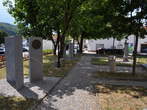
Near the town is the Skocjanski zatok Nature Reserve. Koper is the administrative center of the Municipality of Koper. The climate is sub-Mediterranean, characterized by hot and long summers, mild winters and frequent winds. Most precipitation falls in the fall. A specialty on the Koper coast are olive trees. The Mediterranean climate is also characterized by figs, citrus fruits, macchia and aromatic plants. The Koper coast consists of a narrow coastal strip and a flysch hinterland. The old town center of Koper is spread on the former island, which united naturally and by embankment with the mainland. A new town center and harbor have been created in the inhabited area, and new residential neighborhoods have grown in the nearby hilly areas. Koper has a rich cultural heritage, which includes markets, palaces, churches and monasteries. Hlavaty Park is located on the outskirts of the Old Town, close to the Hotel Koper, the city promenade and the marina of Koper. Hlavaty Park is beautifully and newly remodeled with greenery, trees, fountains, a playground for the youngest and wooden benches. There are busts of national heroes in the park - Pinko Tomazic, Karlo Maslo and Janko Premrl Vojko. On the other side of the park are the following statues - Anton Ukmar Miro, Spanish fighter and honorary citizen of Koper and Genoa, Alber Klun, historian, military officer, publicist and Kazmir Rencelj, naval officer and commander of the Trieste maritime sector at the end of Second World War. The park has an interesting sculpture of the sun, which represents the symbol of the city of Koper. Hlavaty Park is very popular with locals and other visitors.
From the park there is a walking path in the direction of Zusterna, which was once an independent settlement, but today is a residential district of Koper with hotel and swimming pool complex Aquapark.
Kranjska Gora is a well-known sports and tourist center that attracts many local and foreign visitors throughout the year. The story of the place goes back to the second half of the 14th century, when the inhabitants began to clear forests and turn them into pastures for cattle and sheep and agricultural centers.
It became strategically important during First World War, when Russian prisoners made a military road across the Vrsic Pass from the Sava Valley to the Soca River Valley. As a tourist destination, Kranjska Gora became famous with the construction of the railway line and the first visitors. In the later times, however, the summers and the jumps in Planica brought the name of the valley and place to the world. This contributed to the rapid tourist development of the area, especially when the first ski lifts were erected on the slopes of Vitranc in the late 1950s. The sculpture park is located in the center of Kranjska Gora, in the area behind the Grand Hotel Prisank. In 2004, a sculpture colony was held in Kranjska Gora, which supported it financially Hotel and tourism company Gorenjka. In the area of the park there was once a wild, unguarded parking lot, which with the new arrangement enriched the tourist offer of the place in the cultural and artistic field. The sculptures are the work of artists Boni Ceh, Francisek Berce, Crtomir Frelih, Metod Frlic and Boget Dimovski.
They are made of stone and wood. The entire landscape architectural arrangement of the park offers the walker is a combination of sculptural and park elements that are designed to fit into the wider Alpine landscape of Kranjska Gora.
Lendava is the most eastern city in Slovenia. It lies under the picturesque Lendavske gorice along the Lendava River, near the border with Hungary. Lendava became a square in the 14th century and as a parish was mentioned in the year 1334. The settlement was over the time affected by many earthquakes and in the year 1838 by a huge fire. Lendava became a town in the year 1867. The Evangelical parish was founded in the year 1902 and until the Second World War was strong the Jewish community.
In Lendava are the most important attractions Lendava Castle, the Church of Saint Catharine, Synagogue, the Theatre and Concert Hall, the Museum of the middle class, printing and umbrella-making, the Chapel of Holy Trinity and many other. Since 1983 are by the Lendava River developing Terme Lendava, which are the natural resort where are treated mainly the rheumatic diseases. There is also a recreational park with a summer swimming pool and tennis courts. Accommodation is available in the Hotel Lipa, in the Apartmenst Lipov gaj or in the Camping Lipa.
The Town Park in Lendava is nicely settled area with benches and a playground. The renovated park was officially opened in the year 2009. By renovation were taking an important part as designers and architects Maja Kardos and Goran Dominko. With the renovation they kept all existings and to residents accepted paths, but in a new modern appearance.
Ljubljana is the picturesque capital town of Slovenia. It is known as a cosy small town that attracts many tourists. It is administrative, political, cultural, economic, educational and scientific center of Slovenia.
Ljubljana is known for its varied historical past, which is visible at every step. Town has an interesting old part, through which the Ljubljanica River goes, giving it an additional attraction. The largest cultural and historical sights are the Ljubljana Castle, the symbol of the capital, the Ljubljanica River, Triple Bridge, Preseren Square, Plecnik's Market, the town hall, the National Museum, the National Gallery and Cankar House, which is the congress and cultural center. Miklosicev Park and Miklosic Road were designed by Maks Fabiani. They are named after professor of Slavic Studies at the University of Vienna, Fran Miklosic. His marble bust was replaced by a statue of Franz Joseph. Most of Miklosic's Park is surrounded by secession buildings. Among them is the most magnificent court palace, located on the north side. It was completed in 1902 and increased by one floor after the Second World War.
Around the park are also located Deghengi House, Cuden House and Pogacnik House. Miklosicev Park is a popular promenade that attracts many visitors. It is a green oasis where passers by can relax and rest on the benches during sightseeing tours of old Ljubljana.
City Park in Maribor is a place of peace and relaxation after the city hustle and bustle. It is situated north of the town centre. The design of the park has a medieval basis. In the year 1879 the City Park was finally reformed and split into several parts, which are City Park, Calvary, Three ponds and Pyramid Hill. Despite later changes the City Park preserved the quality of the original historical design in the landscape style.
Today in the park grows about 100 species of domestic and foreign deciduous trees and many coniferous trees. In 1998, at the 100th anniversary of the Olympic champion Leon Strukelj was planted 100 new trees. In the park was in different periods raised some monuments of which are now preserved only two. City Park has many sculptures and fountains.
Occasionally are in the pavilion of the park organized different concerts. In the smaller part of the park is a playground. We can also visit the aquarium – terrarium, which is one of the most known in the south and middle Europe. From the Tomsic promenade that leads from the main railway to the City Park, we can also go to the small hill named Piramida, which is a favourite place for the local people. From here we can enjoy in a wonderful view of the wine slopes and to the whole city.
Murska Sobota is the biggest town of Pomurje. It is the administrative, economical, cultural, educational and health centre of the Pomurje region. You can teach yourself about the history of the town in the Regional Museum, which is situated in the castle of Murska Sobota. Round the renaissance manor is the extensive English park, which has the typical grassy patchs and is called the City park. The park is situated between the Sobota castle (manor) and the Evangelical Church. It has planted oaks, ash trees, lime trees and two hundred years old beech trees. In the park is also the pond, where you can see ducks and other animals. You can see the portrait of the Primoz Trubar and the monument of the killed educational workers. Here is also interesting the stony column – litopuncture of Marko Pogacnik from the year 1993.
Pisece is a larger and cloddy settlement, which is situated on the south slope of Orlica on the east border of Slovenia in Posotelj. The buildings are adapted to the steep position by the slopes. The kernel is by the village road under the church of saint Michael. In the village core the old school, inn, blacksmith's museum and shop. Pisece Castle lies on the west side by the village. It stands inside the larger park and it's base originates from the Romanesque times. It was built by the Archbishops of Salzburg. Park Pisece is ordered in English landscape style. There are numerous and exceptional foreign trees like plane tree, sequoia and others. At the beginning of the road to the castle is the information board which directs you to the walking road to the castle. In this part is also the table for Water educational trail Gabernica.
Polhov Gradec Mansion is situated in the village Polhov Gradec. It lies between Polhograjska Gora and Kalvarija and it is a little bit far of from the old village centre. In front of the mansion is a wonderful park with a hundred years old lime tree and the Neptun fountain with colums with nymphs from the year 1696. The mansion complex also has an English tower with clock, mansion farm, stables, mansion laundry, drying house for flax and other. In the mansion park is a small fountain, pavilion for weddings, pond and there are walking paths. The mansion park is in barogue style. The surrounding is an excellent starting point for trips.
Rastelli Park is located in Portorož, which is one of the largest tourist destinations in Slovenia and the most important tourist destination on the Slovenian coast. Rastelli's park was renovated in the second half of the 19th century when spa tourism began to thrive in Portorož.
Mr Rastelli owned the park at the time. The beginnings of health tourism in Portoroz are attributed to patri Benedictines, who treated rheumatic and other diseases with highly concentrated seawater. Until the beginning of tourist development, fertile soil, with a favorable climate, enabled the development of agriculture, especially the cultivation of olive trees and vines, and the seaside position gave rise to salt production and fisheries. The beginnings of vibrant trade and economic development in the area date back to the Roman times. Archaeological finds in the wider area of Portoroz testify to the many estates, called villae rusticae, located in sheltered locations, in convenient locations and near drinking water springs. Rastelli Park boasts many types of ornamental trees and shrubs. Most tree species have already reached a high age.
The park is home to red-beech, cedar, mulberry, magnolia, yew and lagerstremia. We also find the thickest evergreen oak in Slovenia. The 100-year-old giant is 17 feet tall and has a trunk circumference of 375 inches.
Preseren grove was in 1952 reorganized by plans of architect Marjan Sorli from previously abandoned city Kranj cemetery. Grove is in the property of community Kranj. Renovation was going under the expertise of Institute for protection cultural heritage. The area is designed as grove because of historical part and piety. It is a place for rest, meditation and cultural inspiration. Paving stone footpaths are from all sides concluded in the central part with transitional booth on eight columns with three time divided semicircular roof. At the end of 18. century they left off the cemetery at church Saint Kancijan and started to bury in the small place of today's Preseren grove. The cemetery expanded at the end of 19. century, but in 1939 was gave up because of space distress. On this place they preserved only some of the most important historical tombstone and cultural monuments, which are the tombstone of France Prešeren, Simon Jenko, Janez Puhart, the famous inventor of photography on glass, mausoleum Majdic, bust statue France Prešeren and grave of Presern's daughter Ernestina Jelovšek.
The Garden of cacti is situated in Seca near Portoroz. You can come to the garden by walking from the Camp Fiesa or in the main road from Portoroz. The Garden of cacti is located by the road and you will see the direction table for garden. Before the Garden of cacti is the parking place. In the time of my visit I had to pay one euro entrance fee. The Garden of cacti is extending over one large covered place. In the garden you can see lots of species of cacti and you can also buy them. The Garden of cacti is in the family property. For more then 30 years they cultivate them Magda and Rok Grasic. Magda is especially proud to the immense cactus, which origins is from the year 1955. Cacti belongs to the family of plants, which is widened only in the southern and northern America. In the central Asia is growing only one kind of the cactus. Cacti can appear in very different largenesses and forms, which you can see in the Garden of cacti. The fundamental forms are column, ball and tree. Cacti are the most widened in the half deserts. Cacti belongs to the several years old plants and they live for some years or over 300 years. They grow very slow.
The botanic gardens of Sezana are situated in the north – eastern part of the town. Sezana has been the administrative centre of the Upper Carst since 1848, and was a commercial and traffic centre already before the date.
The trader family Scaramanga from Trieste was so enthusiastic about the location and the significance of the town that it build a summer residence. In the period between 1848 and 1880 they bought from the farmers the land of which the today's botanic gardens are located. A greenhouse was built in 1890 for those plants that are particularily sensitive to the cold weather. In the botanic park the Scaramanga family cultivated plants from many different parts of the world. They planted deciduous trees from North America, Japan, coniferous trees from Europe and Asia and evergreens from Mediterranean.
Officials fo the park have been completing since 1948 the selection of coniferous and deciduous trees as well as bushes by adding new plants. At the same time they enlarged the stock of plants within the greenhouse by achuiring new material from subtropic, dry and tropic parts of the world.
 KRAJI - Slovenia
 IzolaHotel Stara šola - Oleander Resort