Source: Public information of Slovenia,
The Surveying and Mapping Authority of the Republic of Slovenia,
State map in measure 1 : 1.000.000, 1995
www.gu.gov.si
Recommended
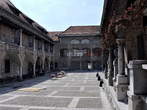
The Carthusian Monastery Bistra is situated in Vrhnika Commune in the southwestern border of the Ljubljana swamp. The beginnings of the monastery go to the year 1220, when the Carinthia duke Bernard Spanheimski invited to Kranjska the first Carthusian monks. Bistra was one of the fourth Carthusian Monasteries in Slovenia. Beside Bistra were also Zicka Carthusian, Pleterje Carthusian and Jurkloster Carthusian. Bistra reached its highest point in the economical and cultural development in the 14th century. The monastery was through centuries many times affected from earthquakes and fires. From the medieval plan was only preserved the small part of the Gothic cloisters from the year 1449. The kernel of the building was the one nave church from the 13th century, which was demolished in the year 1808. It was standing in the place where the courtyard opens today to the park. The Chapel of Saint Joseph, which is decorated with frescos and stuccoes of Anton Cebe from the 18th century is located by the present baroque crossing to the inner yard. By the brook were in the 16th century built the farm buildings. The monastery was in the 17th century renovated and added the baroque arcades. The Hapsburg emperor Joseph II. in the year 1782 published the decree about dissolving of the monasteries. The monks had to left the monastery and with the property managed the state. In the year 1826 bought the buildings and the surrounding property the manufacturer and merchant Franc Galle. He changed the monastery to the manor house. The manor house was afther the second world war with all the property nationalized. Technical Museum of Slovenia is in the Cahteau Bistra from the year 1951.
Sticna Abbey is situated among Dolenjska hills. Among the rare working cloisters is the only one, which belongs to Cistercian monks. The Cistercian order originates to the year 1098 to Burgundija in France. It got the name by the place called Citeaux. The founders were three saints, which were the benedictine monks from the monastery in Molesme. The Sticna Abbey is today the important cultural and religious memorial. It was established from the patriarch Peregrin I. At that time it also got lots of property. The monks Cistercians have beside prayers dedicated lots of their time to charity, work and economical activity. From the 13th century they also work on pastoral soul. In the second part of the 15th century had experienced many attacks from Turks and had crisis in the 16th century. The new blossoming was in the 17th century. That lasted till its disbandment in the year 1784. The abbey was again inhabited in the year 1898. It is the oldest in the Slovenian territory. In Sticna Abbey lived well-known Slovenian medical man Simon Asic. Here were also educated Anton Tomaz Linhart and Jakob Petelin Gallus. The complex of the abbey is composed from the Romanic cloistral church – basilica, which was in baroque twice renovated, early Gothic cross – shaped corridor with frescoes and the line of the buildings with the change from the 17th and 18th century. In the first floor are museum and gallery collections from the Slovenian religious museum. Part of the garden in the walls at the southern side comprehends meditative park, which is completely distant from the other areas and ordered like the peaceful, green grass. In the shop you can buy well – known herbs of the Simon Asic and products of other monks.
Other
 KRAJI - Slovenia
 MariborHotel Maribor, City apartments