Source: Public information of Slovenia,
The Surveying and Mapping Authority of the Republic of Slovenia,
State map in measure 1 : 1.000.000, 1995
www.gu.gov.si
Recommended
The old city centre has many important buildings. Among them are Carpaccio square with Taverna, Saint Justina’s column and fountain, fountain Da Ponte, the Muda Gate, Praetorian Palace (Pretorijska palača), cathedral and the defence tower, square Brolo with the park, Fontico with the heraldic decoration, Palace Tarsia, Palace Almerigogna, Palace De Belli, the Rotunda of the Assumption. Carpaccio Square is embellished with the Carpaccio House, the Gothic building from the 15th century. It was the residence of the Venetian painter Benedetto Carpaccio, the son of the famous Vittore. They left the city the rich painting’s heritage. In the middle of the square is the Saint Justina’s column, which was built in the memory of the participation of the local people in the victorious battle against the Turks by the Lepan in the year 1571. The view to the sea is partially veiled with the Taverna, former Venetian salt storehouse, today the multi purposed entertainment place. The baroque decorated fountain Da Ponte is originated from the year 1666. For more centuries in this place the local people were supplied with drinkable water, which has by the wooden tubes, placed to the sea bottom, arrived from the sea hinterland. The Muda Gate, former town’s gate, were long centuries the only entrance to the city by land. They are in the renaissance style. In the left side of the gates are the remains of the former town’s walls with the small arched doors and in the right side is the church of the Saint Basso from the 16th century. The Praetorian Palace (Pretorijska palača), town's house in the times of the Venetian Republic, is the most precious architecture memorial of the city Koper. The facade of the Cathedral of the Assumption is built in the gothic and in the renaissance style, by them is raising the imposing town's tower, sometimes parted from the cathedral. In the middle of the square Brolo are standing the stony fountains from the end of the 15th century, where the local people were supplied with rainwater. The Fontico is the former granary, built in the year 1392.
Piran is an old port town in Slovenian Istra. The town is bilingual, Italian and Slovenian. The Italian name for the city is Pirano. It is situated at the cape of the Piran peninsula. Piran has kept its medieval appearance with narrow streets and closely built houses, which gives it a typical Mediterranean character and a special charm.
On a hill above the houses, the church of Saint George is situated, with a high tower and an interior with many paintings and intricate artwork. Piran has been settled since before Roman times. In the years between 1909 and 1953, Piran was connected with Portorož and Lucija by an electric railway. Today, Piran is an administrative and tourist center which attracts both local and foreign visitors. Some of the most fascinating sites in Piran include the Tartini Square, the Town Palace, the Tartini Monument, the Tartini House, special stone columns for flags, the Court Palace, the May 1 Square, also known as the Old Square, and the old town wall composed of three walls from different time periods. In the city center is the Aquarium which was established in 1964. The Promenade extends along the coast and offers many restaurants with a wide variety of local foods and drinks. Church of Saint George offers an extraordinary view of the old town and the Gulf of Trieste. It was built in 1638 on the site of the Romanesque basilica and the Gothic three-nave church. A bell tower stands independently of the church. It was built in 1609 after the model of the bell tower of St. Mark in Venice. Tartini Square was originally a seafront for fishing boats. It was demolished in 1894. In the middle of the square stands a bronze monument to Giuseppe Tartini, a famous Piran countryman, composer, violinist and music educator. The Church of Our Lady of the Snows is located along Bolniska Street. It was built in 1404 and rebuilt in the baroque style in the 17th century. Opposite the church stands the church of Saint Franciscan monastery. The monastery cross corridor with a portal is a remarkable work from the 17th century.
Narrow streets in Piran make it impossible to drive cars, so there are parking places in front of the city. Piran, Seča and Portorož are connected by a regular local bus route. A newer part of the town developed outside the walls along the coast towards Portorož.
Other
Izola is a littoral town, which has interesting old city centre. It includes Manziolijev trg with neighbourhood, Soncno nabrezje, Trg padlih za svobodo with neighbourhood, Trg republike with neighbourhood, Trg svetega Mavra with neighbourhood, Veliki trg with neighbourhood, Ulica Alme Vivoda with neighbourhood and other. Izola hides many wonderful things. You can see the Italian elementary school Dante Alighieri, Parenzana museum, the Church of St. Mary of Haliaetum, port (madrac), archades from the year 1531, which were in complex with Fontika and Loza, Municipal palace (City Hall), fountain in park on Veliki trg, the Church of St. Maurus, entrance in the Besenghi degli Ughi palace, the Chapel of the Brotherhood of Flagellants, Scuola Batutti, the pavilion and fountain in Pietro Coppo Park and others. The Museum Parenzana shows the history of the narrow gauge railway Parenzana. The railway connected at the beginning of the earlier century places from Trieste to Porec that included Izola as a key station stop. The Church of St. Mary of Haliaetum is from the second half of the 11th century and it is the oldest city church. Inside you can see wooden choir, three altars and organ of the master Nakic. The Municipal Palace was made in Gothic style. Today has the baroque front from the 17th century. The Chapel of the Brotherhood of Flagellants, Scuola Battuti was built in the year 1451 and it is one of the oldest in Izola. It has preserved the external Gothic style.
 KRAJI - Slovenia
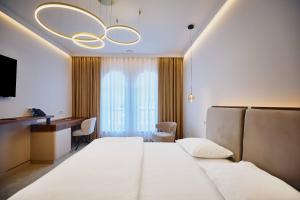 Zgornje ŠkofijeCasino & Hotel ADMIRAL Skofije