Source: Public information of Slovenia,
The Surveying and Mapping Authority of the Republic of Slovenia,
State map in measure 1 : 1.000.000, 1995
www.gu.gov.si
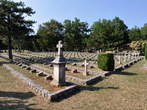
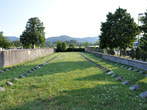
Bohinjska Bistrica is the largest village in the Bohinj valley and seat of the community. It is situated between hills Ajdovski gradec and Dobrava and between brooks Bistrica and Belica. The village divides road from the railway station to the Lower and Upper village. In Bohinjska Bistrica are railway tunnel, sports hall, open playground for tennis, football playground, elementary school, bus station, museum, restaurants, shops, private hotels, hotel, health service, local office, tourist informative centre, fire station, monument in memory of Second World War, Zois Manor with Tower Clock, First World War Military Cemetery, the Church of Saint Nicholas, ski center Kobla and other. Next to Aquapark Bohinj is located interesting and beautifully arranged Ceconi’s Park. The 1st World War Military Cemetery lies on the belvedere hill called Rebro. We can come there by the road, which goes from Bohinjska Bistrica to the village Ravne. The cemetery comprises 285 marked graves where soldiers of all nations of the monarchy were put to rest. 202 were from the infantry ranks, 55 were from technical units and various services, 19 were from the artillery and 9 were Russian prisoners of war. They died in two hospitals in Bistrica and were burried here from the year 1915 to 1917. In the cemetery they erected the stony monument in the year 1945.
The military cemetery of the fallen soldiers in the World War I is marked with the table and is situated near main road to Log pod Mangrtom. Near the cemetery is a small chapel. At the World War I Military Cemetery is in four terraces buried 859 Austo – Hungarian soldiers, fallen in the fights in Rombon and Cukel. In the middle of the of the cemetery is erected the monument of the fallen soldiers with the image of the Bosnian and Austrian soldiers. The monument was made by Ladislav Kofranek from Prague. The tombstones are separated with iron crosses and Islamic tombstone symbols.
The German Charnel House near Tolmin is situated on the left bank of the Soca River. It is in the immediate neighbourhood of the city Tolmin, about one kilometer past the school and across the parking lot of the former casino. The ossuary means building or place for preserving bones from the dig up graves. The German Charnel House was built by the company from Munich in the year 1938. There was buried 965 German soldiers. At the entrance to the foyer are forged doors, which are designed from gun barrels. The interior of the chapel is divided into two parts. In the first section the names of the fallen are inscribed on oak panels. In the second section, separated by a wrought iron screen, the names of the fallen are inscribed using mosaics in three lunettes. At the centre of this space is the grave of the Unknown Soldier where the sun strikes during the summer solstice.
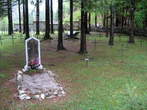
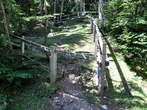
During the 1st World War was Bohinj the transitional zone between battlefield and hinterland. It was the rallying point for soldiers, training and resting place for sick and wounded. In Bohinj were three military cemeteries, from which are now maintained the cemeteries on Rebro and in Ukanc. The cemetery in Ukanc is situated by the road Zlatorog – Savica, near the lower station of cable car for Vogel. In the cemetery are 282 graves of fallen soldiers in Krn mountains and deceased in the Ukanc region. The military cemetery is surrounded with wooden fence. The graves are concrete with wooden crosses. In the cemetery we can also see the wooden chapel with the stairs from natural stone, memorial board in Hungarian language and the monument dedicated to heroes of Krn – Defenders of Bohinj.
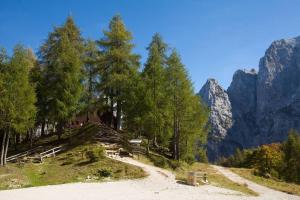
At an altitude of 1611 metres, the mountain pass at Vrsic is the highest in the eastern Julian Alps and provides a link between the Savska and the Soska valleys. We can have a relaxing cub of tea or even stay the night at the Ticarjev mountain hut, which is located at the top of the pass. There are five mountain huts on Vrsic offering refreshment and rest.
Just off the main road winding up Vrsic, at an altitude of around 1200 metres is located the Russian chapel. It is a Russian Orthodox memorial chapel which was built by Russian prisoners of war engaged in forced labor in the area during the First World War. During the war Kranjska Gora was an important cross – roads of military passages. When Italy declared war to Austria in May 1915, the connection with the front line on the river Soca was a strategic importance. In the years 1915 to 1916 Austrian military command engaged more than 10.000 Russian war prisoners to build the road from Kranjska Gora over the Mojstrovka (Vrsic) mountain pass to Trenta.
In March 1916 more than a hundred Russian prisoners and some Austrian guards were buried by an avalanche. Two burial grounds in the vicinity of the Erjavceva koca, the tomb and the Russian Chapel, built in 1917 by the surviving Russian prisoners in memory of their fellow soldiers, are the reminders of the tragic events.
 KRAJI - Slovenia
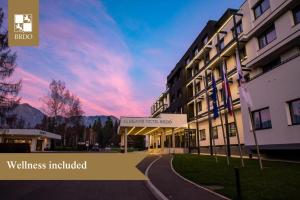 KranjElegans Hotel Brdo