Source: Public information of Slovenia,
The Surveying and Mapping Authority of the Republic of Slovenia,
State map in measure 1 : 1.000.000, 1995
www.gu.gov.si
Recommended
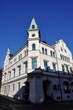
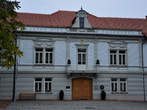
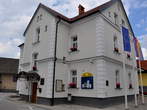
Idrija has in the inner town centre four squares: Town Square (Mestni trg), St. Ahacij Square (Trg sv. Ahacija), Aumeski and Scopoli Square. In the newest Town Square we can see the secessional Town Hall from the year 1898, where is the seat of municipality, monumental Lace School Idrija from the year 1876, monument, library and other. In the Town Hall are in the entrance hall and in one other room graphites of the local artists, which were made at the 500th anniversary of the city and mine. The famous lacework carried beside the mercury the reputation of Idrija worldwide. The lace-making trade began to develop in Idrija at the end of the 17th century. The oldest preserved document of lace is from the year 1696. The Lace School Idrija under the administration by Ivanka Ferjancic was open in the year 1876. The biggest boom lacemaking experienced since the last quarter of the 19th century till the First World War. We can eat in the restaurant and pizzeria Kut, where they have delicious local speciality called zlikrofi. The other well know dishes are also the soup smukavec, zelsovka and old mine drink gerus. By the library is the passage to the St. Ahacij Square.
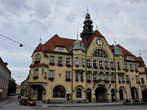
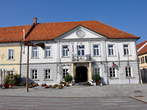
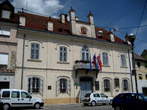
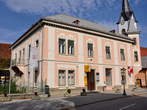
City Hall is located on the City Square. The present building is from the year 1906-7. On this place was the house already built in the year 1571 by Dominican monks. In the 18th century was in the property of the Poskocil Family. It got one ground plan, but it was for the floor lower. In the beginning of the 20th century the Ptuj Municipality ordered the plan for the new city hall from the architect Baron Maks Ferstl from Graz. He designed the building in the style of the German late Gothic. After the Second World War was in front of the City Hall the petrol station. Already before the war, the same as it is today, were in the ground floor of the house the tobacco shop and the lottery. The City Hall is ornamented with two corner piers. On the left pier are engraved some of the old constructive elements and there is also the mayor office. City Hall is with the agitation and by largeness the central building on the City Square. On the first floor of the building is the large hall the lobby for the entrance to the most important offices. On the second floor is prevalent the festival hall, which also includes the gallery and is lifting through two floors. The large windows, which are looking to the City Square are composed from the colourful glasses, which were made by the glazier Josip Kollenz.
Other
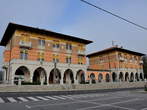
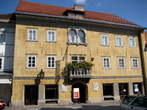
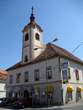
Cesta prvih borcev in Brezice is filled with many remarkable buildings as a Castle granary, Castle stables, old pharmacy house, the House of the Del Cott family, Town Hall, the Parish Church of St. Laurence in Brezice, National Centre, German house and other. The Castle granary is one of the best preserved granaries in Slovenia. The building is first mentioned in 1491, but today’s building is from the early 18 th century. Over time, the granary served for different purposes. Today is in the castle stable the Music School Brezice. In the old pharmacy is a popular restaurant and pizzeria Santa Lucija. The House of the Del Cott family is one of the most beautiful buildings in the city. Its owners belonged to a higher bourgeois class. It was built in the second half of the 18th century. The Town Hall was a building of a town authorities. It has an interesting round balcony with a simple portal and bellied baroque fence. In the lobby of the Town Hall is a Tourist information centre Brezice, where you can learn about Brezice an surrounding areas. The Church of St. Laurence was built in 1782. According to plans should extend to the edge of the road, but they ran out of money. National Centre was built in 1904. Part of it was also an inn. It was a political and cultural centre of local people in times of national struggle. In the German House is located a district court. In this part is also a Hotel Splavar with a restaurant.
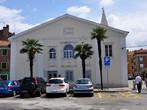
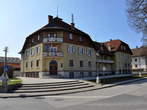
The city Ravne na Koroskem is located in the agitated country of the lower Meziska valley, squeezed in the wide basin, which is bordered with the rich woods and from the southern side is in the back Urslja mountain. This is the most populated part of the Koroska Region, where is the city Ravne jointed with the neighbourhood Prevalje. Ravne are today the largest Koroska city and they are administrative, economical, educational, sporting and cultural centre of the Meziska valley, but in many things they are exceeded the borders of the Koroska land. The surrounding of the Ravne was settled already in antiquity, because there was going through the village Roman road. In the place of the ironworks was found the Roman ceramics, mosaic small stones, brick and money. The first time Ravne is mentioned in the year 1248 as the Guttenstein and as the square in the year 1317. The base for the development was the steel industry, which got the chance with the decay of the iron foundry in Crna, Mezica and Prevalje. With the development of the steel industry was also fast developed the place, which became in the year 1952 the city and changed the name from Gustanj to Ravne na Koroskem. The structure of the tourist offer forms the extended region of the Urslja mountain with the Roman source, Prezihovina, lake Ivarcko and ski slope in Osven and in the sport park in Ravne. The stress is in the excursion tourism with the emphasis in the presentation of the cultural and historical heritage (iron museum, manor Ravne) and natural sights (Votla stove, Urslja mountain), the offer of the recreative activity in the nature (Ivarcko, Osven, sport park Ravne) and the tourism in the countryside.
 KRAJI - Slovenia
 LjubljanaWH Apartments