Recommended
Bled is by far the country’s most popular destination. Thanks to its placid fairytale lake and the island in the middle, this small town is the top choice for travelers who want to spend relaxing holidays in Slovenia.
The castle is perched 120 meters on a craggy bluff on the northern shore. The first trace of human settlement dates from the Stone Age. Bled is today a modern resort with many hotels, private apartments, car parks and various local and foreign culinary delights. It is especially renowned for the delicious “kremsnita” (cream slices), a local sweet made of custard. Bled is also famous as a rowing and boat race center. It is the starting point for numerous trips and walks in the beautiful areas surrounding Bled, such as the Pokljuka Gorge, Vintgar, the waterfall under Iglica, the Pokljuka plateaux, and the Triglav National Park. There is a path that encircles the lake which only takes an hour and one-half. You can also take a carriage by the Festival Hall for a tour around the lake.
Visitors can visit the island with a typical “pletna” boat which is steered with only one oar and accommodates about 20 persons. The church on the island is famous for its “wishing bell” manufactured in 1543. If you make a secret wish, it will come true when you ring the bell.
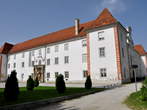
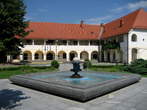
The Otocec Castle is situated near the city Novo mesto in Dolenjska. It is the only water castle in Slovenia and it stands on one of the island of the Krka River. Its image was formed through the centuries. The beginning of the castle goes back to the 13 th century, in the year 1252. The name Otocec originates from the Freizing bishops. The owners of the castle were named knights from the island – de Werde or islander. In the minddle of the 14 th century the building was widened and it got the ground plan of the letter L. The Castle Otocec was additional strengthened after the Turks devastation in the year 1471. In the second half of the 16 th century it got the renaissance appearance. In the second half of the 17 th century the castle building got among the other renovations also the arcade corridors in the ground floor and in the both floors of the southern tract. Between the Second World War the Castle Otocec was destroyed by fire from the partisans and in that time were ruined the precious archives in which was hidden some interesting stories from the rich history of this wonderful castle. After the war the castle was nationalized. Today is in the castle the Otocec Castle Hotel, which is very luxurious and a restaurant with the best culinary offer. Near the hotel, in the right side of the river Krka, is situated pleasant Camp Otocec. About 300 metres from the castle is the Sport Hotel and a motel, which is designed mainly for travellers in transit guests. We can get fun in the Sport Hotel, where they have gambling rooms. For business meetings is available congressional hall. At the weekends is possible to dance in the restaurant Tango at the sounds of the live music. The Otocec has also developed to sport centre, which offers excellent conditions for running or cycling and guests can play tennis, golf and other sports. The River Krka invites us in the upper current to rafting, under the castle you can go boating or fishing. The Hotel Otocec is the ideal place for romantic and unforgettable weddings, where guests can feel like kings. They offer arrangements like Castle wedding in Chivalric saloon, Castle wedding, Wedding in the open air, Romantic wedding in the shine of the torchs and candles, Wedding in the open air with bridesmaid and senior, Lords wedding and Wedding in the dreaming river Krka. In last years are very popular weddings in the open air under the tent in the Castle Otocec park. The park is shaped after the patterns of the English landscape style. The oldest trees are old almost hundred years and mayority was planted after the renovation of the castle in the 50 years of the 20th century.
Sneznik Castle is the best preserved castle in Notranjska region. It is located under the mountain Sneznik near the place Kozarisce. The castle is built on a rock at the source of the Brezno Spring and the Obrh. Below the castle is the spring dammed into a large pond. In sources the Sneznik Castle was first mentioned in the year 1268 as the hunting post. The formation of the present castle goes to the year 1462. First owners were the Aquileian Patriarchs and later the owners changed several times. Before the war it was the property of the family Schönburg from the vicinity of Dresden. Sneznik Castle is a three storey building with a newer stone bridge that leads to the walls and Renaissance walls in front of the entrance. Two arched stone bridge and the outer towers are Romantic additions of the 19th century. In the castle is preserved all the original fittings, mostly from the 19th. You can feel the throb of life from the end of the 19th and beginning of the 20th century. Among the living quarters are the most interesting the room with Egyptian furniture, the dining room and a larger hall arranged into a wedding hall. The castle residents also had an improvised theatre hall and a small library. In vestibules and in all the halls you can see the numerous stuffed animals and trophies. The surroundings have been carefully arranged into a park with riding and walking paths. East of the Sneznik Castle are farms and other additional buildings that house a small hunting museum. Sneznik Castle is a wonderful place for a romantic and unforgettable wedding. The manager of the castle is the National Museum of Slovenia.
The Predjama Castle is located under the overhanging rock in the region Podgora, which is only 9 kilometres from Postojna, beside the village of Predjama. It is also called eagle nest of the robbery knight Erazem Predjamski, about who exists lots of legends. The Predjama Castle is carved in the vivid rock. It was existing already in the 13th century, probably sooner. It was managed by Jamski, which belonged under the Oglej property. After Jamski the castle was under management of the Adam Purgstaller and from the year 1567 were in it the family Kobenzl, who also provided for the renovation. The last aristocratic owners were counts Windischgrätzi from the year 1846 to 1945, which also changed the external image of the castle. The parts of the castle are different by style and by the time of the origin. The constructors used the advantages of the cave and with that they preserved the non conquery of the primary castle. The cave under the Predjama Castle is ramified with more parts with the several entrances. The most famous is the entrance through the Horse stable in which they discovered the traces of the minor stony and copper age and also from the Roman times. Today is in the castle museum, which is showing the medieval life of the knights. Amongst the interesting things are also residence rooms, chapel and prisons, some parts of the arms, oil paintings and Pieta from the year 1420. Every year is organized here the famous Erazem knight tournament, which attracts many visitors. The performance conjures up the former life in and beside the castle.
Rising 475m above the city of Krancelj on a prominence stands Loka Castle. It was built on the edge of a natural terrace and below the castle a settlement of merchants and tradesmen grew up. It was first mentioned in a document in 1202 which stated it to be a resistantial castle. The first castle was build by the Freising Bishops and was the seat of the Manager or Head. The bishop when he came to see his dominion also stayed here. When it was almost completely destroyed by an earthquake in 1511, Bishop Filip ordered it to be rebuilt. In the castle’s courtyard was a powerful tower whose foundations are still seen today. Today the castle is part of the Loka Museum where you can see the cultural, ethnological, historical, Artistric, natural and scientific wealth of the Skofja loka region. Near the castle is a place used for concerts and walks that are wonderful during the summer. Into the city we can come down on the way near good preserved city wall that protect city many centuries.
Other
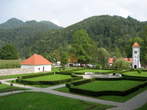
Technical Museum of Slovenia, Chateau Bistra is situated in the former monastery and later cahteau area of Bistra. Bistra is located in the nearness of Ljubljana, between Vrhnika and Borovnica. The museum is housed in 6000 square metre of area. In the museum they have permanent collections from the fields of water drive, forestry, wood processing, hunting, fishing, electrical engineering, textile engineering, vehicles and traffic, agriculture and printing. Bistra was one of the fourth Carthusian Monasteries in Slovenia. Beside Bistra were also Zicka Carthusian, Pleterje Carthusian and Jurkloster Carthusian. Bistra reached its highest point in the economical and cultural development in the 14th century. It lies in a wonderful environment with fish pond, park and forest educational trail. Sometimes was in the chateau park the monastery one nave church from the 13th century, but it was demolished in the year 1808. The park is very beautiful and has many walking paths. In this area is also the coffeehouse and the pavilion for weddings.
Castle Bogensperk is one of the most significant Renaissance castles in Slovenia. It was also home of the celebrated polymath Johann Weichard Valvasor. The castle was built by the Wagen family, feudal lords of the near by Lichenberg castle.
The first documented records date back to 1533 when Jorg Wentschitsch is mentioned as the castellan. The castle remained the property of the Wagen family until 1627, and had several subsequent owners before being bought by Johann Weichard Valvasor (1641-1693) in 1672. Further to the extensive library and a collection comprising 7,752 graphic prints and drawing by 15th-17th century European masters, Valvasor founded a graphics enterprise and a workshop employing a number of artists and copperplate engravers. In a twenty year period he wrote and published six works of a topographic historical nature and three with a more artists mofit. Valvasor's magnum opus and most famous work was the multi volume Glory of the Duchy of Carniola published in 1689. The publication of the Glory was a massive undertaking which got him into financial difficulties, and in 1692 he was forced to sell the castle. It then had a succession of owners, before becoming a home of Windischgraetz nobility, who were forced to relinquish the property at the end of the Second World War.
Castle Bogensperk was plundered during Second World War, and after the war it was used by the Jesuits for some years. A gradual renovation began in 1972. Today, Bogensperk houses a museum containing exhibition collections pertaining to Valvasor and his era.
Grad Castle is located in the village Grad in Goricko. The village Grad is the biggest and the oldest settlement in Goricko. The castle is a cultural memorial and it is very important in the state level. It is protected with its surroundings and castle park as the artistry, architecture and cultural memorial. The castle is the big trump for the touristical resuscitate of the village Grad. The local people wants that the castle would be live again as the centre of the political, economical and cultural life of the region. Grad Castle is at the moment under the renovation. It is the biggest castle complex in Slovenia. It has over 365 rooms. The history of the castle goes to the year 1208. The owners were frequently different. Between the First World War and the Second World War were its owner the industrial Geza Hartner from Murska Sobota. At that time was equipped with art works and very well preserved, afterwards was till the renovation long time abandoned and left to the destruction. Inside of the castle is the fountain, which is insured with plate and cut in the vivid rock. In the time of the attacks and sieges had played the important role. In the castle yard is the focal point of the energetic forces. The vibrations of the castle radiation should heal different illnesses. The visitors can see only one part of the rooms. It is open the wedding room, smith's, potter's and wheelwright's workroom and some of the ethnological collections. It is also available the smaller souvenir shop. The biggest traditional performance is the Night of the witches.
Slovenska Bistrica Castle is located in the immediate nearness of the city centre. It is the powerful building, which can be hardly missed. At the castle is the park, which attracts locals and other visitors in every time of the year. The Slovenska Bistrica Castle was first mentioned in the year 1313. It has variegated history, because it changed the owners several times. At the beginning it was in the ducal lands. In the year 1587 bought it the aristocratic family Vetter, later von der Lilie. The next owners were the family Wildenstein before the end of the 17th century. They are famous by the forming of the Bistrica Castle Park. The counts Attems bought it in the year 1717 and it remained in their property till the end of the Second World War in the year 1945. Today is the castle the cultural centre of the city. It is carefully renovated since the year 1985. In the Slovenska Bistrica Castle you can see the permanent exhibitions like the room of flags, Roman road Celeia – Petovio, the exhibition Ancnik ancient fort, Ark’s ethnologic collection, collection of the wines of the Bistrica growers, collection of the prayer books, collection of the oil lamps, collection of the puppets in the typical costums of the world, Pajtler’s collection of the fossils and minerals, collection of the minerals from Communes Slovenska Bistrica and Oplotnica, Ingolic memorial room, stoneware of the Pohorje, Castle’s smokehouse with the old castle hour and Tomazic memorial room. In the castle are also the artistic saloon, chivalric hall in which they organize different cultural performances, the wedding hall and the gallery Castle. In the summer time they organize the traditional old Bistrica evenings. They have the permanent guide service.
Zgornji Tustanj is a small village in the Municipality of Moravce in the central part of Slovenia. Tustanj Castle is located on a hill southwest of Moravce and southeast of the road to Vrhpolje. The castle was built in 1490 and got its present form in the year 1671.
Tustanj Castle offer – attend castle cultural events, organisation of field trips for kindergartens and schools, organise seminars and events in a unique castle ambient, experience an unforgettable wedding (a church and a civil ceremony in a standard wedding dress or in a medieval costume), learn about life within the castle walls on a guided tour. By prior arrangements, groups will be served home made delicacies. Tustanj Castle is among the few amazing castles in Slovenia in which an original collection of porcelain, furniture, land register, documents, tiled stoves and other antiques are kept. The first nobility mentioned is the Lichtenberg family. Tustanj Castle is the only preserved castle from the six castles that once dominated the Moravče Valley. It was home to many noble families for more than 500 years of its exsistence, it has a rich history and many interesting stories to tell. The most famous of all of them is the one about how the castle passed over from the hands of noblemen into the hands of the ordinary Slovenian family of Pirnat, a castle gardener.
Tustanj castle has an arcaded courtyard and four corridors with halls that guard the pearls of the interior furnishings dating from the lifetimes of past nobility. The beautiful castle park preserves a large plane tree and a small pond.
Tito Square is the centre of the old town and belongs to the one of the most beautiful city squares in the former Venetian region. It is the juncture of the main town's traffic roads. At the square you can first see the beautiful Praetorian Palace. Tito Square with neighbourhood has the next attractions: Armeria, Pizzarello-Palma Palace, Loggia, the Cathedral of the Assumption, Del Bello Palace, Patriarch's tower, Rotunda of Janez Krstnik. The Praetor's Palace belongs to the central architecture monuments in Koper. It has rich building history from the 13th to the 17th century. In the second half of the 15th century got the present image. It was built in the place of the two older houses from the middle of the 13th century. It is the most representational secular building in the city with its late Gothic Renaissance facade and different inner areas. The palace was the seat of the Venetian captains and podestat's till the end of the 18th century. It is decorated with the statues, blazons and inscriptional stones. The cogged Ghibbeline addition was placed above the main facade in the year 1664. There stands Justice in stone, armed with a sword. Today is the Praetorian Palace arranged for the representational needs of the municipality and fitted with period furniture in the celebration hall, offices and exhibition areas on the ground floor. Foresteria was once used as accommodation and reception facilities for podesta's guests. It has beautiful stone Renaissance door named Porta del Corte. The Armeria was till the year 1550 warehouse of the weapon, then was the a loan office or pawnshop for poors and then the place for town's offices and vice homes. In the 18th century were the Foresteria and Armeria connected together, when they also heighten Armeria for one floor. In the portal of the former armoury is the town's blazon with the head of Medusa. Both buildings were built in the 15th and 16th century. The Loggia got the present image at the end of the 17th century. In remembrance of an epidemic of the plague a terra-cotta statue of Mary was erected above the corner in 1555. The Koper loggia is the only preserved Gothic city loggia in Slovenia. Above the slender stone pillars, the pointed Gothic arches are preserved. Its ground floor houses a cafe. The Cathedral of the Assumption was built in the second half of the 12th century. It was enlarged in the 15th century. In the lower part was preserved the Gothic style, higher is added the Renaissance touch. They created the new hall place in the first part of the 18th century. The belfry of the cathedral was sometimes the fortified building. Rotunda of Janez Krstnik belongs among the Roman architecture buildings.
Lipica is situated in the wonderful Karst environment, close to the Italian border. It was founded in the year 1580 and it is the centre of the all Lipizzan hourses (400 lipizzan hourses today in Lipica). The Stud-farm of Lipica is one of the most beautiful cultural and historical monuments of the Republic of Slovenia. Here, the tradition of selection and breeding of pure Lipizzan hourses has been alive for over than four hundred years. After the Second World War, Lipica succeded to develop its own Classical Riding School and presented it in the presentations and equestrian events all over the world. Today is Lipica a recreational and sports centre of a worldwide reputation, where visitors can spend wonderful moments of relaxation. In the complex of Lipica is to the visitor available the Hotel Maestoso, Klub Hotel Lipica, tennis courts, golf course, mini golf, swimming pool, sauna, fitness centre, souvenir shop, museum collection of old carriages and many other. We can see one of the oldest stud farm in the world, the presentation of the Classical Riding School, racetrack, the collection of the art work in the Avgust-Cernigoj Gallery, the Church of the Saint Anthony of Padua and the Valley Our Lady of Lourdes. We can go to the riding school, golf and to the interesting drive with the carriage. In Lipica they also have a wedding hall for romantic weddings.
Ljubljana has been the capital city of Slovenia since 1991. It is a popular tourist destination that attracts visitors throughout the year. It was first mentioned in written sources around 1120.
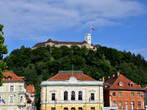
Today, Ljubljana is the cultural, administrative, transport, economic, political, research, and educational center of Slovenia. Ljubljana Castle, a mighty medieval fortress, is a symbol of the capital. It stands on the edge of Castle Hill, just above medieval Ljubljana. You can reach the castle by car, take the funicular railway from Krek Square in the old town, or walk along one of the well-maintained trails. Ljubljana Castle evolved from a fortified tower with a defensive wall, even before the first mention of Ljubljana. On the hill where the castle stands, human presence has been confirmed since the late Bronze Age. Throughout its rich and varied history, Ljubljana Castle has undergone many changes and witnessed important events that influenced the development of Ljubljana and Slovenia. At the end of the 18th century, the Habsburg owners wanted to abandon it, but did not demolish it due to protests from the Carniolan provinces. The castle was purchased by Mayor Ivan Hribar on behalf of the city in 1905, and he transformed it into a cultural center. In the early 20th century, the city of Ljubljana bought the building, and many renovations began, with plans drawn up by well-known architects such as Plečnik, Mihevc, Kobe, and Ravnikar Jr. The castle's current appearance is the result of the efforts and ideas of Projective Bureau Ambienti d.o.o. from Ljubljana.
Their contributions to the renovation include the funicular railway, the Slovenian History exhibition, the Erasmus Tower, the Frederick Tower, the circular route around the castle, the lapidary and mini-theatre, the archers' tower, the castle inn, wedding halls, the bastille, the Puppet Museum, Hribar Hall, the wine cellar, terrace, and more. Today, Ljubljana Castle is an extremely attractive tourist destination and hosts many concerts, cultural events, film and theater performances, and exhibitions. Visitors can explore various parts of the castle, such as the tower, the Chapel of St. George, the permanent exhibitions on the Penitentiary and Slovenian History, Dwelling Hall, Frederick Tower, Frederick's Room, the Arts Sales Gallery, Shooter Tower, and the Pentagonal Tower. The Virtual Castle offers a 12-minute projection on the history of the castle, its architectural development, and archaeological findings.
The Castle Cafe serves typical Slovenian dishes with a modern twist, while the Castle Cafe offers a wide selection of coffees, beverages, fruit bowls, cocktails, and desserts. During the summer, the castle courtyard hosts various events, the most popular of which is the "Movie Under the Stars" screening.
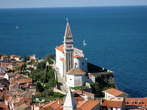
St. George's Church (Cathedral) in Piran is proudly raising above the city Piran and gives it the special meaning. The St. George was protector of the town. The cathedral was built in the 12th century and in the 14th century was constructed in the present largeness. In the year 1637 got the today's image by the baroque renovation. In the year 1608 was added the belfry and the baptistery in the year 1650. The hill on which is standing the church was also fortified in these years. In the year 1641 they built the supporting walls and in the sea part they strengthen the hill with the rocky arches. They began with their building in the year 1663 and finished it in the year 1804. In the year 1998 they renovated them, because they were destroyed from erosion. The church of St. George got in the year 1737 seven marble altars. Worth to see are two plastic arts of Saint George. Among important pieces of the church equipment are the cathedral organs. They were made by Petar Nakić, Franciscan monk from Dalmatia. Belfry is the shorten copy of the belfry of Saint Mark in Venice. In summer months you can go up and enjoy in wonderful views far away. The baptistery is made in the shape of octagon and in it you can see the painting works from different periods and the church furniture from the 17th century.
Polhov Gradec Mansion is situated in the village Polhov Gradec. It lies between Polhograjska Gora and Kalvarija and it is a little bit far of from the old village centre. In front of the mansion is a wonderful park with a hundred years old lime tree and the Neptun fountain with colums with nymphs from the year 1696. The mansion complex also has an English tower with clock, mansion farm, stables, mansion laundry, drying house for flax and other. In the mansion park is a small fountain, pavilion for weddings, pond and there are walking paths. The mansion park is in barogue style. The surrounding is an excellent starting point for trips.
The Lake Crnava and Hotel Alma & Grad Hrib are situated in Preddvor. They are popular places for many local people. They are also starting-points for trips to the saint Jakob, Potoska gora, Kalisce, Javorjev vrh, Srednji vrh, Cemsenik, Storzic and Hudicev borst. The Preddvor manor in the middle of the village was between second world war private hotel for holidaymakers. Today is youth house. The Castle Hrib was reorganized to the restaurant and they also have weddings. Beside the castle is an old avenue planted with old trees on both sides. The old legend promises to the fresh married couple, if they walk through this promenade, 50 years of faithfulness. Beside the castle they damed up the brook Bistrica, which flows from the back of the Potoska gora and supplies the artificial lake Crnava. Hotel Alma has a terrace, from where we can enjoy in wonderful views to the mountaints and to the lake. In summer time is possible to borrow the boat, hire a tennis place and in winter time we can slide. Around the lake is a good walking path. In the Bistrica valley, beneath Zaplata, is the rock climbing. It is only half an hour walking from the Lake Crnava.
Smarna gora Hill is a popular hiking point, which attracts many people from everywhere through all the year. It is situated in Tacen by Ljubljana. Top of the Smarna gora Hill has two peaks, which are Smarna gora Hill (669 metres) and Grmada (676 metres). On the peak is a wonderful view to surroundings. When it is sunny weather, you can see Triglav, the highest mountain in Slovenia. Smarna gora Hill was already settled in prehistorical times. You can go to Smarna gora Hill from different ways, which are way over Peske, way from Vikrc, Wester way, Kovac path, way from Tacen, path over Zatrep and Upper kitchen, Pilgrim's way, path to Grmada over Lower Kitchen and Zatrep, Mazi path, way of Freedom, way from Skarucna, Partisan's way, path from Zavrh, Smarska path, climbing or Pogacnik way and road to Smarna gora Hill. The most known to me is the way from Tacen, where will expect you the free parking place. From here to the peak is about 30 to 40 minutes of walking. Towards to the end is the slope more steep. Here is the St. Antony's bell. Your wish will fulfil if you pull the bell, but just once. On Smarna gora Hill is the interesting late Gothic church in which are also organized weddings. Beside the church is the restaurant Ledinek, where they have delicious Slovenian food. The most known is the tea and salty pretzel. If you wish, you can use comfortable chairs for resting. Children can play at the playground. In Smarna gora Hill are also organized photographic, artistic, sports and musical events.
 KRAJI - Slovenia
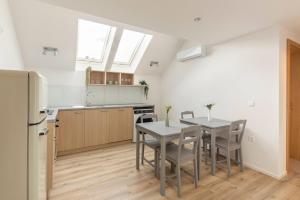 LjubljanaHouse Pr'Španc