Source: Public information of Slovenia,
The Surveying and Mapping Authority of the Republic of Slovenia,
State map in measure 1 : 1.000.000, 1995
www.gu.gov.si
Recommended
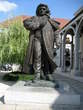
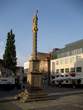
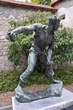
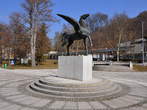
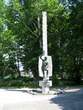
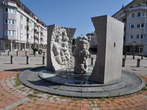
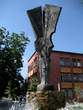
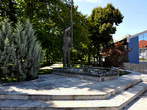
Trg Svobode (Liberty Square) is the place in Maribor, where something always is happening. There are many shows like parties, meetings, performances, fairs and many other. In the summer time you can enjoy under the sunshine, chating and coffee. In this part is the most powerful the bronze monument for the National Liberation War. It was made in the year 1975 and it is the work of the Slavko Tihec. In the monument you can see engraved imitations of the proclamations about shooting hostages, which were during the Second World War condemned to death. There was also engraved the farewell letter of the Joze Fluks. The important buildings are also the Maribor Castle, Town Savings Bank, Wine cellar Vinag and the Consulate of Croatia. The Maribor Castle was a rich feudal residence. It was built by Friderik III. to strengthen the northeastern part of the city walls. Now is there the Regional Museum Maribor. Opposite of the castle is standing the three-storeyed Neo - baroque palace of the Town Savings Bank. It was built in the year 1910. In this place was sometimes the Herzog tannery. The building is ornamented with corner cupola and two balconies. The Wine cellar Vinag is spreading out under the square. It is one of the oldest and the biggest classical wine cellars in the Europe. It has 2,5 kilometres long underground tunnels and extends over 20.000 square metres. In the wine archives they have more than 250.000 bottles of the best vintages. If you want to see the Wine cellar Vinag you have to have beforehand agreement. You can try wines in the tasting room and you can also buy them.
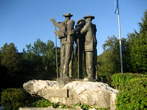
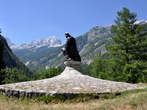
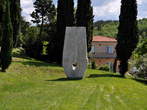
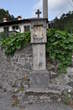
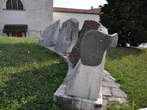
Ribcev Laz is a village in the Bohinj municipality. It is situated in the eastern part of Bohinj and represents the centre of the happening and the most known image of Bohinj. The inhabitants were primary farmers, but today is the main income from tourism. During First World War was the transitional zone between battlefield and hinterland. In Ribcev Laz are the greatest remarkablenesses the John the Baptist's Church, which is today under the memorial protection, the monument to four courageous men, which was erected in the year 1978 and the statue of Goldenhorn. At Ribcev Laz is also a stony wall, which is situated near the inn Pod skalco and is perforated from the sea shells. This proves that the bank of the former sea was very shallow. In Ribcev Laz are the Tourist information centre, shop, post, Hotel Bohinj, Hotel Jezero, holiday home Na skalci, apartments, restaurants and other. There are available many sport activities as climbing on the natural walls Pod skalco and Bellevue, boating with the borrowing of kayaks and canues, swimming, cycling, walking and other. We can drive with the tourist boats Bohinj and Zlatorog. They also organize evening nights by home made food and accordion.
Other
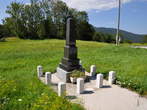
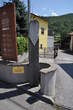
Borovnica is a village which lies on the border of the Ljubljana swamp. The Borovnica Commune is situated on the region where they meet different landscapes. Behind the village Borovnica is beginning the Karst land. Borovnica is a starting point for wonderful trips to the Pekel gorge and to Rakitna. In former times the village was known by viaduct and railway line Dunaj – Trieste, which was the largest viaduct built of stone in Europe and technical achievement of the 19th century. Borovnica viaduct was built from the year 1850 to 1856. It was made without cement. The viaduct is 38 metres high and 561 metres long. Today reminds of it only the 21. column, which is situated in the middle of the village. In the year 1992 was proclaimed for the technical monument. In Borovnica are the largest plantations of the American bilberries in Slovenia. In other half of the July they organize The day of bilberries. In the village you can see the Primary School Ivan Korosec, the Parish church of St. Margaret, the restaurant Godec, the churchyard, the bus and railway station, the library Borovnica, the administrative unit and municipality Borovnica, the monument of the war victims, the monument dedicated to the killed in First World War, the sport ground, the post office, the Dolina or Jelen bridge, the TVD Partizan Borovnica, the birth house of Marja Borsnik, literary historian and other. Jelen or Dolina bridge was built in the year 1857. It belongs to the oldest Slovenian bridges with double track line. It is 29 metres high and 219 metres long. The Church of St. Margaret was first mentioned in the year 1351. It is not known when the primary church was made, but they estimate that it was about in the year 1300. The Saint Margaret was the patron of the peasants. Its beginning should be connected with the construction of the Carthusian monastery Bistra. The church was many times renovated, at last in the year 1935 in the new classicism style.
Brdo pri Lukovici is a small settlement next to Lukovica in the eastern part of the Upper Carniola region. It was first mentioned in records under the German name Ekk in the 14th century. Brdo Castle was non existant in those days.
What once used to be a small village later became home to clerks, noblemen and intellects. Today it is a monument to a rich history and a beautiful place for a day trip. Brdo Castle was built by Lamberg family in 1552. It is the magnificent work of Renaissance architecture. Three hundred years after its construction, a famous Slovene writer by the name of Janko Kersnik, who with his work made great contributions to Slovene literature, was born in Brdo Castle. Fran Levec, an editor and a literary historian, taught the noblemen's children in Brdo Castle. The castle walls made up a wonderful mosaic of history until World War II, when the building burnt down. It has never been renovated to its former self. The Baroque Parish Church of the Assumption of Our Lady is decorated with frescos by the renowned Slovene painter Jelovšek. The most interesting sight is the sundial. The Janko Kersnik Primary School, which dates back to 1837, stands next to the church along with a presbytery.
There is also the birth house of France Marolt (1891-1951), a renowed Slovene composer and acclaimed choirmaster who was actively involved in cultural activities. Above Marlot's homestead towers the Beekeeping Centre of Slovenia, where we can learn about honey plants along a herbal-beekeeping trail in unspoiled nature.
Brezje in Gorenjska is famous as a pilgrimage place of Slovenian Cristians. Brezje is visited across all year, but the main meeting is at the festival of Maria Pomagaj in 24 th of May. Brezje are situated in outstanding beauty of Slovenian land, because they lie in Gorenjska flat country under rich woods of Karavanke, Jelovica and Pokljuka under powerful Triglav. Brezje are first mentioned in 11th century, but at least in 15th century was there modest church of saint Vid, which belonged in parish church Mošnje. In basilica of saint Vid today worship merciful image Mother of God, which was painted by Leopold Layer in the year 1814 and people name it »Marija Pomagaj«. In the year 1907 was crowned by Ljubljana's bishop Anton Bonaventura Jeglič with permission of pope Pij X.
Dom na Komni Mountain Hut (1520 metres) is situated in the eastern edge of plateau Komna, which is sweeping steeply into the Bohinj valley. You can expect for about 2 hours and 15 minutes walking. The best way is that we leave the car in the parking place by Home Savica. The signpost leads us ahead to the road. In the right side we will see log cabin, which is a starting-point for the visit of Savica Waterfall. The way goes roundabout in the forest, which cools us in the summer time. Between that we rarely see the places with a good view of the Bohinj lake. At the end of the path is becoming more and more rocky. The mountain hut was built in the year 1936 and several times renovated and modernized. There also leads telpher line. This place is one of the most visited, because it stands in the waypost of bigger mountain paths. It is supplied all the year and it is managed from Ljubljana-Matica. It has a place with outside terrace, which offers wonderful views to the lake in the valley. Only 15 minutes is from this hut to the hut under Bogatin.
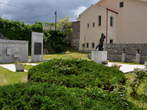
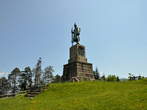
Monument for the National Liberation War is situated at the top of the hill Drca in Vrhnika. It is the powerful monument, which was made by the sculptor Boris Kalin and planed by architect Boris Kobe. It was erected in the year 1950 and it is made from stone. The easiest way to the monument is, if you go from the direction of Mocilnik, where you can also park the car. There are also other ways to the hill. From the monument for the National Liberation War is the wonderful view to city Vrhnika. The fight for the liberation of Vrhnika started in the 5th of May in the year 1945. The 11th and 15th brigade liberated town only the next day after the tiresome and badly fights. Beside the monument is also the tomb and the memorial plate. In the tomb are buried the poet Ivan Rob, writer Karel Grabeljskek – Gaber (1906 – 1985) and many other partisans.
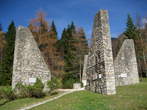
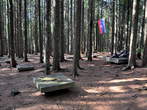
Concentration camp Ljubelj is located on the way to the former frontier Ljubelj. Labour camp Ljubelj is the only concentration camp, which was during the second world war in the region of Republic Slovenia. It was the subsidiary of the notorious camp Mauthausen in Austria. The concentration camp Ljubelj was operating from the year 1942 to 1945. About 1800 prisoners dug tunnel through Karavanke till the year 1945. The Nazis decided to build it because of the economical and strategical reasons to improve transport roads to Yugoslavia. The bad or incapable people were sent to Mauthausen, which meant for them certain death. The Slovenian government announced this camp for historical memorial place. Beside public monument to the internees, which was built in the year 1954, preserves this region of the camp authentic remains of administrative and prison terraces including with crematorium. After the Second World War they built military guardhouse in the civil part of the camp, which was destroyed by fire. The presentation of the concentration camp Ljubelj is in the cellar of the former guardhouse. With the statue of the sculptor Boris Kobe is showed the suffering of the prisoners. At Koroska side of the camp was nothing preserved. The only reminder are two memorial boards. In the nearness of the Concentration camp Ljubelj is a restaurant Koren and just beside is the adrenalin park.
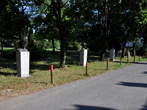
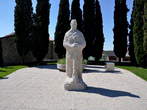
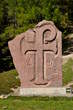
The military cemetery of the fallen soldiers in the World War I is marked with the table and is situated near main road to Log pod Mangrtom. Near the cemetery is a small chapel. At the World War I Military Cemetery is in four terraces buried 859 Austo – Hungarian soldiers, fallen in the fights in Rombon and Cukel. In the middle of the of the cemetery is erected the monument of the fallen soldiers with the image of the Bosnian and Austrian soldiers. The monument was made by Ladislav Kofranek from Prague. The tombstones are separated with iron crosses and Islamic tombstone symbols.
Marezige is a picturesque village located in Slovenian Istria. Administratively, it belongs to the Municipality of Koper, which is one of the most divided Slovenian municipalities. The settlement lies above the Vanganelska valley and is about ten kilometers from Koper.
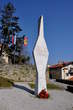
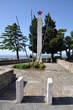
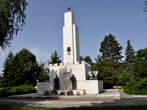
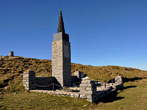
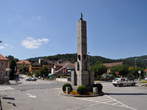
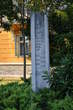
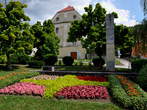
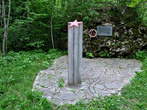
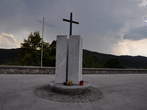
The settlement covers several hamlets on the ridge and slopes of the Marezgan ridge, between the valleys of the Rokava stream in the south and the Badasevica stream in the north. On the ridge, the village of Burja is exposed to the burja wind. On the northern slope are the hamlets of Brzani and Sabadini, and on the southern slope are Rokavci and Bernetici. Marezige has a rich historical past. In the second half of the 8th century, Istria passed from Byzantine to Frankish rule. Istrian cities have felt the influence of Venice since the 9th century, and after a long period of independence in 1279, they had to accept their rule, which lasted until the collapse of the republic in 1797. For a short time, the village belonged to Napoleon's France. At first they were part of the Kingdom of Italy, but from 1809 they were part of the Illyrian provinces. The municipality of Marezige was founded in August 1898 and at that time belonged to the Austrian littoral. A varied political and cultural life took place in the place. A loan company and a savings bank were established. After the First World War, Istria was annexed to Italy. The authorities persecuted the Slovenian population and closed Slovenian schools. In May 1921, the locals finally revolted and challenged the fascists. At the trial in 1923, the Italians sentenced many locals to several years in prison. Marezige rebellion belongs to the first forms of resistance against fascism. In memory of this event, the municipality of Koper celebrates a municipal holiday, and the elementary school in Marezige was named after Ivan Babic, who was the leader of the resistance. During the Second World War, a partisan school was founded in Marezige. In October 1943, the Germans burned the houses in the village and killed the hostages. The primary school was rebuilt in 1949. After the war, Marezige got electricity, they modernized the road and they got water from Rizana waterworks. The Monument to the National Liberation War and the pre-war victims of fascism is located in the center of village, opposite the seat of the local community, along the road Koper - Marezige. The design and arrangement project of the monument is the work of architect Teja Badjur. The monument stands on a stone-paved plateau. It is a tall square column made of white Istrian stone, which is finished with a red five-pointed star. It was erected in 1958. On the monument there is an inscription by the writer and poet France Bevk, part of which includes the text - We pay tribute to the comrades who fell in the first rebellion against the fascists in the Slovenian littoral and the freedom fighters in the National Liberation War. On the anniversaries of the Marezige rebellion, the traditional Refosk Festival has been held in the village since 1972.
The event grew from a Refoska exhibition into a great celebration of winegrowers and wine lovers. The event promotes wine culture, the quality of wines and the cultural and ethnological heritage of Istria. Marezige is also known for the first wine fountain for wine tasting in Istria.
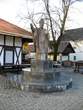
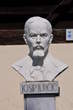
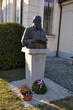
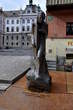
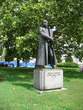
General Maister Square is named by the general Rudolf Maister (1874 – 1934), which was famous Slovenian poet, general and fighter for the northern border. Where the park and pavement part of the square meet a memorial was erected in the year 1987. At the memorial, which is the work of the sculptress Vlasta Zorko, was planted a linden tree on the occasion of the proclamation of Slovenia's independence in the year 1991. In the ground is buried a bottle with a document that describes the solemn event. At the General Maister Square are also the memorial of journalist Anton Tomsic and the Fountain. In the nearness is the First Grammar School, memorial of writer and journalist Josip Jurcic (1844 – 1881) and the Neo-baroque building of the Municipality Maribor, built in the year 1911. The First Grammar School began as the secondary modern school in the year 1924. If you have enough time, you can walk to the City park with three ponds, which is only few minutes away.
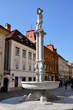
The City Hall, also called Rotovz or Magistrat, is the seat of the City of Ljubljana. It is located on Town Square, which, with its house, cathedral, diocesan mansion and fountain in the middle, is one of the most beautiful baroque ambiences in Central Europe.
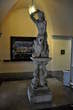
At the beginning of the 18th century, the baroque building was rebuilt from two older houses by Gregor Macek, according to the plans of Carl Martinuzzi. The facade is one of the finest examples of mature baroque in Ljubljana. Later the building was rebuilt several times, most thoroughly according to the plans of Svetozar Krizaj in 1963. In the lobby of the Magistrate is a statue of Hercules with a late 17th century lion that once stood on the Hercules well in the middle of Old Square. It is the mythological motive of the hero from the ship Argo. A copy adorns the fountain in front of the Stiski Mansion in New Square. The statue depicts Hercules killing the lion below him. In the courtyard arcades is also the Baroque Narcissus well, which is the work of Baroque sculptor Francesco Robba (1698 - 1757). Robba married Theresa, the daughter of the stonemason of Luka Misle, in 1722. After his father-in-law's death he took over the workshop of the stonecutter and furnished the most important churches in Ljubljana with his creations - marble altars. He designed Robb's well for the city, located in the National Gallery of Ljubljana since 2008, with a copy of it before the Town Hall. At the staircase stands a monument to Mayor Ivan Hribar (1851 - 1941). At Town Hall, visitors can view the following exhibits: Historic Atrium, Glass Atrium, Central and Right Atrium.
The main purpose of the exhibitions is to present the projects of the City of Ljubljana. In addition, art exhibitions are organized in the framework of long-distance and international collaborations, as well as group and individual exhibitions by amateur or established artists.
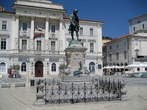
Piran is a wonderful old port town in Slovenian Istria. The city preserved the medieval plan with narrow streets and squeezed houses, which gives it the special charm. Tartini Square is the centre of Piran and the largest square. It got the name by the Giuseppe Tartini (1692 – 1770), the famous composer and violinist. The main square became in the end of the 13th century. The image, which has it today, got in the other half of the 19th century. It began with the covering of the inner port. On the square are Tartini house, the Saint Peter's Church, baroque house, hotel Tartini, interesting stony columns with flag pole, the doors of Saint George, the judge palace, town hall, Tartini memorial, Loggia, Gothic house, called Venetian and other. In the atrium of the town hall we see the polygonal stone with quantity measures and inscriptional slabs with some arms from the old town hall. In the majority in more important buildings were built in the Venetian lions with the open book. The open book meant peace and close book meant war. The loggia was situated in the area of the present Coastal galleries. In the loggia were meeting the town's magnates. Venetian house is a wonderful red building, which was made in the middle of the 15th century. It is the example of the Venetian and Gothic architecture in Piran and the oldest building in the square. The most interesting is the corner Gothic balcony. The bronze Tartini monument was erected in the year 1896. It was made by the Venetian sculptor Antonio dal Zotta. It is connected with the Church of Saint George. The Tartini house is ranged among the oldest houses in the square. It was built in the Gothic style. Later they renovated its exterior in new classical style. The last renovation was in the years from 1985 to 1991. Today is the seat of the Italian Community. In the first floor is the Tartini memorial house. The house is intended for exhibitions, performances and art workshops. The stony pillars for flags are in the entrance to the Tartini square. They are from XV. century. The court house was built in the area, where was in the 14th century Fontik, the storehouse for flour and cereals. The pawnshop town got in the 16th century.
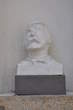
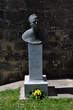
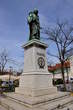
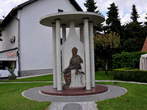
Preseren grove was in 1952 reorganized by plans of architect Marjan Sorli from previously abandoned city Kranj cemetery. Grove is in the property of community Kranj. Renovation was going under the expertise of Institute for protection cultural heritage. The area is designed as grove because of historical part and piety. It is a place for rest, meditation and cultural inspiration. Paving stone footpaths are from all sides concluded in the central part with transitional booth on eight columns with three time divided semicircular roof. At the end of 18. century they left off the cemetery at church Saint Kancijan and started to bury in the small place of today's Preseren grove. The cemetery expanded at the end of 19. century, but in 1939 was gave up because of space distress. On this place they preserved only some of the most important historical tombstone and cultural monuments, which are the tombstone of France Prešeren, Simon Jenko, Janez Puhart, the famous inventor of photography on glass, mausoleum Majdic, bust statue France Prešeren and grave of Presern's daughter Ernestina Jelovšek.
Volcji Potok Arboretum is located near Kamnik. The word arboretum means the collection of the trees and bushes, which is designed for education and researching. In the base the Arboretum is the botanic garden for woody plants and it is the only one in Slovenia. In the earlier centuries was the mansion property, but from the year 1882 was in the property of the Ferdinand Souvan and later of his son. He arranged the park with ponds and plantation of the exotic trees. The park is also called the Souvan park. The manor was between the Second World War destroyed by the fire. From the year 1952 the park is allocated to the agronomy and forestry faculty in Ljubljana. The Volcji Potok Arboretum is divided to: Francoski park, Stari park, Souvanova loka, Rozarij, Zgornji angleški park, Jelova draga, Spodnji angleški park, Hujski park, Južni park, Zahodni park and the forest in which is very important the rare union of the fir tree and tropical moss. In Arboretum, 80 hectare of ecologically very diversified ground is occupied by about 2.500 taxons of trees and shrubs. The number of perennials is different every year. In the Arboretum is six lakes. The newnesses they have announced in the web page. The exhibition of the orchids and tropical plants you can see in the greenhouse behind the old administration. Between them are flying beautiful tropical butterflys. In April they have the exhibition of the blooming tulips and spring flowers. In the park was on tour the Minimundus from Austria with the miniature buildings. The Arboretum also has the playground for children, which was renovated recently. Next to the playground is situated the granary and in front of it is the garden in which are cultivated herbs like marjoram, sage, tarragon, absinthe and many others. In the cafe you can get refreshing drinks, cakes, ice cream and they also have special daily offer. The Gallery Arboretum entertains the permanent collection of the sculptures from the statuary Janez Boljka. In the pavilion you can rest and enjoy in peace and silence.
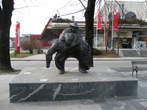
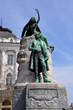
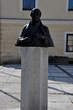
Vrhnika is situated near Ljubljana, the main city of Slovenia. Cankar's Square is in the centre of Vrhnika. It is named by the well-known writer, dramatist and poet Ivan Cankar, which was born here. In this part you can see the former court of justice and prisons, church of St. Lenart, Hotel Mantova, former Hotel By black eagle (Pri crnem orlu), Lavrencic House – Old post, Eleven school under bridge over the river Ljubljanica, monument of Ivan Cankar, dendrological natural monument yew tree, Administrative Unit and Municipality Vrhnika and many other. Here is also the Tourist Information Centre Vrhnika. In the nearness is the shopping centre Mercator. The church of the Saint Lenart got the present baroque image in the 18th century. The primary chapel of the saint Lenart was built in the Gothic style. First was mentioned in the year 1444. The former three-storeyed Hotel By black eagle was built by the lander proprietor Jozef Kotnik. In the first floor was the reading club and in the ground floor was coffeehouse and inn. At the renovation in the year 1990 they done the archaeological researches and they discovered ceramic finds from the 13th and 15th century. Lavrencic House – Old post belongs to one of the most important and oldest buildings in Vrhnika. It is located in the bank of the river Ljubljanica. Here was sometimes also the travelling's harbour. It was made with the union of two houses and had one floor more. There once stayed overnight the emperor Karel VI., because in that time was guest house, tollhouse and post office. Today is in it the Centre of the industry leather Vrhnika. Eleven school under bridge Cankar described in the short novel My life. The first bridge above the river Ljubljanica was built in the year 1790 and the second the year 1888. It was from lithoiron and the first one like this in Kranjska Region. The bronze monument of Ivan Cankar was made in the year 1930. The sculptor was Ivo Jurkovic.
 KRAJI - Slovenia
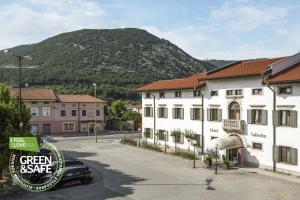 Nova GoricaSabotin, Hotel & Restaurant