Source: Public information of Slovenia,
The Surveying and Mapping Authority of the Republic of Slovenia,
State map in measure 1 : 1.000.000, 1995
www.gu.gov.si
Recommended
Other
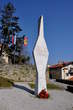
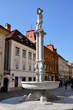
Borovnica is a village which lies on the border of the Ljubljana swamp. The Borovnica Commune is situated on the region where they meet different landscapes. Behind the village Borovnica is beginning the Karst land. Borovnica is a starting point for wonderful trips to the Pekel gorge and to Rakitna. In former times the village was known by viaduct and railway line Dunaj – Trieste, which was the largest viaduct built of stone in Europe and technical achievement of the 19th century. Borovnica viaduct was built from the year 1850 to 1856. It was made without cement. The viaduct is 38 metres high and 561 metres long. Today reminds of it only the 21. column, which is situated in the middle of the village. In the year 1992 was proclaimed for the technical monument. In Borovnica are the largest plantations of the American bilberries in Slovenia. In other half of the July they organize The day of bilberries. In the village you can see the Primary School Ivan Korosec, the Parish church of St. Margaret, the restaurant Godec, the churchyard, the bus and railway station, the library Borovnica, the administrative unit and municipality Borovnica, the monument of the war victims, the monument dedicated to the killed in First World War, the sport ground, the post office, the Dolina or Jelen bridge, the TVD Partizan Borovnica, the birth house of Marja Borsnik, literary historian and other. Jelen or Dolina bridge was built in the year 1857. It belongs to the oldest Slovenian bridges with double track line. It is 29 metres high and 219 metres long. The Church of St. Margaret was first mentioned in the year 1351. It is not known when the primary church was made, but they estimate that it was about in the year 1300. The Saint Margaret was the patron of the peasants. Its beginning should be connected with the construction of the Carthusian monastery Bistra. The church was many times renovated, at last in the year 1935 in the new classicism style.
Brdo pri Lukovici is a small settlement next to Lukovica in the eastern part of the Upper Carniola region. It was first mentioned in records under the German name Ekk in the 14th century. Brdo Castle was non existant in those days.
What once used to be a small village later became home to clerks, noblemen and intellects. Today it is a monument to a rich history and a beautiful place for a day trip. Brdo Castle was built by Lamberg family in 1552. It is the magnificent work of Renaissance architecture. Three hundred years after its construction, a famous Slovene writer by the name of Janko Kersnik, who with his work made great contributions to Slovene literature, was born in Brdo Castle. Fran Levec, an editor and a literary historian, taught the noblemen's children in Brdo Castle. The castle walls made up a wonderful mosaic of history until World War II, when the building burnt down. It has never been renovated to its former self. The Baroque Parish Church of the Assumption of Our Lady is decorated with frescos by the renowned Slovene painter Jelovšek. The most interesting sight is the sundial. The Janko Kersnik Primary School, which dates back to 1837, stands next to the church along with a presbytery.
There is also the birth house of France Marolt (1891-1951), a renowed Slovene composer and acclaimed choirmaster who was actively involved in cultural activities. Above Marlot's homestead towers the Beekeeping Centre of Slovenia, where we can learn about honey plants along a herbal-beekeeping trail in unspoiled nature.
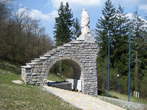
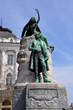
Monument for the National Liberation War is situated at the top of the hill Drca in Vrhnika. It is the powerful monument, which was made by the sculptor Boris Kalin and planed by architect Boris Kobe. It was erected in the year 1950 and it is made from stone. The easiest way to the monument is, if you go from the direction of Mocilnik, where you can also park the car. There are also other ways to the hill. From the monument for the National Liberation War is the wonderful view to city Vrhnika. The fight for the liberation of Vrhnika started in the 5th of May in the year 1945. The 11th and 15th brigade liberated town only the next day after the tiresome and badly fights. Beside the monument is also the tomb and the memorial plate. In the tomb are buried the poet Ivan Rob, writer Karel Grabeljskek – Gaber (1906 – 1985) and many other partisans.
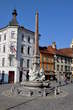
The City Hall, also called Rotovz or Magistrat, is the seat of the City of Ljubljana. It is located on Town Square, which, with its house, cathedral, diocesan mansion and fountain in the middle, is one of the most beautiful baroque ambiences in Central Europe.
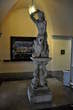
At the beginning of the 18th century, the baroque building was rebuilt from two older houses by Gregor Macek, according to the plans of Carl Martinuzzi. The facade is one of the finest examples of mature baroque in Ljubljana. Later the building was rebuilt several times, most thoroughly according to the plans of Svetozar Krizaj in 1963. In the lobby of the Magistrate is a statue of Hercules with a late 17th century lion that once stood on the Hercules well in the middle of Old Square. It is the mythological motive of the hero from the ship Argo. A copy adorns the fountain in front of the Stiski Mansion in New Square. The statue depicts Hercules killing the lion below him. In the courtyard arcades is also the Baroque Narcissus well, which is the work of Baroque sculptor Francesco Robba (1698 - 1757). Robba married Theresa, the daughter of the stonemason of Luka Misle, in 1722. After his father-in-law's death he took over the workshop of the stonecutter and furnished the most important churches in Ljubljana with his creations - marble altars. He designed Robb's well for the city, located in the National Gallery of Ljubljana since 2008, with a copy of it before the Town Hall. At the staircase stands a monument to Mayor Ivan Hribar (1851 - 1941). At Town Hall, visitors can view the following exhibits: Historic Atrium, Glass Atrium, Central and Right Atrium.
The main purpose of the exhibitions is to present the projects of the City of Ljubljana. In addition, art exhibitions are organized in the framework of long-distance and international collaborations, as well as group and individual exhibitions by amateur or established artists.
Volcji Potok Arboretum is located near Kamnik. The word arboretum means the collection of the trees and bushes, which is designed for education and researching. In the base the Arboretum is the botanic garden for woody plants and it is the only one in Slovenia. In the earlier centuries was the mansion property, but from the year 1882 was in the property of the Ferdinand Souvan and later of his son. He arranged the park with ponds and plantation of the exotic trees. The park is also called the Souvan park. The manor was between the Second World War destroyed by the fire. From the year 1952 the park is allocated to the agronomy and forestry faculty in Ljubljana. The Volcji Potok Arboretum is divided to: Francoski park, Stari park, Souvanova loka, Rozarij, Zgornji angleški park, Jelova draga, Spodnji angleški park, Hujski park, Južni park, Zahodni park and the forest in which is very important the rare union of the fir tree and tropical moss. In Arboretum, 80 hectare of ecologically very diversified ground is occupied by about 2.500 taxons of trees and shrubs. The number of perennials is different every year. In the Arboretum is six lakes. The newnesses they have announced in the web page. The exhibition of the orchids and tropical plants you can see in the greenhouse behind the old administration. Between them are flying beautiful tropical butterflys. In April they have the exhibition of the blooming tulips and spring flowers. In the park was on tour the Minimundus from Austria with the miniature buildings. The Arboretum also has the playground for children, which was renovated recently. Next to the playground is situated the granary and in front of it is the garden in which are cultivated herbs like marjoram, sage, tarragon, absinthe and many others. In the cafe you can get refreshing drinks, cakes, ice cream and they also have special daily offer. The Gallery Arboretum entertains the permanent collection of the sculptures from the statuary Janez Boljka. In the pavilion you can rest and enjoy in peace and silence.
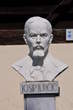
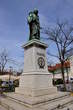
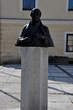
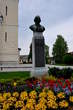
Vrhnika is situated near Ljubljana, the main city of Slovenia. Cankar's Square is in the centre of Vrhnika. It is named by the well-known writer, dramatist and poet Ivan Cankar, which was born here. In this part you can see the former court of justice and prisons, church of St. Lenart, Hotel Mantova, former Hotel By black eagle (Pri crnem orlu), Lavrencic House – Old post, Eleven school under bridge over the river Ljubljanica, monument of Ivan Cankar, dendrological natural monument yew tree, Administrative Unit and Municipality Vrhnika and many other. Here is also the Tourist Information Centre Vrhnika. In the nearness is the shopping centre Mercator. The church of the Saint Lenart got the present baroque image in the 18th century. The primary chapel of the saint Lenart was built in the Gothic style. First was mentioned in the year 1444. The former three-storeyed Hotel By black eagle was built by the lander proprietor Jozef Kotnik. In the first floor was the reading club and in the ground floor was coffeehouse and inn. At the renovation in the year 1990 they done the archaeological researches and they discovered ceramic finds from the 13th and 15th century. Lavrencic House – Old post belongs to one of the most important and oldest buildings in Vrhnika. It is located in the bank of the river Ljubljanica. Here was sometimes also the travelling's harbour. It was made with the union of two houses and had one floor more. There once stayed overnight the emperor Karel VI., because in that time was guest house, tollhouse and post office. Today is in it the Centre of the industry leather Vrhnika. Eleven school under bridge Cankar described in the short novel My life. The first bridge above the river Ljubljanica was built in the year 1790 and the second the year 1888. It was from lithoiron and the first one like this in Kranjska Region. The bronze monument of Ivan Cankar was made in the year 1930. The sculptor was Ivo Jurkovic.
 KRAJI - Slovenia
 SolčavaHiša Ojstrica