Source: Public information of Slovenia,
The Surveying and Mapping Authority of the Republic of Slovenia,
State map in measure 1 : 1.000.000, 1995
www.gu.gov.si
Recommended
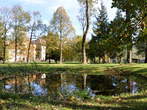
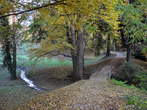
The three ponds are situated north of Maribor near the city park. In the past the ponds were water reserves that supplied the town's defense moat. Today are the three ponds artificially made lakes, which are filled up with water from the nearest brooks. It also exist the fourth pond from which flow two canals and fill up the first, second and third lake. The first pond has fountain and in the second is the artificial island for nesting ducks and swans. The third pond is the warmest and it freezes only in the rare circumstances in the winter. This region offers beside its beauty also the variety of the restaurants and locals. The three ponds are wonderful in every time of the year. They are popular walking place for the local people and others. Near the ponds is the city hill called Piramida, from where is the marvellous view to the whole city and to the wine hills.
Other
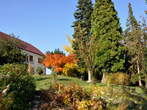
Botanical garden Pivola is located in Hoce near the city of Maribor. It is the part of University of Maribor, Faculty of Agriculture and life sciences, which became its user in the year 1994. From the year 2000 to 2001 was made a great amount of work at the garden, which was at beginning just the agriculture property. Botanical garden shows the native and foreign flora, especially some floral rarities of the Pohorje Mt and of the other parts of Northeastern Slovenia. The gardeni is at the same time a scientific and research institution, open for the public. Botanical garden Pivola has mixed woods, rose garden, collections of ornamental shrubs and trees, rock garden, irises, hemerocalis and water habitats, foliage plants, brook and soak system, Celtic mounds, three compost heaps, systematic area, horticultural and fruit plantation, experimental area, seed bank, origin of the drinkable water, forestry, geological, archaeological displays and many other things. There are also resting places with benches and tables or you can freshen up in a small tavern. The sources of the fresh water are disposed equable by the garden. The Botanical garden Pivola was officially opened on 24th May, 2002, on the European Day of Parks. Since then it welcomes visitors every year between April and November.
Lendava is the most eastern city in Slovenia. It lies under the picturesque Lendavske gorice along the Lendava River, near the border with Hungary. Lendava became a square in the 14th century and as a parish was mentioned in the year 1334. The settlement was over the time affected by many earthquakes and in the year 1838 by a huge fire. Lendava became a town in the year 1867. The Evangelical parish was founded in the year 1902 and until the Second World War was strong the Jewish community.
In Lendava are the most important attractions Lendava Castle, the Church of Saint Catharine, Synagogue, the Theatre and Concert Hall, the Museum of the middle class, printing and umbrella-making, the Chapel of Holy Trinity and many other. Since 1983 are by the Lendava River developing Terme Lendava, which are the natural resort where are treated mainly the rheumatic diseases. There is also a recreational park with a summer swimming pool and tennis courts. Accommodation is available in the Hotel Lipa, in the Apartmenst Lipov gaj or in the Camping Lipa.
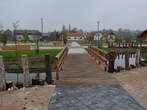
The Town Park in Lendava is nicely settled area with benches and a playground. The renovated park was officially opened in the year 2009. By renovation were taking an important part as designers and architects Maja Kardos and Goran Dominko. With the renovation they kept all existings and to residents accepted paths, but in a new modern appearance.
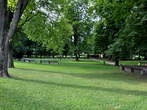
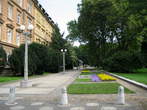
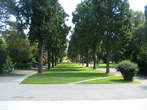
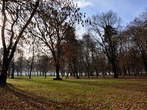
City Park in Maribor is a place of peace and relaxation after the city hustle and bustle. It is situated north of the town centre. The design of the park has a medieval basis. In the year 1879 the City Park was finally reformed and split into several parts, which are City Park, Calvary, Three ponds and Pyramid Hill. Despite later changes the City Park preserved the quality of the original historical design in the landscape style.
Today in the park grows about 100 species of domestic and foreign deciduous trees and many coniferous trees. In 1998, at the 100th anniversary of the Olympic champion Leon Strukelj was planted 100 new trees. In the park was in different periods raised some monuments of which are now preserved only two. City Park has many sculptures and fountains.
Occasionally are in the pavilion of the park organized different concerts. In the smaller part of the park is a playground. We can also visit the aquarium – terrarium, which is one of the most known in the south and middle Europe. From the Tomsic promenade that leads from the main railway to the City Park, we can also go to the small hill named Piramida, which is a favourite place for the local people. From here we can enjoy in a wonderful view of the wine slopes and to the whole city.
Murska Sobota is the biggest town of Pomurje. It is the administrative, economical, cultural, educational and health centre of the Pomurje region. You can teach yourself about the history of the town in the Regional Museum, which is situated in the castle of Murska Sobota. Round the renaissance manor is the extensive English park, which has the typical grassy patchs and is called the City park. The park is situated between the Sobota castle (manor) and the Evangelical Church. It has planted oaks, ash trees, lime trees and two hundred years old beech trees. In the park is also the pond, where you can see ducks and other animals. You can see the portrait of the Primoz Trubar and the monument of the killed educational workers. Here is also interesting the stony column – litopuncture of Marko Pogacnik from the year 1993.
 KRAJI - Slovenia
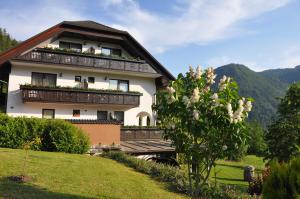 BledNature Hotel Lukanc